In today’s competitive eCommerce landscape, the way businesses communicate with customers can make or break their success. Effective customer communication goes beyond simply responding to inquiries—it’s about creating a seamless, personalized experience that builds trust and fosters loyalty. At WISMOlabs, we’ve seen firsthand how optimized communication channels can transform customer relationships and drive business growth.
Key Takeaways
- Implement real-time shipment tracking to reduce customer inquiries by up to 95%
- Leverage proactive communication strategies to prevent WISMO (Where Is My Order) calls
- Personalize post-purchase communications to enhance customer loyalty and satisfaction
- Utilize data analytics to optimize logistics performance and predict potential delays
- Create self-service options that empower customers while reducing support workload
- Integrate omnichannel communication for a seamless customer experience
Understanding the Importance of Optimized Communication Channels
The post-purchase phase is really important, as it’s when customers are most engaged with your brand and forming lasting impressions. Research shows that customers who receive proactive, personalized communications during this phase are much more likely to become repeat buyers and brand advocates. According to studies, businesses that excel at post-purchase communication experience up to 40% higher customer retention rates and 25% increased average order values compared to those with standard communication practices.
Optimizing your communication channels isn’t just about cutting costs—it’s about creating meaningful interactions that enhance the overall customer experience. When customers feel informed, valued, and heard, they’re more likely to develop a lasting relationship with your brand. Modern shoppers expect transparency throughout their buying journey, with research showing that 70% of customers cite poor communication as a main reason for abandoning retailers, even after previously successful purchases.
Let’s explore how you can transform your customer communication strategy to drive satisfaction, reduce support inquiries, and boost your bottom line. By using the strategies in this guide, businesses typically see a 30-50% reduction in customer service contacts while improving satisfaction scores by 25% or more.

Implementing Real-Time Shipment Tracking for Enhanced Visibility
One of the most effective ways to optimize customer communication is by implementing comprehensive real-time shipment tracking. This tool gives customers immediate visibility into their order status, greatly reducing the need for them to contact your support team. Advanced tracking systems can deliver package location updates within minutes of carrier scans, offering customers clear transparency throughout the delivery process.
At WISMOlabs, our tracking solutions connect with over 750 global carriers, ensuring your customers always know where their packages are, regardless of the shipping provider. This complete coverage eliminates the information gaps that often lead to customer inquiries. Our platform processes millions of tracking events daily, providing real-time updates even during busy shipping seasons when carrier systems might be delayed.
Real-time shipment tracking offers several key benefits:
- 24/7 Access to Information: Customers can check their order status anytime, anywhere, without having to wait for customer service help. This on-demand access lets shoppers get answers right away, even outside business hours when support staff might not be available.
- Reduced WISMO Calls: Our clients consistently see a 95% reduction in “Where Is My Order” inquiries after implementing our self-service tracking solutions. This big decrease allows customer service teams to focus on more complex issues that truly need human help.
- Increased Customer Confidence: Clear shipping information builds trust and reduces worry about online purchases. Studies show that 83% of shoppers are more likely to return to retailers that provide clear visibility into order status and delivery timelines.
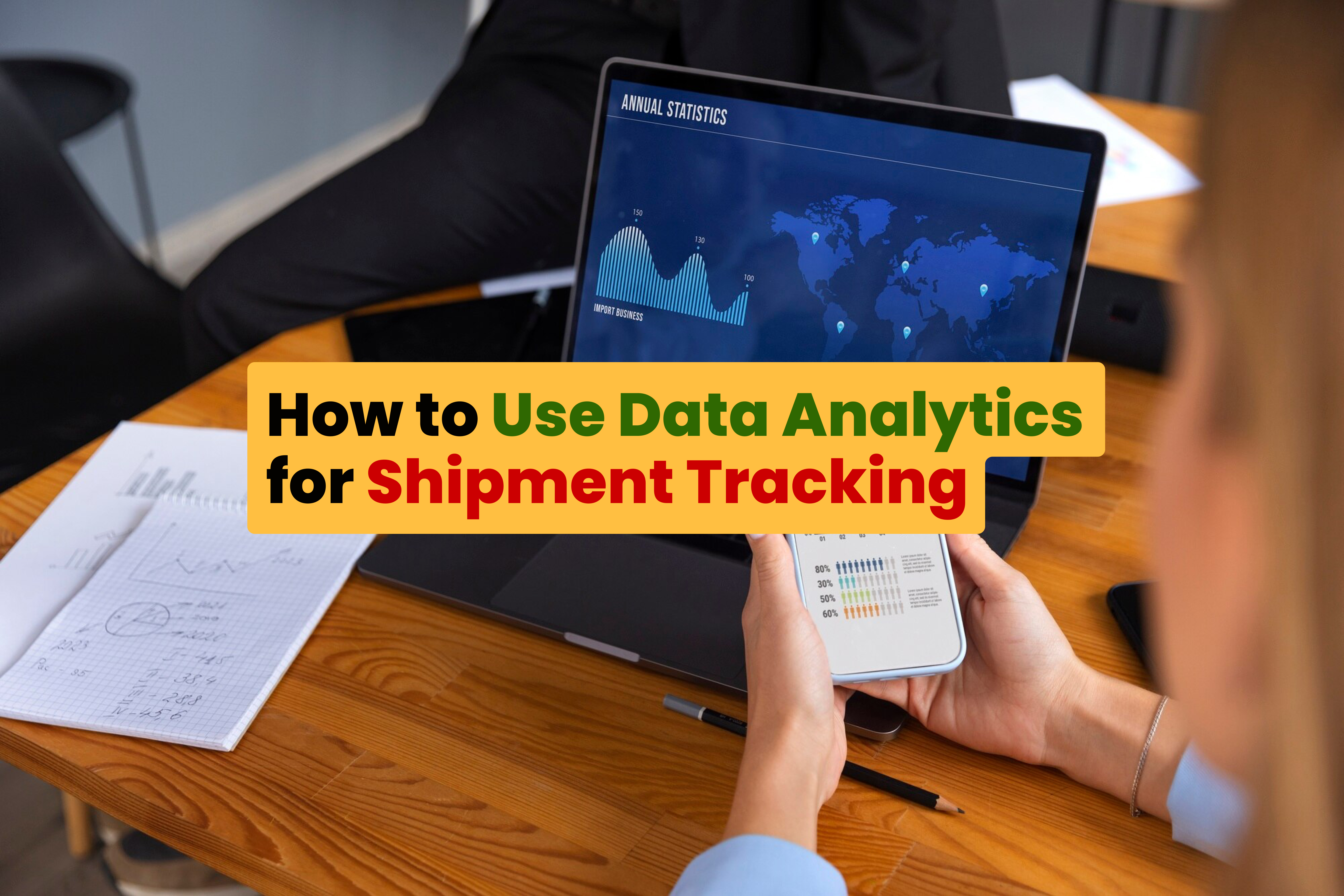
- Operational Insights: Beyond customer benefits, tracking data provides valuable information about your logistics performance. Analyzing patterns across thousands of shipments helps identify carrier reliability issues, regional delivery challenges, and opportunities for supply chain improvement.
Leveraging Proactive Communication to Prevent Customer Inquiries
While reactive customer service is necessary, proactive communication is transformative. By anticipating customer needs and providing information before they ask for it, you can dramatically improve satisfaction while reducing support volume. Research shows that businesses using proactive communication strategies experience up to 60% fewer inbound service requests and 25% higher customer satisfaction scores compared to those relying solely on reactive approaches.

Proactive communication is especially valuable in the post-purchase phase, where customers are often anxious about their orders. Our Intelligent Shipment Notifications system automates this process, sending timely updates at critical points in the shipping journey. These notifications are triggered by specific shipping events and can be customized based on factors like product type, delivery timeframe, customer segment, and historical performance data.
Key proactive communication strategies include:
Order confirmations give immediate peace of mind and set expectations. These should include detailed order information, estimated shipping timeframes, and clear next steps to keep customers informed from the moment they complete a purchase.
Shipping notifications alert customers when an order ships, including tracking information and estimated delivery dates. Advanced systems can provide dynamic delivery windows that adjust based on real-time carrier performance and regional delivery patterns for greater accuracy.
Delivery predictions give advance notice of potential delivery delays with alternative solutions or compensation offers. Our predictive algorithms can identify likely delays 24-48 hours before they occur, allowing businesses to proactively address issues before customers become concerned.
Delivery confirmations verify that an order has been successfully delivered. These notifications can include package placement information, delivery photos, and easy options for reporting any issues, creating an additional layer of security and confidence for customers.
Personalizing Post-Purchase Communication for Enhanced Customer Loyalty
Today’s customers expect more than generic messages—they want communications that recognize their unique relationship with your brand. Personalization is no longer optional; it’s essential for building lasting customer relationships. Studies show that personalized post-purchase communications can increase customer lifetime value by up to 40% and boost retention rates by 25% compared to standard, non-personalized approaches.
Our Post-Purchase Marketing & Personalization Engine enables businesses to create tailored communications based on customer data, purchase history, and behavioral patterns. This level of personalization transforms standard transactional messages into powerful marketing opportunities. The system analyzes dozens of data points, including purchase frequency, product categories, average order value, and browsing behavior, to deliver highly relevant communications that resonate with individual customers.
Effective personalization strategies include:
Basic personalization acknowledges the individual customer and their specific purchase. While seemingly simple, correctly implemented name personalization can increase email open rates by up to 26% according to industry research.
Purchase history integration references previous purchases or customer status (e.g., “As a valued returning customer…”). This approach creates continuity in the customer relationship and shows that you recognize their ongoing loyalty to your brand.
Behavioral triggers create communications based on specific customer actions, such as browsing certain products or abandoning a cart. These highly targeted messages can achieve conversion rates 5-10 times higher than standard promotional communications.
Utilizing Data Analytics to Optimize Logistics Performance
Data-driven decision making is essential for continuously improving your customer communication strategy. By analyzing patterns in customer interactions, shipping performance, and feedback, you can identify opportunities for optimization and address potential issues before they impact customer satisfaction. Advanced analytics platforms can process millions of data points to identify trends and anomalies that would be impossible to detect through manual monitoring.
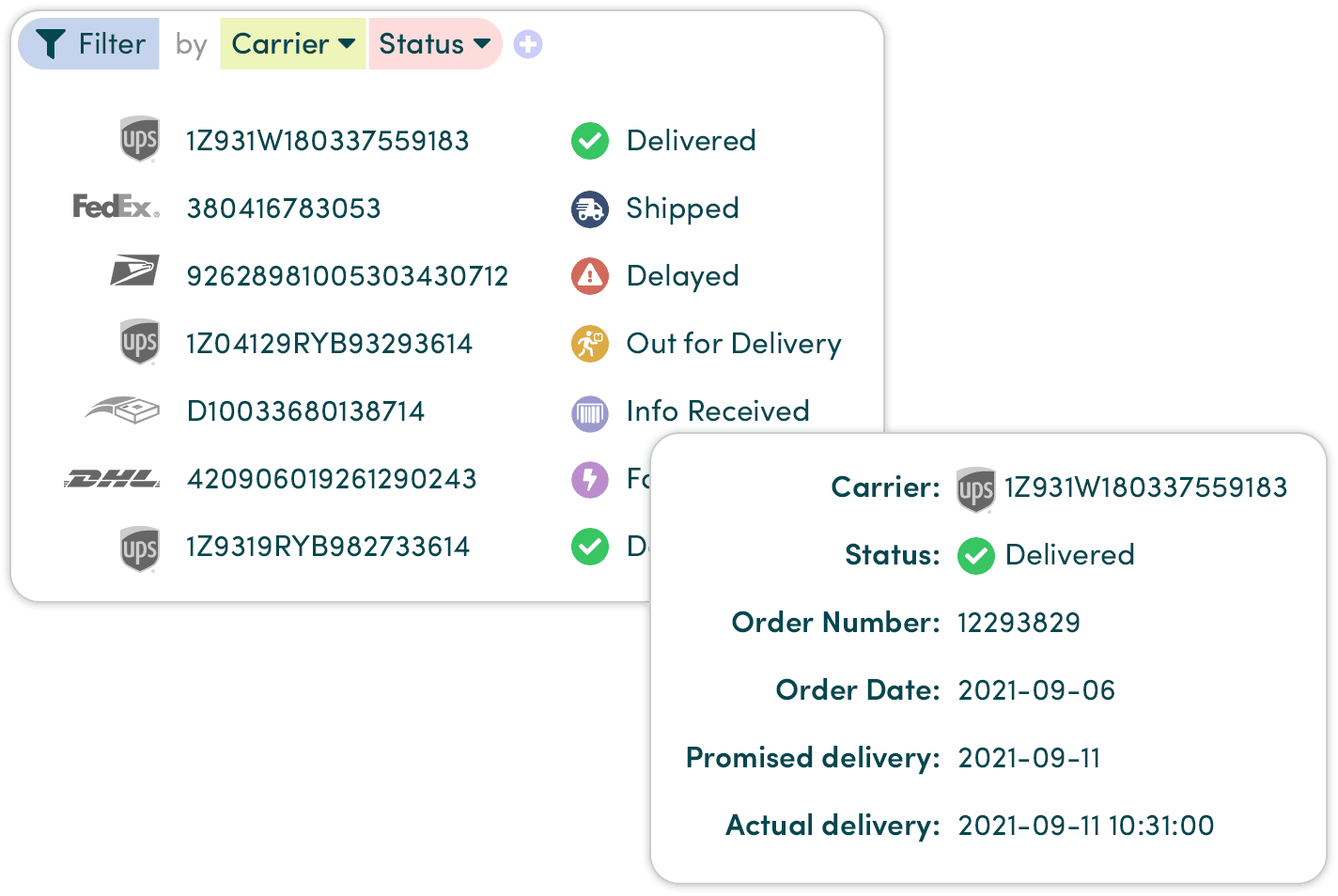
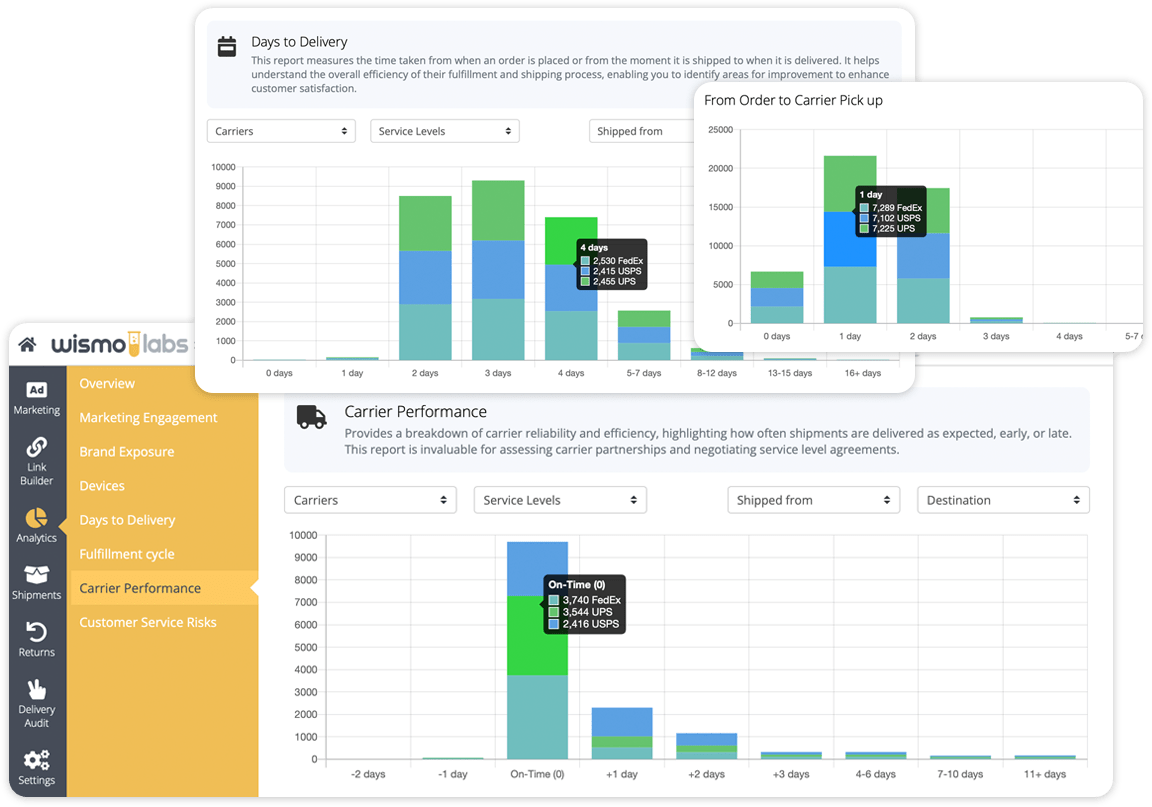
Our Customer Engagement Analytics platform provides actionable insights into your post-purchase experience, helping you understand what’s working and what needs improvement. These insights enable you to make data-backed decisions that enhance customer satisfaction while optimizing operational efficiency. The system continuously monitors performance across multiple dimensions, automatically alerting you to significant changes from expected patterns that might indicate emerging issues.
Key analytics to monitor include:
Carrier performance metrics track on-time delivery rates, damage rates, and other key performance indicators across carriers. This data helps identify the most reliable shipping partners for different regions and product types, potentially reducing delivery issues by 30-40% through strategic carrier selection.
Communication engagement measures open rates, click-through rates, and response rates for different types of customer communications. Analyzing this data helps refine messaging strategies, with top-performing businesses achieving engagement rates 3-5 times higher than industry averages through continuous optimization.
Customer service inquiries analysis looks at the volume, type, and resolution of customer inquiries to identify common issues. Pattern recognition algorithms can detect emerging problems before they become widespread, allowing for preemptive solutions that can prevent up to 70% of potential support tickets.
Creating Self-Service Options to Empower Customers
Today’s customers often prefer to find information on their own rather than contacting customer service. By providing robust self-service options, you can empower customers while reducing the volume of routine inquiries handled by your support team. Research indicates that 67% of consumers prefer self-service over speaking with a company representative, and businesses that implement comprehensive self-service solutions typically see support costs decrease by 25-30% while customer satisfaction increases.
Our Self-Service Order & Shipment Tracking solution provides customers with 24/7 access to detailed order information, dramatically reducing the need for customer service assistance. This not only improves customer satisfaction but also frees your support team to focus on more complex issues. The platform delivers comprehensive information in an easy-to-use interface, allowing customers to quickly find answers to common questions without navigating complex menus or deciphering technical terminology.
Effective self-service options include:
- Comprehensive Order Tracking: Detailed, real-time information about order status and shipping progress. Advanced tracking portals can include package location maps, delivery time windows, and even weather conditions that might affect delivery, providing customers with complete awareness of their situation.
- Knowledge Bases: Searchable collections of information addressing common questions and issues. Well-designed knowledge bases can resolve up to 80% of routine customer inquiries without requiring human intervention, especially when enhanced with natural language search capabilities.
- Interactive FAQs: Dynamic frequently asked questions that adapt based on customer behavior and common inquiries. Machine learning algorithms can continuously optimize FAQ content based on search patterns and successful resolution rates, ensuring the most relevant information is prominently displayed.
- Chatbots: AI-powered assistants that can address routine questions and escalate complex issues to human agents. Modern conversational AI can successfully resolve 40-60% of initial customer inquiries, with the percentage continuously improving as the system learns from interactions.
- Self-Service Returns: Systems that allow customers to initiate and track returns without contacting customer service. Automated return portals can reduce processing costs by up to 50% while providing customers with immediate confirmation and status updates throughout the return process.
Integrating Omnichannel Communication for a Seamless Experience
Modern customers interact with brands across multiple channels, often switching between them during a single customer journey. A truly optimized communication strategy must provide a seamless experience across all these touchpoints, maintaining consistency while leveraging the unique strengths of each channel. Research shows that customers who engage with brands across multiple channels have 30% higher lifetime value than single-channel customers, highlighting the importance of a cohesive omnichannel approach.
Our Intelligent Shipment Notifications system enables businesses to communicate with customers through their preferred channels, whether that’s email, SMS, social media, or push notifications. This flexibility ensures that your messages reach customers where they’re most likely to engage. The platform maintains a unified customer profile across all channels, ensuring consistent messaging while adapting content format and delivery timing to match the characteristics of each communication method.
Different channels are good at different types of communication. Email works best for detailed information and rich content, SMS is great for urgent updates, social media is excellent at community engagement, and phone support is best for solving complex problems. A truly optimized strategy uses the strengths of each channel. Data analysis can show which types of communications perform best on each channel for your specific customer base, allowing for increasingly refined channel selection over time.
Channel Optimization Guide
Best for: Detailed information, rich content, non-urgent updates
SMS
Best for: Time-sensitive updates, delivery notifications, brief confirmations
Live Chat
Best for: Real-time problem solving, pre-purchase questions, simple issues
Phone
Best for: Complex issues, high-value customers, sensitive matters
Case Study: Transforming Customer Communication with WISMOlabs
To show the impact of optimized customer communication, let’s look at a real example of how businesses have transformed their customer experience using our solutions. This case demonstrates the real benefits that can be achieved through strategic improvements to post-purchase communication channels and processes.
A leading online retailer was struggling with high volumes of WISMO (Where Is My Order) calls, which were overwhelming their customer service team and creating a negative customer experience. They implemented our Self-Service Tracking and Intelligent Shipment Notifications solutions to address these challenges. Before implementation, they were receiving over 200 WISMO calls daily, representing about 65% of their total customer service volume and requiring a dedicated team of 12 support agents to manage these inquiries.
The results were amazing:
- 95% Reduction in WISMO Calls: By providing proactive updates and self-service tracking, they dramatically reduced the volume of order status inquiries. Within three months of implementation, WISMO calls decreased from 200+ daily to fewer than 10, allowing them to reassign 10 customer service agents to more complex support tasks and value-adding activities.
- 42% Increase in Customer Satisfaction: Customers appreciated the transparency and convenience of real-time tracking information. Their overall NPS score increased from 32 to 56, with post-purchase experience ratings showing the most significant improvement across all customer journey touchpoints.
- 28% Boost in Repeat Purchases: The improved post-purchase experience led to higher customer retention and increased lifetime value. First-time customers who received enhanced shipping communications were 28% more likely to make a second purchase within 60 days compared to historical conversion rates.
- $245,000 Annual Savings: Reduced support costs allowed them to reallocate resources to more strategic initiatives. These savings came from reduced staffing requirements, lower telecommunications costs, and increased agent productivity through focusing on higher-value interactions rather than routine status updates.
This case study shows how strategic improvements to customer communication can deliver significant business benefits while enhancing the customer experience. By providing the right information at the right time through the right channels, businesses can transform their customer relationships and drive sustainable growth. The retailer also noticed unexpected benefits, including reduced cart abandonment rates (attributed to increased confidence in their fulfillment process) and higher average order values (as customers became more comfortable making larger purchases with a trusted retailer).
Measuring Success: Key Performance Indicators for Customer Communication
Implementing optimized communication channels is only the first step—measuring their effectiveness is essential for continuous improvement. Establishing clear key performance indicators (KPIs) allows you to track progress, identify areas for enhancement, and demonstrate the ROI of your communication investments. Without proper measurement frameworks, businesses often struggle to justify continued investment in communication improvements or identify which specific initiatives are driving results.
Our Customer Engagement Analytics platform provides comprehensive dashboards that track all essential metrics in real-time, enabling data-driven decision making. The system automatically aggregates data from multiple sources and presents it in actionable formats that both operational teams and executive leadership can use effectively.
Essential KPIs to monitor include:
- WISMO Call Volume: Track the number of “Where Is My Order” inquiries over time to measure the effectiveness of proactive communication. A well-implemented strategy should reduce these inquiries by 70-95% within the first three months, with continued improvement as customers become familiar with self-service options.
- Customer Satisfaction Scores (CSAT): Measure customer satisfaction specifically related to post-purchase communication. Best-in-class retailers achieve CSAT scores of 85% or higher for their post-purchase experience, compared to the industry average of 65-70%.
- Net Promoter Score (NPS): Gauge overall customer loyalty and likelihood to recommend your brand. Research shows that improvements in post-purchase communication can increase NPS by 15-25 points, with customers specifically citing transparency and proactive updates as key drivers of their recommendations.
- First Contact Resolution Rate: Measure how often customer issues are resolved in a single interaction. With optimized communication channels, this rate typically increases from 60% to 85% or higher, as customers arrive at support interactions better informed and agents have access to more comprehensive order information.
- Customer Effort Score (CES): Assess how easy it is for customers to get the information they need. Lower effort scores correlate strongly with higher retention rates, with studies showing that customers who rate their experience as “easy” are 94% more likely to repurchase.
- Communication Engagement Rates: Monitor open rates, click-through rates, and response rates across all channels. Top-performing businesses achieve email open rates of 65-75% for shipping notifications, compared to the industry average of 40-50%.
Best Practices for Implementation
Successfully optimizing customer communication channels requires a strategic approach that balances quick wins with long-term improvements. Based on our experience working with hundreds of retailers, we’ve identified key best practices that consistently lead to successful implementations and sustained results.
Start with a comprehensive audit of your current communication channels. Before implementing changes, understand your baseline performance across all touchpoints. Document the volume and types of customer inquiries, analyze existing communication flows, and identify the most significant pain points in your current customer journey. This audit will help prioritize improvements and establish benchmarks for measuring success.
Prioritize high-impact, low-effort improvements first. Quick wins build momentum and demonstrate value to stakeholders. Implementing basic proactive shipping notifications, for example, can reduce WISMO calls by 40-50% with minimal technical integration, providing immediate benefits while more complex solutions are developed.
Ensure cross-functional alignment from the start. Successful communication optimization requires collaboration between customer service, marketing, operations, and technology teams. Establish clear ownership, shared goals, and regular communication between departments to avoid siloed implementations that create inconsistent customer experiences.
Test and iterate continuously. Customer preferences and expectations evolve constantly, so your communication strategy should too. Implement A/B testing for message content, timing, and channel selection. Use the insights gained to continuously refine your approach, with top-performing businesses running 10-15 optimization tests monthly.
Invest in proper training and change management. Even the best technology solutions fail without proper adoption. Ensure your customer service team understands the new tools and processes, and empower them to provide feedback that can inform future improvements. Ongoing training should be scheduled quarterly to address new features and reinforce best practices.
Future Trends in Customer Communication
The landscape of customer communication continues to evolve rapidly, driven by technological advances and changing consumer expectations. Staying ahead of these trends is essential for maintaining competitive advantage and meeting the ever-increasing demands of modern shoppers. Businesses that anticipate and adapt to these changes will be best positioned to build lasting customer relationships.
Artificial intelligence and machine learning are transforming how businesses communicate with customers. Predictive analytics can now anticipate customer needs before they arise, enabling truly proactive communication. AI-powered systems can analyze patterns across millions of shipments to predict delays with 85% accuracy 24-48 hours in advance, allowing businesses to address issues before customers become concerned. Our Predict Delivery Delays solution leverages these capabilities to keep customers informed of potential issues before they impact satisfaction.
Conversational commerce is becoming increasingly important as customers expect to interact with brands through messaging platforms and voice assistants. Forward-thinking businesses are integrating their communication channels with platforms like WhatsApp, Facebook Messenger, and smart speakers, creating seamless experiences that meet customers wherever they are. By 2026, industry analysts predict that over 60% of customer service interactions will occur through conversational interfaces.
Hyper-personalization is moving beyond basic name insertion to truly individualized experiences. Advanced systems now consider factors like browsing history, purchase patterns, preferred communication times, and even weather conditions to deliver precisely tailored messages. This level of personalization can increase engagement rates by 40-60% compared to segment-based approaches.
Sustainability communication is emerging as a differentiator. Environmentally conscious consumers increasingly want visibility into the carbon footprint of their deliveries and options for more sustainable shipping choices. Retailers that provide this transparency are seeing improved brand perception and higher loyalty among eco-conscious customer segments.
Conclusion: Taking the Next Step
Optimizing customer communication channels is no longer a nice-to-have—it’s a business imperative in today’s competitive eCommerce environment. The strategies outlined in this guide provide a roadmap for transforming your post-purchase experience from a potential source of customer frustration into a powerful driver of loyalty and growth.
The benefits of optimized communication are clear and measurable: reduced support costs, increased customer satisfaction, higher retention rates, and improved operational efficiency. Businesses that invest in these capabilities consistently outperform their competitors across key metrics, with the best performers seeing 30-50% reductions in support volume while simultaneously improving customer satisfaction scores.
At WISMOlabs, we’ve helped hundreds of retailers transform their customer communication strategies, and we’ve seen firsthand the dramatic impact these improvements can have on both customer relationships and business results. Our comprehensive suite of solutions—from Self-Service Tracking to Intelligent Shipment Notifications to Post-Purchase Marketing & Personalization—provides everything you need to create exceptional post-purchase experiences.
The journey to optimized customer communication starts with a single step. Whether you begin by implementing real-time tracking, automating shipping notifications, or building comprehensive self-service options, every improvement moves you closer to the seamless, personalized experience your customers expect and deserve.
Ready to Transform Your Customer Communication?
Discover how WISMOlabs can help you reduce WISMO calls by up to 95%, increase customer satisfaction, and drive repeat purchases.
Schedule a DemoFrequently Asked Questions
How quickly can I expect to see results from optimizing customer communication?
Most businesses see significant improvements within 30-60 days of implementation. Quick wins like automated shipping notifications can reduce WISMO calls by 40-50% within the first month, while more comprehensive solutions typically deliver 70-95% reductions within 90 days. Full ROI is typically realized within 3-6 months of implementation.
What is the typical return on investment for customer communication optimization?
ROI varies based on your current support costs and order volume, but most businesses see returns of 300-500% within the first year. Savings come from reduced support staff requirements, lower telecommunications costs, and increased customer retention. Additionally, improved post-purchase experiences typically drive 15-30% increases in repeat purchase rates, further enhancing overall returns.
How does WISMOlabs integrate with my existing systems?
Our solutions are designed for seamless integration with all major eCommerce platforms, including Shopify, Magento, WooCommerce, BigCommerce, and custom solutions. We also integrate with over 750 global carriers and popular marketing platforms like Klaviyo, Mailchimp, and Attentive. Most implementations are completed within 2-4 weeks with minimal technical resources required.
Can I customize communications to match my brand identity?
Absolutely. Our Branded Tracking Portal and notification systems are fully customizable to reflect your brand identity, including colours, logos, messaging tone, and content. This ensures a consistent brand experience across all customer touchpoints, reinforcing brand recognition and trust throughout the post-purchase journey.
How do you ensure data security and privacy compliance?
WISMOlabs maintains the highest standards of data security and privacy compliance. Our platform is SOC 2 Type II certified, GDPR compliant, and CCPA compliant. We employ enterprise-grade encryption for all data in transit and at rest, and our systems undergo regular third-party security audits to ensure continued protection of customer information.