More than 40 percent of American ecommerce support teams say most customer inquiries come from WISMO tickets. For customer experience managers across North America, every post purchase touchpoint either calms anxious buyers or adds pressure to busy inboxes. This guide shares practical communication strategies proven to lower ticket volume and build lasting loyalty, helping your brand deliver the clarity and reassurance today’s online shoppers demand.
Table of Contents
- 1. Order Confirmation Emails: Building Immediate Trust
- 2. Shipping Notification Emails: Reducing Anxiety with Clarity
- 3. Delivery Update Emails: Providing Real-Time Assurance
- 4. Exception and Delay Emails: Managing Expectations Proactively
- 5. Personalized Recommendation Emails: Driving Upsells and Loyalty
- 6. Feedback and Review Request Emails: Timing for Positive Responses
- 7. Re-Engagement Emails: Sustaining Brand Connection Post-Delivery
Quick Summary
| Key Insight | Explanation |
|---|---|
| 1. Build Trust with Confirmation Emails | Order confirmation emails reassure customers, providing validation for their purchase and reducing buyer anxiety. Include key transaction details for clarity. |
| 2. Enhance Shipping Notifications for Transparency | Effective shipping notification emails provide real-time updates, improving customer connection and trust. Key components include tracking number and estimated delivery date. |
| 3. Proactively Communicate Delivery Updates | Delivery update emails should offer precise location information and estimated arrival times, alleviating customer anxiety and enhancing brand perception. |
| 4. Manage Expectations with Delay Emails | Exception emails should explain delays transparently and provide revised timelines. This honesty can strengthen customer loyalty despite issues. |
| 5. Personalize Recommendations for Higher Engagement | Use AI-driven content in personalized recommendation emails to suggest relevant products, turning standard communications into tailored shopping experiences. |
1. Order Confirmation Emails: Building Immediate Trust
Order confirmation emails are a critical first touchpoint in the customer journey that can either build instant trust or trigger buyer anxiety. These transactional messages serve far more than a simple receipt purpose, functioning as a strategic communication tool that reassures customers and sets the tone for their entire post purchase experience.
The primary goal of an order confirmation email is to provide immediate validation of customer purchase, eliminating uncertainty and transforming a potentially nerve-wracking moment into a positive interaction. By delivering clear, concise information about the transaction, you demonstrate professionalism and respect for the customer’s investment.
Successful order confirmation emails typically include several key elements: the complete order summary, unique order number, itemized list of purchased products, expected shipping timeline, and delivery address verification. This transparency helps customers feel secure and reduces potential support inquiries by proactively answering their most immediate questions.
Moreover, these emails represent an exceptional opportunity to reinforce brand messaging and begin building long term customer loyalty. A well-crafted confirmation email can transform a routine transaction into an engaging brand experience that makes customers feel valued and understood.
Best Practices for Order Confirmation Emails:
- Use a clear, recognizable sender email address
- Include your brand logo prominently
- Write a warm, personalized subject line
- Provide complete transaction details
- Offer easy access to customer support contact information
Pro tip: Design your order confirmation email template with mobile responsiveness in mind, ensuring customers can easily read and understand their purchase details on any device.
2. Shipping Notification Emails: Reducing Anxiety with Clarity
Shipping notification emails are the digital equivalent of a friendly delivery person keeping you informed about your package’s journey. These strategic communications are far more than simple updates they are powerful tools for managing customer expectations and building trust.
In the world of ecommerce, real-time shipment updates have become an essential component of customer experience management. They serve a critical function by providing transparency and reducing the uncertainty that often accompanies online purchases. When customers know exactly where their package is and when it will arrive, they feel more confident and connected to your brand.
Effective shipping notification emails should include specific key details: tracking number, estimated delivery date, current shipment status, and a clear visual representation of the delivery progress. By presenting this information in a clean, easy to understand format, you transform a potentially anxious waiting period into an engaging brand interaction.
Customers want predictability and control. By proactively communicating shipping details, you significantly reduce support inquiries and demonstrate a commitment to customer satisfaction. This approach not only alleviates customer stress but also provides an opportunity to reinforce your brand’s reliability and attention to detail.
Critical Elements of Great Shipping Notifications:
- Accurate and timely updates
- Mobile friendly design
- Clear tracking information
- Personalized messaging
- Option to track package easily
Pro tip: Design your shipping notification emails with a progress bar or visual tracking map to help customers intuitively understand their package’s current location and estimated arrival time.
3. Delivery Update Emails: Providing Real-Time Assurance
Delivery update emails represent the digital heartbeat of modern ecommerce customer communication, transforming an otherwise mundane shipping process into an engaging customer experience. These strategic messages go far beyond simple tracking information, serving as a critical touchpoint that can significantly influence customer perception and satisfaction.
The evolution of real-time tracking technologies has revolutionized how businesses communicate shipment progress. Integrating advanced systems like GPS, IoT, and RFID enables companies to provide unprecedented visibility into package movements, turning potential moments of uncertainty into opportunities for building customer trust.
Effective delivery update emails should accomplish three primary objectives: provide precise location information, offer estimated arrival times, and demonstrate proactive communication. When customers feel fully informed, their anxiety diminishes and their confidence in your brand increases. This approach transforms the waiting period from a passive experience into an interactive journey.
Modern consumers expect transparency and instant information. By delivering timely, accurate updates directly to their inbox, you show respect for their time and investment. These emails can include additional value like personalized recommendations, care instructions for purchased items, or even exclusive loyalty rewards that enhance the overall purchasing experience.
Key Components of Outstanding Delivery Update Emails:
- Real-time tracking link
- Accurate estimated delivery time
- Package current location
- Courier information
- Customer support contact details
Pro tip: Design your delivery update emails with a mobile responsive layout that allows customers to track packages with a single tap, reducing friction and improving overall user experience.
4. Exception and Delay Emails: Managing Expectations Proactively
Exception and delay emails represent a critical communication strategy for maintaining customer trust during unexpected shipping challenges. These messages are not just notifications they are powerful relationship preservation tools that can transform potential frustration into understanding.
When shipments encounter unexpected obstacles, managing client expectations becomes paramount. Transparent and proactive communication serves as the primary mechanism for reducing customer anxiety and maintaining brand reputation. By addressing potential issues before customers become concerned, you demonstrate professionalism and commitment to their experience.
Effective exception and delay emails should accomplish three key objectives: explain the specific reason for the delay, provide a realistic new estimated delivery timeline, and offer a tangible solution or compensation. This approach transforms a potentially negative experience into an opportunity to showcase your company’s reliability and customer service excellence.
The psychology behind these communications is critical. Customers do not expect perfection but they do demand honesty. A well crafted delay email that acknowledges the issue, takes responsibility, and provides clear next steps can actually strengthen customer loyalty more effectively than a flawless delivery experience.
Key Elements of Powerful Exception and Delay Emails:
- Clear explanation of delay
- Specific revised delivery timeline
- Apologetic yet professional tone
- Compensation or goodwill gesture
- Direct customer support contact information
Pro tip: Develop email templates for different delay scenarios in advance, allowing your team to respond quickly and consistently during shipping disruptions.
5. Personalized Recommendation Emails: Driving Upsells and Loyalty
Personalized recommendation emails represent the pinnacle of intelligent customer engagement in modern ecommerce. These strategic communications transform standard post purchase interactions into powerful opportunities for driving additional revenue and deepening customer relationships.
By leveraging AI-driven personalization techniques, businesses can create remarkably precise product suggestions that feel intuitive and relevant to individual customers. The magic lies in understanding not just what customers have purchased but predicting what they might want next based on sophisticated behavioral analysis.
The science behind effective recommendation emails involves complex algorithms that evaluate multiple data points purchase history, browsing patterns, seasonal trends, and individual preferences. These insights enable brands to craft recommendations that feel less like marketing and more like a helpful shopping assistant offering curated suggestions.
Successful personalized recommendation emails go beyond simple product listings. They tell a story about how additional products complement previous purchases, solve emerging customer needs, or enhance the utility of items already owned. This narrative approach transforms recommendations from passive suggestions to compelling invitations that feel tailored and valuable.
Key Elements of High Converting Recommendation Emails:
- Behavior driven product suggestions
- Clear value proposition
- Visually appealing product display
- Limited time incentives
- Easy purchasing mechanism
Pro tip: Segment your recommendation emails by customer lifecycle stage, ensuring that new customers receive different suggestions compared to long term loyal buyers.
6. Feedback and Review Request Emails: Timing for Positive Responses
Feedback and review request emails represent a strategic opportunity to transform customer experiences into valuable insights and social proof. These carefully crafted communications do far more than collect opinions they create a dialogue that can significantly impact future customer relationships.
The science of timing customer feedback requests is critical to maximizing response rates and obtaining authentic insights. Sending these emails too early can feel premature, while waiting too long risks diminishing customer enthusiasm and recall of their product experience.
Successful feedback request emails strike a delicate balance between capturing genuine customer sentiment and making the review process effortless. They should acknowledge the customer’s recent purchase, demonstrate appreciation for their business, and provide an incredibly simple mechanism for sharing their thoughts. The most effective emails make customers feel their opinion truly matters.
Different product categories require nuanced timing strategies. A fashion item might warrant a review request within a week, while a complex electronic device might need three weeks to allow for comprehensive usage and evaluation. Understanding these subtle variations can dramatically improve the quality and authenticity of collected feedback.
Key Components of High Performance Feedback Emails:
- Personalized customer greeting
- Clear and simple review mechanism
- Brief explanation of why feedback matters
- Potential incentive for completing review
- Mobile friendly design
Pro tip: Create segmented review request templates for different product categories, adjusting timing and tone to match the typical customer interaction cycle for each type of item.
7. Re-Engagement Emails: Sustaining Brand Connection Post-Delivery
Re-engagement emails represent a strategic lifeline for maintaining customer relationships beyond the initial transaction. These thoughtful communications serve as a digital bridge, reconnecting customers with your brand during moments when their interest might be waning.
The art of rebuilding customer connections involves understanding the delicate psychology of consumer retention. Successful re-engagement emails do not merely remind customers of a past purchase they reignite emotional connections by demonstrating continued value and understanding of individual preferences.
Effective re-engagement strategies leverage personalized data to craft messages that feel authentic and timely. By analyzing past purchase behavior, browsing history, and interaction patterns, brands can create targeted communications that speak directly to a customer’s unique interests and needs. This approach transforms generic marketing into a tailored conversation that feels genuinely relevant.
Re-engagement emails can take multiple strategic forms triggered by specific customer behaviors such as prolonged inactivity, abandoned cart scenarios, or opportunities for complementary product recommendations. The key is to provide genuine value compelling reasons for customers to renew their relationship with your brand.
Powerful Re-Engagement Email Strategies:
- Personalized product recommendations
- Exclusive loyalty rewards
- Time sensitive promotions
- Emotional brand storytelling
- Clear value proposition
Pro tip: Segment your re-engagement emails based on customer lifecycle stages, ensuring that the messaging and offers align precisely with each customer’s historical interaction with your brand.
Below is a comprehensive table summarizing the key email strategies for improving customer communication and trust as discussed in the article.
| Email Type | Purpose | Key Elements |
|---|---|---|
| Order Confirmation Emails | Establish trust and validate purchase | Order details, transaction summary, shipping information, personalized messaging |
| Shipping Notification Emails | Provide updates and reduce anxiety | Tracking number, estimated delivery date, shipment status, visual timeline |
| Delivery Update Emails | Offer real-time information | Location details, arrival estimates, courier information, tracking link |
| Exception and Delay Emails | Manage expectations during shipping delays | Explanation of delay, revised timeline, professional tone, goodwill gestures |
| Personalized Recommendation Emails | Drive sales and build loyalty | Behavior-based suggestions, incentives, visually appealing layouts |
| Feedback and Review Request Emails | Gather customer insights and enhance engagement | Simplified review process, timing based on product usage, appreciation messaging |
| Re-Engagement Emails | Sustain connections beyond transactions | Targeted promotions, loyalty rewards, storytelling, value communication |
Transform Your Post-Purchase Emails Into Growth Engines
The article highlights key challenges ecommerce brands face in managing post-purchase communication such as reducing customer anxiety, delivering timely updates, and driving revenue through personalized engagement. Pain points include avoiding redundant notifications, providing accurate shipping information, and leveraging the Peak Engagement Window™ to create meaningful customer interactions. Readers want trusted solutions that turn transactional emails like order confirmations, shipping notifications, and delivery updates into strategic tools that increase loyalty and sales.
WISMOlabs offers an intelligent post-purchase orchestration platform that directly addresses these challenges by blending real-time shipment context, customer profiles, and behavioral signals. The platform’s AI-driven decision layer ensures customers receive high-value, personalized communications at the exact moments they need them, reducing “Where Is My Order?” tickets by up to 90% and boosting positive reviews. By capitalizing on the high-attention period between purchase and delivery, WISMOlabs transforms standard notifications into personalized upsell and cross-sell opportunities driving extraordinary ROI.
Ready to elevate your post-purchase experience and convert transactional emails into powerful growth moments?
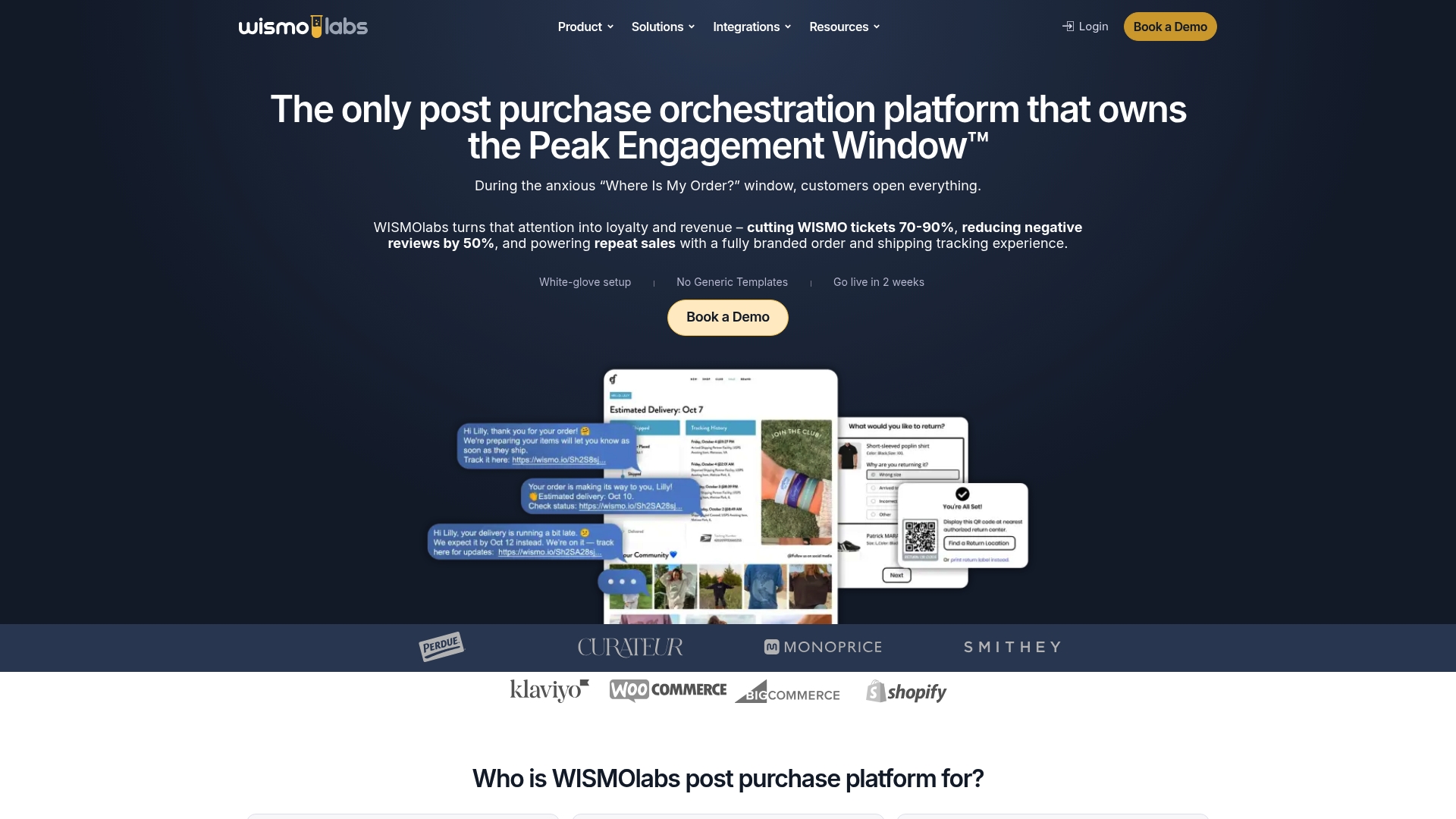
Discover how WISMOlabs can revolutionize your shipping communications and customer engagement today. Learn more at https://wismolabs.com and start turning every post-purchase touchpoint into a strategic advantage.
Frequently Asked Questions
What is the purpose of order confirmation emails in ecommerce?
Order confirmation emails serve to build trust by providing immediate validation of a customer’s purchase. Ensure you include the complete order summary, unique order number, and contact information for support to enhance customer confidence.
How can personalized recommendation emails drive more sales?
Personalized recommendation emails suggest products based on a customer’s purchase history and behavior, making them feel tailored and relevant. Use AI-driven insights to create these recommendations and include clear value propositions to encourage purchases.
What should I include in shipping notification emails to keep customers informed?
Shipping notification emails should offer key details such as tracking number, estimated delivery date, and current shipment status. Present this information clearly to help reduce customer anxiety and keep them engaged with your brand.
How can I effectively manage customer expectations with exception and delay emails?
Exception and delay emails should provide a clear explanation of the delay and a new estimated delivery timeline. Be proactive in your communication by offering potential solutions or goodwill gestures to maintain customer trust during unexpected challenges.
When is the best time to send feedback and review request emails?
The optimal time to send feedback and review request emails is shortly after a product has been received, but not too early to feel premature. Aim to send these emails within 1 to 3 weeks after purchase, depending on the product category, to maximize authenticity and response rates.
What are effective strategies for re-engagement emails to win back customers?
Re-engagement emails should highlight personalized product recommendations, exclusive rewards, or time-sensitive promotions to reignite interest. Segment your audience based on their previous interactions to tailor the messaging and maintain relevance.