Nearly 85 percent of American shoppers expect real-time shipment updates, yet many e-commerce managers still miss vital chances to connect after the purchase. Strong post-purchase engagement not only reduces customer inquiries but also helps brands stand out in crowded global markets. Discover how effective post-purchase strategies, powered by smart tracking and timely communication, turn these must-have updates into real loyalty and lasting satisfaction for both American and international customers.
Table of Contents
- Leveraging Shipment Tracking Data For Engagement
- Analyzing Customer Inquiry Patterns To Minimize Wismo Tickets
- Measuring Effectiveness Of Personalized Order Updates
- Optimizing Upsell And Cross-Sell Opportunities Post-Purchase
- Using Delivery Exception Analytics To Protect Brand Reputation
- Monitoring Review Request Timing To Increase Positive Feedback
- Evaluating Roi From Post-Purchase Communication Automation
Quick Summary
| Key Message | Explanation |
|---|---|
| 1. Utilize Shipment Tracking Data | Analyze shipment tracking to enhance customer engagement and communication strategies based on real-time insights. |
| 2. Minimize WISMO Inquiries | Employ machine learning to predict and address common customer inquiries, reducing support ticket volume. |
| 3. Measure Personalized Update Effectiveness | Use analytics to evaluate the impact of personalized order updates on customer engagement and satisfaction. |
| 4. Optimize Upselling Techniques | Analyze post-purchase behavior to provide personalized product recommendations that enhance customer experience and drive sales. |
| 5. Manage Delivery Exceptions Proactively | Implement analytics to anticipate delivery issues, transforming potential disruptions into trust-building opportunities for customers. |
1. Leveraging Shipment Tracking Data for Engagement
Shipment tracking data represents far more than simple delivery updates. It is a strategic goldmine for understanding customer behavior and creating meaningful post-purchase interactions that transform routine transactions into memorable brand experiences.
Modern e-commerce businesses can unlock powerful engagement opportunities by analyzing real-time shipment tracking insights. This data provides unprecedented visibility into customer anticipation, delivery preferences, and potential friction points throughout the purchasing journey.
By tracking metrics such as package location, estimated arrival time, and delivery confirmation, brands can create personalized communication strategies that boost customer satisfaction. The World Bank’s Logistics Performance Index reveals that businesses leveraging detailed shipment tracking can significantly improve customer engagement and build long term loyalty.
Critical tracking data points include:
Delivery Timeframe Patterns
• Average time between order and delivery
• Peak delivery windows
• Variations in shipping speed across different regions
Customer Interaction Signals
• Frequency of tracking page visits
• Time spent reviewing shipment details
• Moments of highest customer anxiety
Behavioral Insights
• Preferred communication channels
• Response rates to different update types
• Correlations between tracking engagement and future purchases
Successful implementation requires sophisticated data analysis tools that can transform raw tracking information into actionable engagement strategies. Brands must move beyond simple status updates and create meaningful touchpoints that add genuine value to the customer experience.
Pro Tip: Implement an AI-driven tracking system that not only provides updates but predicts and proactively addresses potential delivery challenges before they impact customer satisfaction.
2. Analyzing Customer Inquiry Patterns to Minimize WISMO Tickets
WISMO tickets represent a critical pain point in e-commerce customer service that directly impact operational efficiency and customer satisfaction. Understanding and minimizing these inquiries requires a strategic approach rooted in data analysis and proactive communication.
Businesses can dramatically reduce WISMO tickets by leveraging machine learning and predictive analytics to anticipate and address potential customer questions before they arise. By systematically analyzing customer contact logs and identifying recurring inquiry triggers, companies can develop targeted strategies that preemptively resolve common concerns.
Key Strategies for WISMO Ticket Reduction
Comprehensive Inquiry Pattern Analysis
• Track frequency of specific question types
• Identify common customer pain points
• Map typical customer information needs during shipping
Communication Optimization Techniques
• Implement proactive status updates
• Create clear delivery expectation messaging
• Design intuitive tracking interfaces
Technological Intervention Approaches
• Use AI powered predictive communication systems
• Develop automated response mechanisms
• Integrate real time shipment tracking capabilities
Empirical studies demonstrate that integrated data analysis approaches can significantly reduce support requests by providing timely and relevant post purchase information. The goal is not just to answer customer questions but to eliminate the need for those questions entirely.
Successful WISMO reduction requires a multifaceted approach that combines technological innovation customer understanding and strategic communication planning. By treating each potential inquiry as an opportunity for proactive engagement businesses can transform customer service from a reactive cost center into a strategic relationship building function.
Pro Tip: Implement a continuous feedback loop that systematically reviews and updates your communication strategies based on evolving customer inquiry patterns and emerging technological capabilities.
3. Measuring Effectiveness of Personalized Order Updates
Personalized order updates represent a sophisticated approach to customer communication that goes far beyond standard shipping notifications. By transforming routine tracking information into contextually relevant experiences, businesses can significantly enhance customer engagement and satisfaction.
Modern e-commerce brands can now systematically measure personalized update effectiveness through advanced analytics that provide deep insights into customer interaction and communication preferences.
Key Performance Metrics for Personalized Updates
Engagement Measurement Indicators
• Open rates for personalized messages
• Click through rates on tracking links
• Time spent viewing order update pages
• Interaction frequency with tracking interfaces
Customer Satisfaction Indicators
• Reduction in support ticket volumes
• Positive feedback percentages
• Net Promoter Score variations
• Customer retention rates post purchase
Technical Performance Parameters
• Delivery time accuracy
• Update message relevance scoring
• Cross channel communication consistency
• Personalization depth and precision
Successful personalization requires a nuanced approach that balances data driven insights with genuine customer needs. By implementing comprehensive measurement strategies, businesses can continuously refine their communication approaches and create more meaningful post purchase experiences.
The ultimate goal is transforming transactional updates into strategic touchpoints that build long term customer relationships and drive brand loyalty.
Pro Tip: Develop a dynamic scoring system that weights different engagement metrics to create a holistic view of personalized update effectiveness across multiple customer segments.
4. Optimizing Upsell and Cross-Sell Opportunities Post-Purchase
Post-purchase analytics represent a powerful strategy for transforming routine transactions into strategic revenue opportunities. By analyzing customer behavior immediately after a purchase, businesses can unlock sophisticated methods for recommending additional products that genuinely resonate with individual preferences.
Smart e-commerce brands are now leveraging machine learning techniques to identify precise upsell and cross-sell moments that feel personalized rather than intrusive.
Strategic Recommendation Frameworks
Purchase Behavior Analysis
• Examine recent product selections
• Identify complementary product categories
• Track historical purchasing patterns
• Evaluate customer segment characteristics
Recommendation Timing Strategies
• Immediate post purchase window
• Order confirmation interactions
• Shipping notification communications
• Follow up email sequences
Personalization Precision Techniques
• Match recommendations to specific transaction types
• Use granular customer profile data
• Consider purchase frequency and value
• Analyze cross category purchasing signals
Successful post purchase recommendations require a nuanced approach that balances data driven insights with authentic customer value. The goal is creating a seamless experience where additional product suggestions feel like helpful guidance rather than aggressive sales tactics.
By integrating advanced analytics with intelligent recommendation systems, businesses can transform routine transactions into opportunities for meaningful customer engagement and incremental revenue generation.
Pro Tip: Design a dynamic recommendation engine that weights multiple behavioral signals and continuously adapts its suggestion algorithms based on real time customer interaction data.
5. Using Delivery Exception Analytics to Protect Brand Reputation
Delivery exceptions represent critical moments that can make or break customer trust. Understanding and strategically managing these unexpected shipping scenarios is essential for maintaining a positive brand reputation in an increasingly competitive e-commerce landscape.
Businesses can now proactively protect their brand reputation by implementing sophisticated analytics that identify and address potential delivery disruptions before they escalate into customer frustrations.
Comprehensive Delivery Exception Categories
Shipment Interruption Types
• Package delays
• Damaged goods in transit
• Incorrect delivery address
• Lost shipment scenarios
• Weather related disruptions
• Customs clearance issues
Reputation Protection Strategies
• Real time exception tracking
• Automated customer notification systems
• Predictive intervention protocols
• Transparent communication frameworks
Analytics Driven Response Techniques
• Root cause identification
• Carrier performance evaluation
• Customer impact assessment
• Resolution pathway optimization
Successful delivery exception management requires a holistic approach that combines advanced data analytics with empathetic customer communication. By transforming potential service failures into opportunities for demonstrating customer care, brands can actually strengthen customer loyalty during challenging shipping scenarios.
The key is developing a proactive system that anticipates potential issues monitors ongoing shipment status and provides transparent timely updates that keep customers informed and reassured.
Pro Tip: Create a standardized escalation protocol for different types of delivery exceptions that empowers customer service representatives to resolve issues quickly and consistently.
6. Monitoring Review Request Timing to Increase Positive Feedback
Customer reviews are the lifeblood of e-commerce reputation management. The strategic timing of review requests can dramatically influence the sentiment and quality of feedback a business receives.
Smart brands now optimize customer review strategies by leveraging advanced AI techniques that pinpoint the precise moment when customer satisfaction peaks.
Strategic Review Request Timing Principles
Emotional Response Windows
• Immediate post delivery moments
• After successful product usage
• Following positive customer service interactions
• During peak satisfaction experiences
Critical Timing Considerations
• Product delivery confirmation
• Successful first use experience
• Minimal time for genuine product evaluation
• Avoiding customer fatigue or frustration
Psychological Engagement Factors
• Customer emotional state
• Recent positive interactions
• Perceived value of product
• Ease of review submission process
Successful review request strategies require a nuanced understanding of customer psychology. By identifying and targeting moments of peak satisfaction businesses can transform routine feedback collection into powerful brand storytelling opportunities.
The goal is creating a frictionless review experience that feels natural and rewarding rather than transactional or forced. Advanced analytics enable precise targeting that respects customer experience while maximizing positive feedback potential.
Pro Tip: Develop a dynamic scoring system that evaluates multiple signals like delivery satisfaction product interaction and customer support experiences to determine optimal review request timing.
7. Evaluating ROI from Post-Purchase Communication Automation
Post-purchase communication automation represents a transformative strategy for e-commerce businesses seeking to maximize operational efficiency and customer engagement. By systematically measuring the financial impact of automated communication workflows, companies can unlock significant strategic advantages.
Businesses can now quantify communication automation returns through sophisticated analytical frameworks that assess multiple dimensions of operational performance and customer experience.
Key ROI Measurement Dimensions
Operational Cost Reduction
• Manual customer service labor expenses
• Reduction in support ticket processing time
• Efficiency gains from automated workflows
• Technology implementation cost savings
Customer Experience Metrics
• Customer satisfaction score improvements
• Repeat purchase rate increases
• Reduced customer churn percentages
• Average time between purchases
Financial Performance Indicators
• Revenue generated from automated upsells
• Cost per customer communication
• Lifetime customer value enhancement
• Marketing communication efficiency
Successful ROI evaluation requires a holistic approach that combines quantitative financial metrics with qualitative customer experience insights. Advanced AI technologies enable businesses to create intelligent communication systems that adapt and optimize in real time.
By treating post-purchase communication as a strategic investment rather than an operational expense, companies can transform customer interactions into meaningful revenue generation opportunities.
Pro Tip: Develop a comprehensive scorecard that tracks both hard financial metrics and soft customer experience indicators to create a nuanced understanding of communication automation performance.
Below is a comprehensive table summarizing the key trends, strategies, and insights presented in the article regarding post-purchase interactions and data-driven engagement techniques for e-commerce businesses.
| Topic | Details | Benefits |
|---|---|---|
| Shipment Tracking | Analyzing delivery data for customer insights. | Enhanced satisfaction via proactive updates and personalized engagements. |
| WISMO Ticket Reduction | Addressing frequent customer inquiries with predictive analytics. | Decreased service loads and improved operational efficiency. |
| Personalized Updates | Crafting order alerts tailored to individual preference. | Strengthened brand loyalty through relevant customer communication. |
| Upselling Post-Purchase | Leveraging behavioral data to suggest additional purchases. | Increased revenue from well-timed, context-aware recommendations. |
| Delivery Exception Handling | Managing shipment delays or issues with strategic transparency. | Improved brand reputation and maintained customer trust. |
| Review Timing Optimization | Strategically timing feedback requests based on client satisfaction peaks. | Higher quality reviews and customer connection reinforcement. |
| Automation ROI Analysis | Measuring gains from automated customer communication systems. | Increased efficiency, cost reduction, and enhanced customer relationship management. |
Unlock the Full Potential of Your Post-Purchase Analytics with WISMOlabs
The article highlights critical challenges like reducing WISMO tickets, delivering personalized order updates, and optimizing upsell opportunities during the crucial Peak Engagement Window™. If you are seeking to transform post-purchase data into actionable insights that delight customers while protecting your brand reputation, you need a solution that goes beyond simple shipment tracking.
WISMOlabs is designed precisely for these goals. Our intelligent platform uses AI-powered analytics to evaluate real-time shipment context alongside customer behavior and order data. This lets you deliver high-value, personalized communication exactly when it matters most-turning transactional updates into strategic growth drivers. By leveraging proprietary features like Smart Masks, Data Learning, and our Reputation Guard logic, WISMOlabs achieves a 70-90% reduction in WISMO tickets and drives a 15-30x ROI through personalized upsell and cross-sell campaigns.
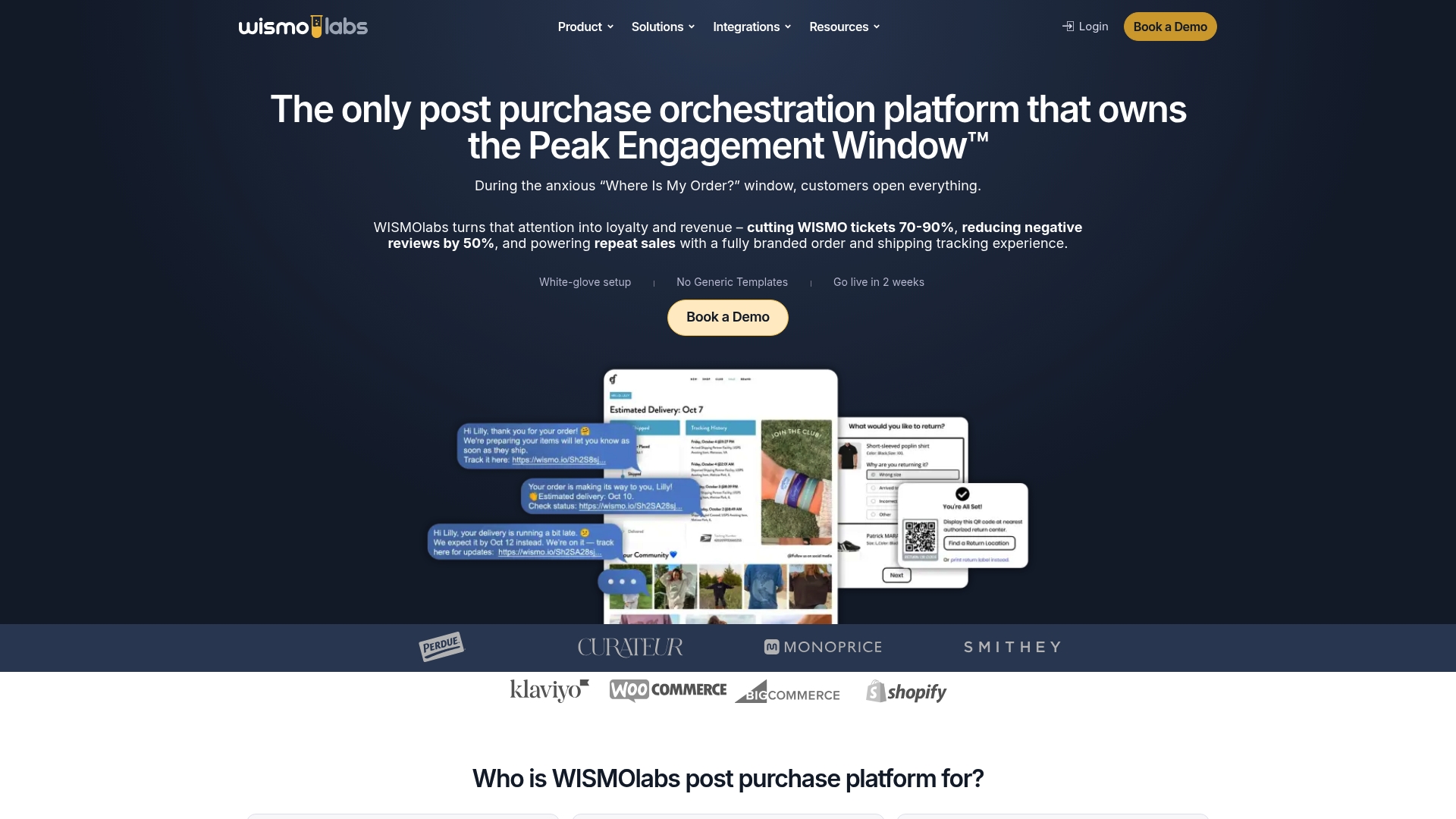
Don’t let vague tracking data or overwhelming customer inquiries hold your brand back. Experience how WISMOlabs can optimize your post-purchase journey with advanced decision-layer orchestration. Visit WISMOlabs to transform customer engagement and boost revenue today. Explore how our post-purchase orchestration platform aligns perfectly with best practices in post-purchase analytics and see why leading retailers trust us to solve complex challenges effectively.
Frequently Asked Questions
What are the key post-purchase analytics examples I should focus on for my e-commerce business?
To maximize e-commerce success, focus on metrics like shipment tracking data, WISMO ticket analysis, personalized order updates, upsell and cross-sell opportunities, delivery exception analytics, review request timing, and ROI from communication automation. Identify which analytics most align with your business goals to enhance customer engagement and satisfaction.
How can I use shipment tracking data to improve customer engagement?
Use shipment tracking data to create personalized communication touchpoints by analyzing key metrics like delivery timeframes and customer interaction signals. Implement an AI-driven tracking system that anticipates potential delivery challenges, which can lead to increased customer satisfaction and loyalty.
What strategies can help reduce WISMO tickets in my customer service?
Implement comprehensive inquiry pattern analysis to identify frequent questions and pain points. By optimizing communication with proactive updates and clear delivery messaging, you can preemptively address customer concerns and potentially reduce WISMO tickets by around 30%.
How do I effectively measure the impact of personalized order updates?
To measure personalized order updates’ effectiveness, track engagement indicators such as open rates, click-through rates, and customer satisfaction scores. Regularly analyze these metrics to refine your communication approach and enhance the customer experience over time.
What techniques can I use for effective upsell and cross-sell opportunities after a purchase?
Analyze customer behavior immediately after purchase to recommend additional products effectively. Use historical purchase patterns and timing strategies, such as sending suggestions in follow-up emails, to enhance the relevance of your recommendations and increase post-purchase sales by approximately 15%.
How can I evaluate the ROI of post-purchase communication automation?
Evaluate ROI by measuring reductions in operational costs, increases in customer satisfaction, and the financial impact of automated communication workflows. Develop a scorecard that tracks both financial metrics and customer experience indicators to gain a holistic understanding of the effectiveness of your automation efforts.