Every Ecommerce manager knows the challenge of turning post-purchase silence into lasting customer loyalty. Setting clear engagement metrics not only shapes actionable goals, but also drives strategic improvement. By emphasizing specific performance measurement frameworks, you gain insights into satisfaction, repeat purchases, and overall order accuracy. This approach helps DTC brands build a smarter post-purchase journey, reducing WISMO inquiries and strengthening every customer relationship.
Table of Contents
- Step 1: Define Post-Purchase Objectives And Engagement Metrics
- Step 2: Integrate Real-Time Order And Customer Data Sources
- Step 3: Configure AI-Driven Communication Decision Rules
- Step 4: Activate Branded, Strategic Customer Notifications
- Step 5: Monitor Engagement And Optimize Journey Flows
Quick Summary
| Key Point | Explanation |
|---|---|
| 1. Define Clear Objectives | Establish post-purchase objectives to enhance customer satisfaction and loyalty through precise engagement metrics. |
| 2. Integrate Real-Time Data | Create a unified data ecosystem for a seamless, personalized post-purchase experience by connecting various customer touchpoints. |
| 3. Utilize AI-Driven Communication | Implement intelligent communication that adapts to customer behaviors, enhancing personalization and engagement. |
| 4. Activate Strategic Notifications | Transform shipping updates into valuable engagement opportunities that reinforce brand identity and improve customer relationships. |
| 5. Monitor and Optimize Engagement | Continuously track customer behavior to refine communication strategies and enhance the overall customer journey experience. |
Step 1: Define post-purchase objectives and engagement metrics
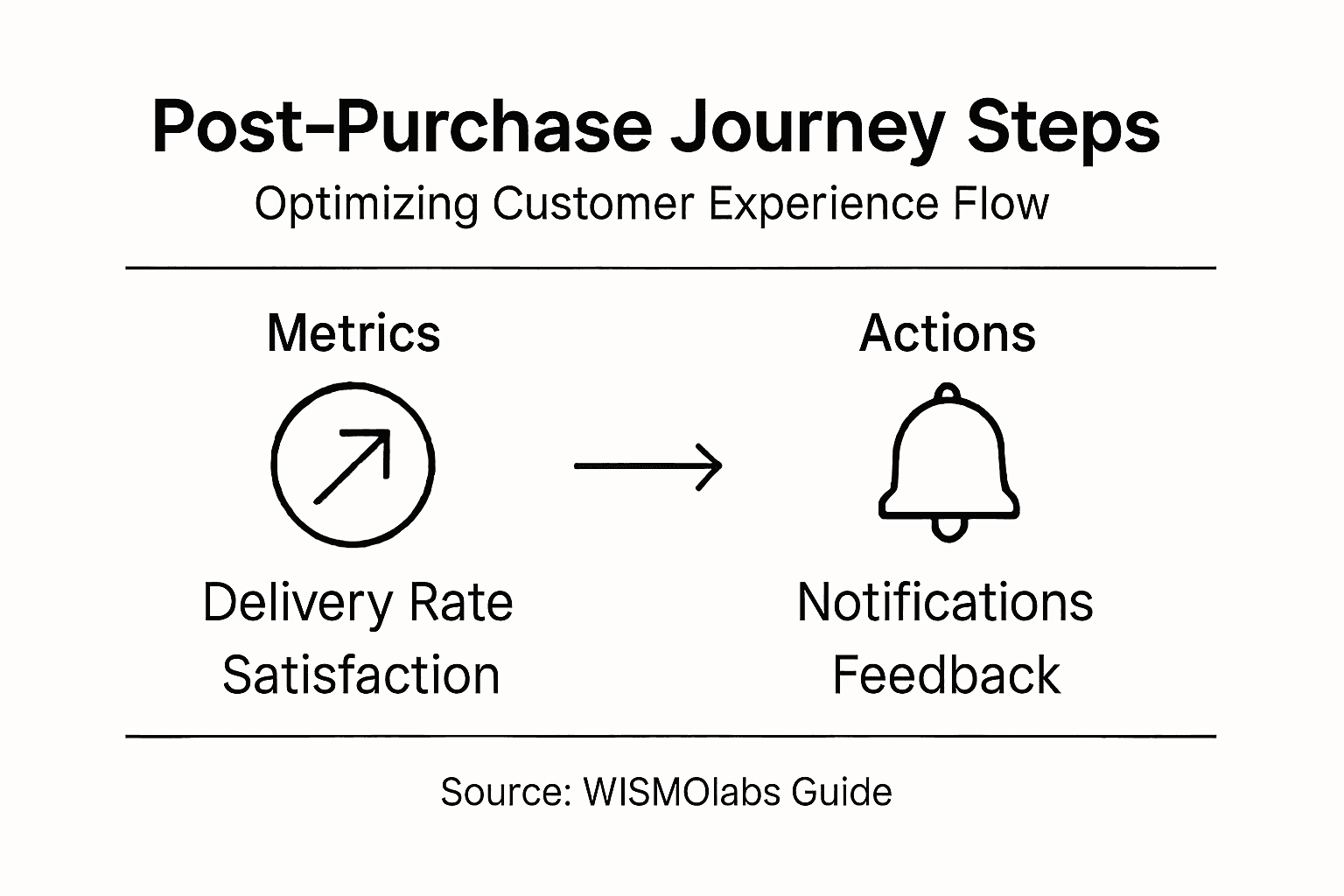
Defining clear post-purchase objectives and engagement metrics is crucial for transforming your customer experience from transactional to strategic. By establishing precise measurements, you can track customer satisfaction, optimize interactions, and drive long-term loyalty.
To develop robust post-purchase objectives, start by identifying key performance indicators (KPIs) that align with your business goals. The most effective approach involves creating specific performance measurement frameworks that capture multiple dimensions of customer engagement. These metrics should cover:
- Order Accuracy: Percentage of orders fulfilled correctly
- Delivery Performance: Average shipping times and on-time delivery rates
- Customer Satisfaction: Net Promoter Score (NPS) and feedback ratings
- Repeat Purchase Rate: Percentage of customers making subsequent purchases
- Engagement Duration: Time spent interacting with post-purchase communications
Each metric provides unique insights into different aspects of the customer journey. For instance, tracking delivery performance helps identify operational bottlenecks, while repeat purchase rates indicate overall customer loyalty. By measuring procurement KPIs strategically, you can proactively address potential friction points and continuously improve the customer experience.

Here’s a summary comparing key post-purchase engagement metrics and their business impact:
| Metric | What It Measures | Example Benefit |
|---|---|---|
| Order Accuracy | Fulfillment precision | Fewer returns and increased trust |
| Delivery Performance | Speed and reliability of shipping | Higher satisfaction, reduced support calls |
| Customer Satisfaction | Overall experience rating | Better retention and word-of-mouth |
| Repeat Purchase Rate | Level of ongoing loyalty | Increased lifetime value per customer |
| Engagement Duration | How long customers interact | More upsell opportunities, deeper loyalty |
Remember: Metrics are most powerful when they drive actionable improvements, not just record historical data.
Pro tip: Regularly review and recalibrate your post-purchase metrics every quarter to ensure they remain aligned with evolving customer expectations and business objectives.
Step 2: Integrate real-time order and customer data sources
Integrating real-time order and customer data sources is critical for creating a seamless post-purchase experience that delivers personalized and timely interactions. By establishing a unified data ecosystem, you can transform fragmented information into a comprehensive customer journey map.
The process begins with implementing continuous data integration strategies that connect multiple systems and platforms. Your integration framework should focus on several key components:
- Data Source Identification: Mapping all customer touchpoints
- API Connection Management: Establishing secure data pathways
- Data Cleansing Protocols: Ensuring information accuracy and consistency
- Unified Customer Profile Creation: Consolidating interactions across channels
- Real-Time Synchronization: Enabling instant updates and notifications
Successful integration requires a strategic approach to connecting customer data platforms with existing order management systems. This involves selecting compatible technologies, creating robust API connections, and implementing governance practices that maintain data integrity while enabling seamless information flow.
Remember: The goal of data integration is not just collecting information, but transforming it into actionable insights that enhance customer experience.
Pro tip: Conduct periodic data integration audits to identify potential bottlenecks and ensure your systems remain agile and responsive to changing customer expectations.
Step 3: Configure AI-driven communication decision rules
Configuring AI-driven communication decision rules transforms your post-purchase experience from reactive messaging to intelligent, personalized customer engagement. By implementing sophisticated algorithms, you can create a dynamic communication framework that adapts to individual customer behaviors and preferences.
The foundation of effective AI communication rules begins with developing transparent decision support systems that balance technological precision with customer trust. Your configuration should incorporate multiple strategic components:
- Behavioral Trigger Mapping: Identifying specific customer actions that initiate communications
- Contextual Relevance Scoring: Evaluating the appropriateness of each message
- Channel Preference Learning: Dynamically adjusting communication channels
- Personalization Depth: Tailoring message content based on individual customer profiles
- Engagement Frequency Optimization: Preventing communication fatigue
Successful implementation requires designing adaptive AI decision frameworks that continuously learn and refine communication strategies based on real-time customer interactions and feedback.
The table below highlights the difference between traditional and AI-driven post-purchase communication approaches:
| Approach | Characteristics | Outcomes |
|---|---|---|
| Traditional | Manual, standardized messaging | Low personalization, inconsistent timing |
| AI-Driven | Rules-based, adaptive messaging | Tailored communication, stronger loyalty |
Remember: AI-driven communication is about creating meaningful connections, not just sending more messages.
Pro tip: Implement a quarterly review process to audit and recalibrate your AI communication rules, ensuring they remain aligned with evolving customer expectations and business objectives.
Step 4: Activate branded, strategic customer notifications
Activating branded, strategic customer notifications transforms routine shipping updates into powerful engagement opportunities that reinforce your brand identity and customer relationship. By crafting intentional, personalized communication strategies, you can turn every notification into a meaningful touchpoint that adds value beyond basic transactional information.
The process begins with designing branded notification experiences that align perfectly with your brand voice and customer expectations. Your notification strategy should encompass several critical elements:
- Brand Voice Consistency: Maintaining uniform messaging tone
- Contextual Relevance: Delivering timely, meaningful updates
- Personalization Depth: Tailoring content to individual customer profiles
- Strategic Timing: Identifying optimal communication windows
- Value-Added Messaging: Including helpful additional information
Successful implementation requires developing strategic notification frameworks that go beyond simple delivery alerts. Your notifications should serve multiple purposes: keeping customers informed, reinforcing brand trust, and creating opportunities for additional engagement.
Remember: Every notification is a chance to strengthen your customer relationship, not just share information.
Pro tip: Create a notification content library with pre-approved message templates that maintain brand consistency while allowing for dynamic personalization.
Step 5: Monitor engagement and optimize journey flows
Monitoring customer engagement and optimizing journey flows is essential for transforming post-purchase interactions from static transactions into dynamic, responsive experiences. By systematically tracking and analyzing customer behavior, you can continuously refine your communication strategies and eliminate potential friction points.
The foundation of effective engagement monitoring begins with developing comprehensive tracking frameworks that capture nuanced customer interactions across multiple touchpoints. Your monitoring approach should encompass several critical dimensions:
- Behavioral Pattern Analysis: Tracking customer interaction sequences
- Engagement Depth Measurement: Quantifying interaction quality and duration
- Friction Point Identification: Detecting potential experience disruptions
- Predictive Performance Indicators: Anticipating future customer behaviors
- Real-Time Optimization Triggers: Enabling immediate journey adjustments
Successful implementation requires creating holistic journey mapping strategies that integrate both quantitative metrics and qualitative insights. This approach allows you to visualize the entire customer experience, understanding not just what happens but why it happens.
Remember: Effective journey optimization is about continuous learning, not just data collection.
Pro tip: Implement a quarterly journey review process that combines data analytics with direct customer feedback to ensure your optimization strategies remain responsive and customer-centric.
Elevate Your Customer Post-Purchase Journey with Intelligent Orchestration
The article highlights the challenge of turning post-purchase interactions into strategic opportunities that boost customer loyalty and satisfaction. Key pain points such as fragmented data, inconsistent communication timing, and lack of personalization can lead to increased customer anxiety and lower repeat purchase rates. Concepts like real-time data integration, AI-driven communication decision rules, and branded strategic notifications are essential to creating a seamless customer experience that exceeds expectations.
WISMOlabs addresses these challenges by providing an intelligent post-purchase orchestration platform designed to act as a sophisticated “Decision Layer.” Our technology goes beyond reactive updates by evaluating real-time shipment context alongside order and behavioral data to deliver personalized, well-timed communications during the crucial Peak Engagement Window™. This results in a 70-90% reduction in “Where Is My Order?” tickets and a 50% decrease in negative reviews while driving a 15-30x ROI through targeted upsells and cross-sells.
Discover how WISMOlabs can transform routine shipping notifications into a unified engine for customer loyalty and revenue growth. Experience seamless integration with platforms like Shopify, BigCommerce, Magento, and Salesforce. Learn more about our innovative solutions at WISMOlabs.
Enhance your post-purchase strategy today with data-driven customer engagement that works smarter, not harder.
Boost your post-purchase communications to deliver value when it matters most
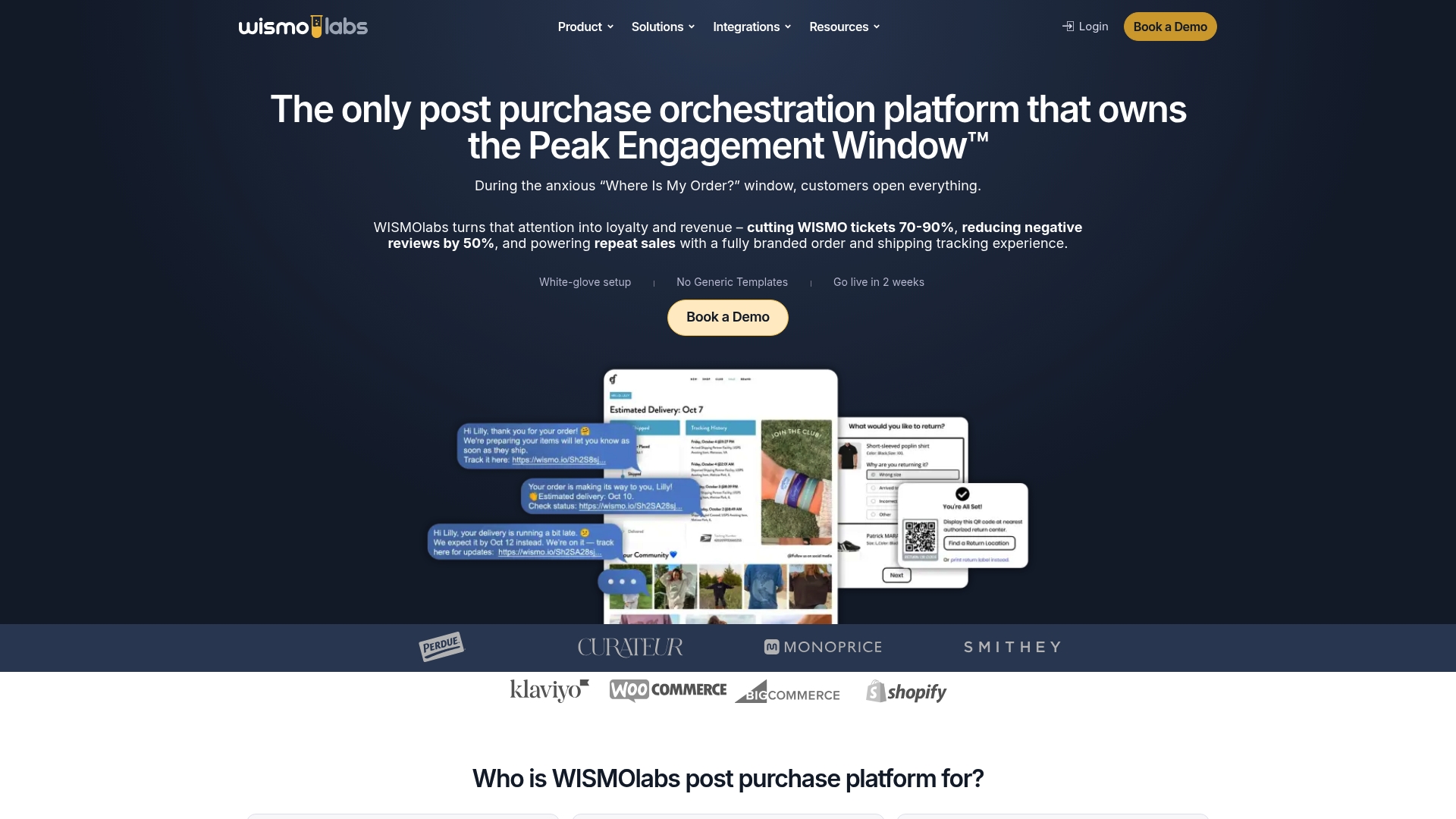
Ready to eliminate redundant messaging and create a strategic post-purchase experience that delights customers? Visit WISMOlabs now to see how our AI-driven platform can revolutionize your customer journey and grow your business.
Frequently Asked Questions
What are key post-purchase objectives I should define?
Defining key post-purchase objectives involves identifying performance metrics such as Order Accuracy and Customer Satisfaction. Start by focusing on how these metrics align with your business goals and customer expectations to enhance long-term loyalty.
How can I integrate real-time data sources into my post-purchase strategy?
To integrate real-time data sources, begin by mapping out all customer touchpoints and establishing secure API connections across systems. This allows for real-time synchronization, which can improve the customer experience significantly within weeks of implementation.
What are AI-driven communication decision rules and how do I configure them?
AI-driven communication decision rules automate personalized messaging based on customer behaviors and preferences. Configure these rules by mapping behavioral triggers and scoring the relevance of each message to improve customer engagement without overwhelming them.
How do I create effective branded customer notifications?
To create effective branded customer notifications, focus on aligning your messaging with your brand voice and delivering timely updates. Include personalized content that provides value, and consider optimizing the timing of your notifications for better engagement.
What monitoring strategies should I use to optimize customer journey flows?
Implement comprehensive tracking frameworks that analyze customer behaviors and identify friction points. Regularly review these insights to make real-time adjustments to your journey flows, enhancing the customer experience consistently.
How often should I recalibrate my post-purchase metrics?
Recalibrating your post-purchase metrics should occur at least quarterly to ensure they remain aligned with evolving customer expectations. Regular reviews help adapt your strategies effectively and maintain high customer satisfaction levels.