Over 80 percent of American ecommerce brands struggle to turn first-time buyers into loyal customers. Accurate customer profiles are now essential for retaining engagement in a crowded online marketplace. Understanding how to build, segment, and use these profiles allows digital marketing teams and brand managers to craft post-purchase communication that is both relevant and effective, giving your business a real chance to drive repeat sales and lasting loyalty.
Table of Contents
- Defining Customer Profiles In Ecommerce
- Segmentation And Types Of Customer Profiles
- How Profiles Shape Post-Purchase Engagement
- Personalization Tactics For Post-Purchase Journey
- Impact On Retention And Revenue Growth
- Avoiding Pitfalls And Common Missteps
Key Takeaways
| Point | Details |
|---|---|
| Customer Profiles Enhance Targeting | Leveraging customer profiles allows businesses to implement personalized marketing strategies that significantly improve engagement and customer experience. |
| Advanced Segmentation Drives Revenue | Utilizing sophisticated segmentation techniques enables businesses to focus on high-value customer groups, optimizing resource allocation and maximizing ROI. |
| Ongoing Data Management is Essential | Maintaining accurate and up-to-date customer profiles is crucial to effective profiling, requiring robust data validation processes and ethical oversight. |
| Personalization Boosts Retention | Tailored post-purchase experiences can dramatically increase repeat purchase rates and overall customer lifetime value, fostering long-term relationships. |
Defining Customer Profiles in Ecommerce
In the dynamic world of online retail, customer profiles represent comprehensive digital representations of individual consumers, capturing their unique characteristics, behaviors, and preferences. Customer profiling in e-commerce involves collecting detailed information through systematic data gathering across multiple digital touchpoints, enabling businesses to construct nuanced understanding of their customer base.
These profiles go beyond traditional demographic segmentation by integrating behavioral data, purchase history, browsing patterns, and interaction metrics. Businesses can extract critical insights by analyzing how customers navigate websites, what products they view, which items they ultimately purchase, and their engagement levels across different marketing channels. The goal is to transform raw data into actionable intelligence that drives personalized marketing strategies and enhances customer experience.
Modern e-commerce customer profiles typically encompass several key dimensions: demographic information (age, location, gender), behavioral data (purchasing frequency, average order value), psychographic insights (lifestyle preferences, brand affinities), and transactional history. By synthesizing these elements, companies can develop predictive models that anticipate customer needs, customize communication approaches, and design targeted promotional campaigns that resonate with specific customer segments.
Pro Tip: Regularly update your customer profiles by implementing dynamic data collection mechanisms that capture evolving consumer preferences and behaviors.
Segmentation and Types of Customer Profiles
Customer segmentation represents a strategic approach to dividing a diverse customer base into meaningful groups with shared characteristics. Customer segmentation methods typically follow a comprehensive four-phase process involving data collection, customer representation, analytical evaluation, and targeted marketing strategies. By breaking down the broader customer population into distinct segments, businesses can develop more precise and effective engagement approaches.
The primary types of customer profiles in e-commerce generally encompass several key classifications. Behavioral segments focus on purchasing patterns, frequency, and engagement levels. Demographic segments categorize customers by age, gender, income, and geographic location. Psychographic segments explore deeper dimensions like lifestyle preferences, personal values, and attitudinal characteristics. Value-based segments assess customers according to their potential lifetime value, purchasing power, and long-term revenue generation potential.
Here’s a concise overview of the key types of customer profiles and how they influence ecommerce strategy:
| Profile Type | Core Focus | Business Impact |
|---|---|---|
| Demographic | Age, gender, location | Basic targeting, broad outreach |
| Behavioral | Purchase & browsing data | Personalized offers, product suggestions |
| Psychographic | Values, lifestyle, interests | Brand loyalty, tailored engagement |
| Value-Based | Lifetime value, spend | Prioritized retention, high ROI |
Advanced segmentation techniques leverage sophisticated data analytics to create nuanced, dynamically updated customer profiles. These approaches move beyond static categorizations, utilizing machine learning algorithms and predictive modeling to identify complex behavioral patterns and anticipate future customer actions. Some sophisticated segmentation strategies include clustering analysis, regression modeling, and hybrid approaches that combine multiple analytical techniques to generate comprehensive customer insights.
Pro Tip: Implement a continuous feedback loop in your segmentation strategy that allows for real-time profile updates and refinement based on the most recent customer interaction data.
How Profiles Shape Post-Purchase Engagement
Customer profiles serve as powerful strategic tools that transform the post-purchase landscape by enabling highly personalized and contextually relevant interactions. Personalized marketing strategies leverage detailed customer data to create targeted engagement approaches that go far beyond traditional one-size-fits-all communication methods. By understanding individual customer characteristics, businesses can craft communications that feel uniquely tailored and genuinely responsive to each customer’s specific needs and preferences.

The core mechanism of profile-driven engagement involves transforming raw transactional data into actionable insights. Different customer segments receive distinctly customized post-purchase experiences based on their behavioral patterns, purchase history, and predicted future interactions. For instance, high-value customers might receive premium follow-up communications with exclusive offers, while first-time buyers could receive educational content designed to build brand trust and encourage repeat purchases. This nuanced approach ensures that each customer interaction feels intentional and personally relevant.
Advanced customer profiles enable sophisticated post-purchase strategies that extend well beyond initial transaction follow-ups. By integrating predictive analytics and machine learning, businesses can anticipate customer needs, proactively address potential concerns, and design engagement pathways that naturally guide customers toward future purchases. These dynamic profiles continuously evolve, capturing new behavioral signals and refining understanding of individual customer preferences, thereby creating increasingly precise and effective engagement mechanisms.
Pro Tip: Implement a comprehensive data collection framework that captures multi-dimensional customer interactions, ensuring your profiles remain dynamic and reflective of real-time customer behavior.
Personalization Tactics for Post-Purchase Journey
The post-purchase journey represents a critical opportunity for businesses to deepen customer relationships through strategic personalization techniques. Personalization tactics encompass a sophisticated array of targeted approaches designed to create meaningful, individualized interactions that extend far beyond the initial transaction. By leveraging comprehensive customer data, businesses can craft engagement strategies that feel uniquely tailored to each customer’s specific preferences, behaviors, and potential future needs.
Effective personalization strategies typically involve multiple interconnected touchpoints. These may include customized email communications that reflect recent purchase history, intelligent product recommendations based on previous buying patterns, personalized loyalty program offers, and proactively designed customer support experiences. For high-value customers, this might mean exclusive early access to new products, while first-time buyers could receive educational content that builds brand trust and demonstrates ongoing value. The key is creating a seamless, adaptive experience that makes each customer feel genuinely understood and appreciated.
Below is a comparison of common personalization tactics and their benefits for post-purchase engagement:
| Tactic | Description | Expected Outcome |
|---|---|---|
| Personalized Emails | Custom content based on purchases | Higher open rates, repeat buys |
| Smart Product Recs | Suggestions from browsing history | Increased basket value |
| Loyalty Offers | Custom rewards for engagement | Stronger brand affinity |
| Proactive Support | Targeted help post-purchase | Fewer complaints, higher trust |
Advanced personalization goes beyond simple segmentation by utilizing dynamic data analytics and predictive modeling. Machine learning algorithms continuously analyze customer interactions, refining understanding of individual preferences and anticipating potential future needs. This approach allows businesses to move from reactive communication to proactive engagement, delivering precisely timed and contextually relevant messages that increase customer satisfaction, encourage repeat purchases, and ultimately build long-term loyalty. By treating each customer interaction as an opportunity for personalized connection, companies can transform transactional relationships into meaningful, enduring partnerships.
Pro Tip: Develop a flexible personalization framework that can rapidly adapt to changing customer signals and integrate insights across multiple data collection channels.
Impact on Retention and Revenue Growth
Customer profiles drive significant financial performance by transforming raw transactional data into strategic revenue generation mechanisms. Personalized retention strategies enable businesses to create targeted approaches that substantially increase customer lifetime value and reduce costly churn rates. By understanding individual customer behaviors and preferences, companies can design precision-driven interventions that directly impact bottom-line growth.
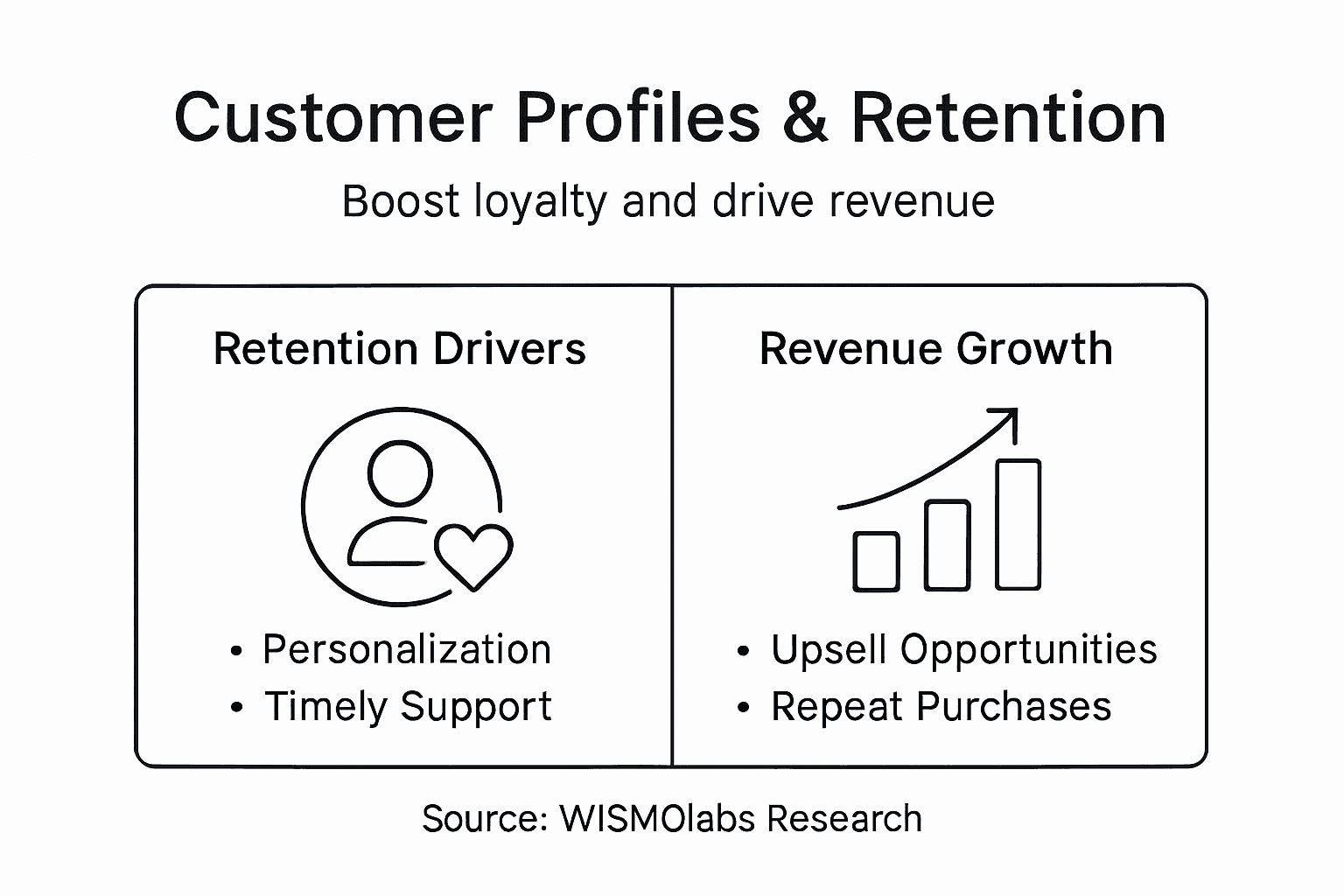
The financial impact of sophisticated customer profiling extends beyond simple marketing tactics. Advanced segmentation allows businesses to allocate resources more efficiently, focusing retention efforts on high-value customer groups that provide the most significant return on investment. For instance, predictive modeling can identify customers with the highest potential for repeat purchases, enabling companies to develop customized engagement strategies that incrementally increase average order values and purchase frequencies.
Retention economics reveal that even modest improvements in customer loyalty can generate exponential revenue growth. Businesses that successfully leverage detailed customer profiles can expect to see dramatic improvements in key performance metrics. Studies consistently demonstrate that personalized post-purchase experiences can increase repeat purchase rates by 20-40%, reduce customer acquisition costs, and create more stable, predictable revenue streams. By treating each customer interaction as an opportunity for deepening relationship and understanding, companies transform transactional relationships into long-term, mutually beneficial partnerships.
Pro Tip: Implement a dynamic scoring system that continuously evaluates customer profiles and automatically adjusts retention strategies based on evolving behavioral signals.
Avoiding Pitfalls and Common Missteps
Customer profiling strategies are complex systems vulnerable to several critical errors that can undermine their effectiveness and credibility. Customer profile missteps frequently stem from data management challenges, ethical oversights, and oversimplification of customer insights. Recognizing and proactively addressing these potential pitfalls is essential for maintaining the integrity and utility of customer profiling approaches.
One of the most significant risks involves data quality and management. Outdated, incomplete, or inaccurately collected customer information can lead to misguided segmentation and ineffective marketing strategies. Companies must implement robust data validation processes that continuously verify and update customer profiles. This includes cross-referencing multiple data sources, establishing clear data collection protocols, and creating mechanisms for customers to review and modify their own profile information. Rigid classification systems that fail to adapt to changing customer behaviors can quickly become obsolete, rendering sophisticated profiling efforts ineffective.
Ethical considerations represent another critical dimension of customer profiling. Businesses must navigate complex privacy regulations and maintain transparent communication about data usage. This involves obtaining explicit consent for data collection, providing clear opt-out mechanisms, and ensuring that customer information is protected with state-of-the-art security measures. Over-aggressive profiling that feels invasive can erode customer trust, potentially causing more harm than good. Successful customer profiling requires a delicate balance between gathering meaningful insights and respecting individual privacy boundaries.
Pro Tip: Develop a comprehensive data governance framework that includes regular audits, transparent consent processes, and flexible profile management tools to maintain ethical and effective customer profiling practices.
Unlock the Power of Customer Profiles to Elevate Post-Purchase Engagement
Understanding detailed customer profiles is crucial for driving effective post-purchase retention and revenue growth. The article highlights key challenges such as avoiding generic communication, delivering personalized experiences during the Peak Engagement Window™, and leveraging behavioral and transactional data to reduce customer anxiety and increase loyalty. These goals align with the need for dynamic, decision-centric communication strategies that transform the post-purchase journey into a strategic advantage.
WISMOlabs provides an intelligent post-purchase orchestration platform designed precisely to meet these challenges. By analyzing customer profiles alongside real-time shipment context, WISMOlabs ensures your messaging is timely, relevant, and personalized at every touchpoint. This proactive approach decreases “Where Is My Order?” tickets by up to 90 percent and increases revenue through tailored upsells and cross-sells, converting critical post-purchase moments into sustained growth opportunities.
Take control of your post-purchase experience today by exploring how our platform enhances customer retention and boosts your bottom line. Discover more about our solution at WISMOlabs and learn how to build on the insights from customer profiles in e-commerce to create powerful, personalized journeys.
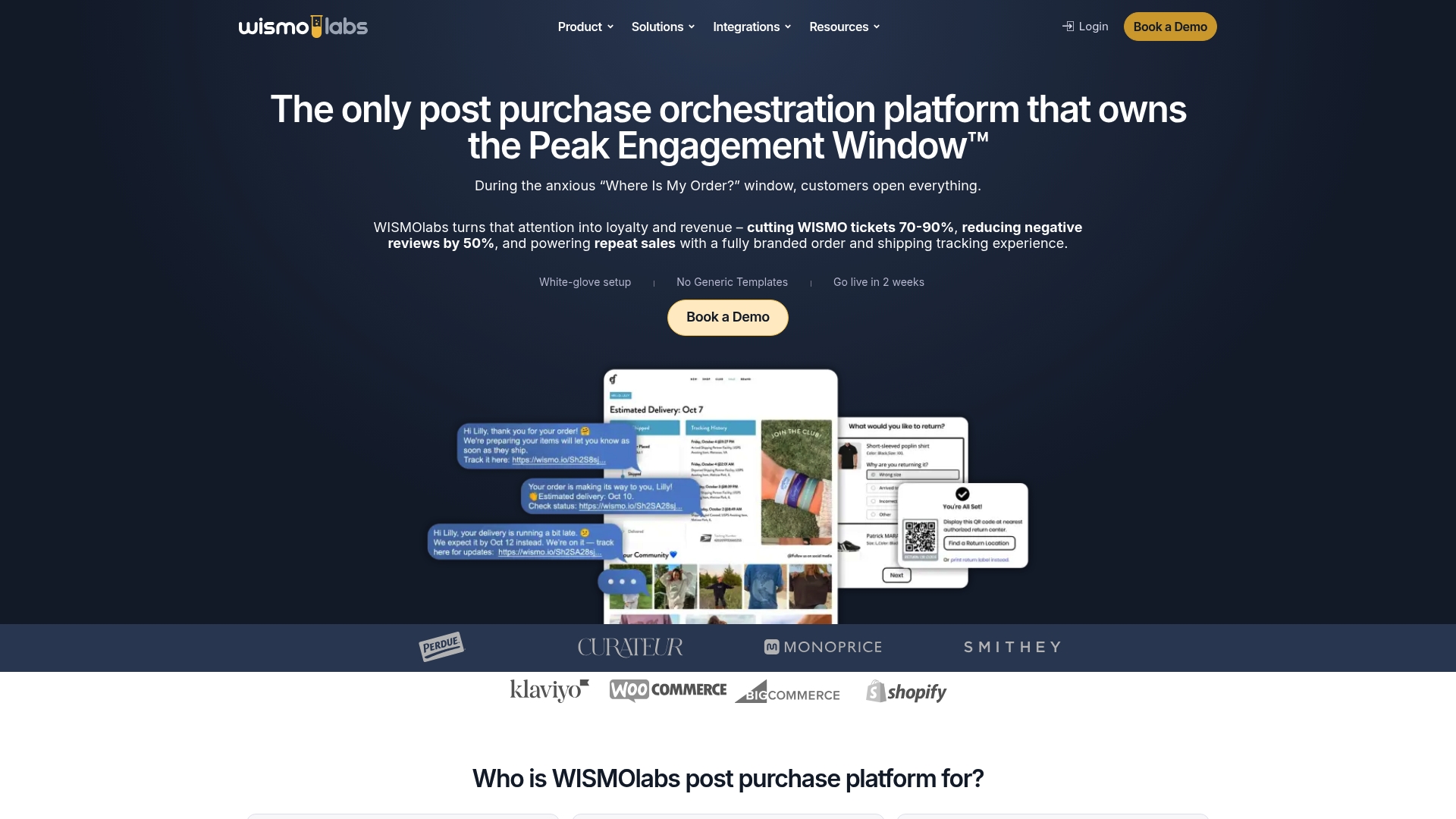
Start transforming your post-purchase strategy now with WISMOlabs. Visit https://wismolabs.com to learn more and request a demo that puts intelligent customer profiling into action.
Frequently Asked Questions
What are customer profiles in the context of post-purchase engagement?
Customer profiles are comprehensive digital representations of individual consumers that include their characteristics, behaviors, and preferences. They help businesses understand customer interactions and shape targeted post-purchase communications.
How do customer profiles enhance retention strategies?
Customer profiles enable businesses to tailor interactions based on unique customer behaviors and preferences, fostering personalized experiences that can increase customer loyalty and repeat purchases.
What types of data are typically included in customer profiles?
Customer profiles usually encompass demographic information, behavioral data (like purchase frequency), psychographic insights (such as lifestyle preferences), and transactional history.
Why is it important to consistently update customer profiles?
Regularly updating customer profiles is vital to capture evolving consumer preferences and behaviors, ensuring marketing strategies remain relevant and effective in engaging customers post-purchase.