Over half of American online shoppers expect real time tracking updates every step of their order journey. Meeting these expectations can make or break a brand’s reputation, especially as WISMO inquiries flood support teams and slow down operations. For ecommerce brand managers at mid-sized retailers, mastering post-purchase communication is no longer optional. This guide explores how to create seamless branded tracking experiences that build customer trust, reduce support volume, and set your store apart on a global stage.
Table of Contents
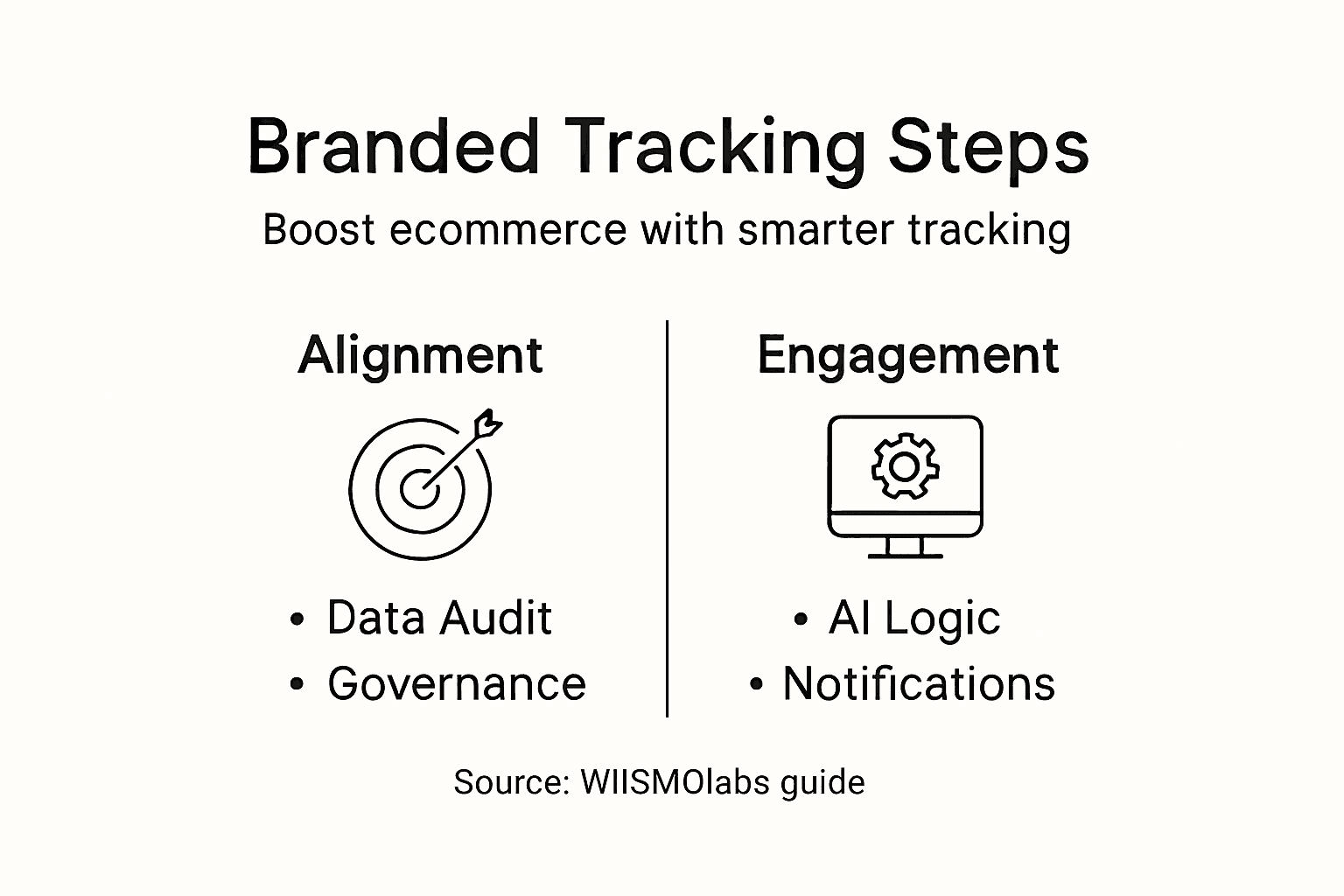
- Step 1: Align Platform Data With Branded Tracking Requirements
- Step 2: Configure Decision Layer Logic For Proactive Communications
- Step 3: Integrate Intelligent Notification Systems And Upsell Triggers
- Step 4: Test Branded Tracking Across Multiple Shipping Scenarios
- Step 5: Monitor Branded Tracking KPIs And Refine For Optimal Results
Quick Summary
| Important Insight | Explanation |
|---|---|
| 1. Conduct a Comprehensive Data Audit | Identify inconsistencies in customer data across platforms to enhance reliability and improve overall tracking accuracy. |
| 2. Establish a Standardized Governance Framework | Implement rules for data formatting to ensure consistent representation, facilitating a unified customer experience. |
| 3. Implement AI-Driven Communication Strategies | Utilize real-time data to foster proactive customer communications, enhancing engagement and reducing uncertainty about orders. |
| 4. Create Intelligent Notification Systems | Integrate systems to automate upsell suggestions based on customer behavior, balancing tracking updates with monetization opportunities. |
| 5. Monitor and Refine Key Performance Indicators | Regularly analyze tracking KPIs to inform improvements, focusing on customer experience and operational efficiency. |
Step 1: Align platform data with branded tracking requirements
Successfully aligning platform data with branded tracking requirements means creating a unified, consistent data strategy that transforms fragmented customer experiences into seamless journeys. Your goal is to integrate data sources strategically to deliver precise, personalized tracking information.
To achieve this alignment, start by conducting a comprehensive data audit across your existing platforms. Cross platform data architecture requires understanding how different systems collect, store, and communicate customer information. Map out your current data touchpoints, identifying inconsistencies in taxonomy, metadata standards, and integration points. Pay special attention to how order details, shipping information, customer profiles, and tracking updates are currently managed.
Next, develop a standardized data governance framework that ensures consistent data representation across all platforms. This means establishing clear rules for data formatting, creating uniform metadata schemas, and implementing automated validation processes. Your framework should support real time data synchronization while maintaining high standards of accuracy and reliability.
Pro tip: Invest in middleware solutions that can automatically translate and normalize data between different platform architectures, reducing manual intervention and minimizing potential errors.
Here is a summary of key components for successful branded tracking data alignment:
| Component | Role in Alignment | Business Impact |
|---|---|---|
| Data Audit | Identifies inconsistencies | Improves data reliability |
| Governance Framework | Standardizes representation | Ensures uniform customer experience |
| Middleware Integration | Automates data translation | Reduces manual errors |
| Metadata Schema | Unifies terminology | Enhances cross-platform analysis |
Step 2: Configure decision layer logic for proactive communications
Configuring decision layer logic transforms your branded tracking from passive updates to intelligent, anticipatory customer communication. This critical step enables your ecommerce platform to proactively engage customers with precision and personalization.
Begin by implementing AI-driven communication strategies that analyze real-time customer data and automate messaging triggers. Map out potential customer journey scenarios, identifying key moments where proactive communication can reduce uncertainty and enhance experience. Design decision rules that consider multiple data signals including order status, shipping complexity, customer history, and potential delivery exceptions. Your logic should prioritize communications that provide genuine value preventing customer anxiety before it emerges.

Next, develop a hierarchical communication framework with escalating engagement protocols. Create intelligent workflows that automatically determine message frequency, tone, and content based on specific order characteristics. For instance, international shipments might require more detailed updates compared to domestic deliveries. Implement sentiment monitoring to dynamically adjust communication strategies, ensuring each interaction feels personalized and relevant.
Pro tip: Regularly audit and refine your decision layer logic by tracking customer response metrics, using machine learning algorithms to continuously optimize communication relevance and timing.
Step 3: Integrate intelligent notification systems and upsell triggers
Transforming your ecommerce platform into a sophisticated revenue generation engine requires strategically integrating intelligent notification systems that seamlessly blend customer communication with targeted upsell opportunities. This step moves beyond traditional tracking to create a dynamic engagement ecosystem.
Start by implementing brand tracking software that enables real-time data analysis and contextual communication triggers. Design notification workflows that analyze customer purchase history, current order details, and predictive behavior models to generate highly personalized upsell recommendations. For example, create intelligent triggers that suggest complementary products based on the items currently in a customer’s shipping queue or recommend upgrades that enhance the utility of purchased products.
Develop a nuanced communication strategy that balances informative tracking updates with strategic monetization opportunities. Segment your notification approach by customer lifecycle stage, purchase frequency, and historical interaction patterns. Craft messaging that feels helpful rather than intrusive, using machine learning algorithms to determine optimal timing and presentation of additional product suggestions. Implement dynamic content blocks within shipping notifications that showcase relevant recommendations, ensuring each interaction provides genuine value while subtly introducing potential additional purchases.
Pro tip: Continuously A/B test your notification content and upsell triggers, tracking conversion rates and customer engagement metrics to refine your approach and maximize revenue potential.
Step 4: Test branded tracking across multiple shipping scenarios
Effective branded tracking requires rigorous testing across diverse shipping environments to ensure consistent performance and customer experience. Your goal is to validate tracking systems under realistic and challenging logistics conditions that simulate real world complexities.
Begin by developing a comprehensive tracking studies methodology that systematically evaluates your branded tracking performance. Create test scenarios representing different shipping contexts such as international versus domestic deliveries, expedited versus standard shipping, and packages with varying weight and dimensions. Simulate scenarios including potential disruptions like customs delays, carrier transfers, and unexpected routing changes to assess how your tracking system maintains accuracy and communication clarity.
Implement a structured testing framework that measures multiple performance dimensions beyond basic location updates. Evaluate metrics like real time data accuracy, update frequency, communication tone consistency, and customer sentiment across different shipping scenarios. Use machine learning algorithms to analyze test results, identifying potential weak points in your tracking workflow. Pay special attention to edge cases that might compromise the customer experience, such as packages with complex routing or shipments crossing multiple carrier networks.
Pro tip: Document and archive your test results comprehensively, creating a living repository of insights that can continuously inform and improve your branded tracking strategy.
Step 5: Monitor branded tracking KPIs and refine for optimal results
Successfully optimizing your branded tracking performance requires a systematic approach to monitoring and continuously refining key performance indicators that directly impact customer experience and operational efficiency. Your mission is to transform raw data into actionable insights that drive strategic improvements.
Begin by establishing a comprehensive cross platform data analysis framework that captures critical KPIs across your tracking ecosystem. Develop a robust metrics dashboard tracking essential indicators such as update accuracy, communication response times, customer engagement rates, and sentiment scoring. Implement advanced analytics tools that can correlate these metrics with broader business outcomes like customer retention, repeat purchase rates, and overall brand perception.
Create a dynamic feedback loop that enables real time performance optimization. Use machine learning algorithms to identify patterns and anomalies in your tracking data, allowing for rapid adjustments to communication strategies. Segment your analysis by different customer groups, shipping methods, and product categories to uncover nuanced insights. Regularly conduct deep dive reviews that go beyond surface level metrics, examining how tracking performance influences broader customer journey touchpoints and potential revenue opportunities.
Pro tip: Schedule quarterly comprehensive KPI review sessions that bring together teams from operations, marketing, and customer experience to holistically interpret tracking performance data and develop integrated improvement strategies.
This table summarizes branded tracking KPIs and why they matter:
| KPI | What It Measures | Why It Matters |
|---|---|---|
| Update Accuracy | Precision of information | Builds customer trust |
| Response Time | Speed of notifications | Improves customer satisfaction |
| Engagement Rate | Customer interaction level | Correlates with retention |
| Sentiment Score | Customer mood and feedback | Identifies areas for improvement |
Elevate Your Branded Tracking with Intelligent Post-Purchase Orchestration
The challenge of aligning platform data with branded tracking requirements and transforming customer communications into proactive, revenue-driving interactions is complex. From harmonizing fragmented data to configuring decision layer logic for seamless, personalized updates, ecommerce brands face hurdles that impact customer trust and satisfaction. This article highlights pain points like inconsistent data, redundant notifications, and missed upsell opportunities that increase customer anxiety.
WISMOlabs offers a solution designed precisely to overcome these challenges. Our intelligent post-purchase orchestration platform treats the tracking journey as a strategic “Decision Layer” by synthesizing real-time shipment context with order data and customer profiles. This approach delivers high-value, personalized updates at the perfect moment, reducing unnecessary messaging and converting transactional notifications into growth opportunities. Features like Smart Masks and Reputation Guard provide hyper-accurate ETAs and protect your brand reputation by automatically adjusting communications when delivery issues arise.
If you want to transform your branded tracking experience and maximize customer loyalty and revenue growth, get started with WISMOlabs. Discover how to reduce “Where Is My Order?” tickets by up to 90 percent and decrease negative reviews by half while generating 15 to 30 times ROI through personalized upsells and cross-sells.
Take control of your post-purchase journey today.
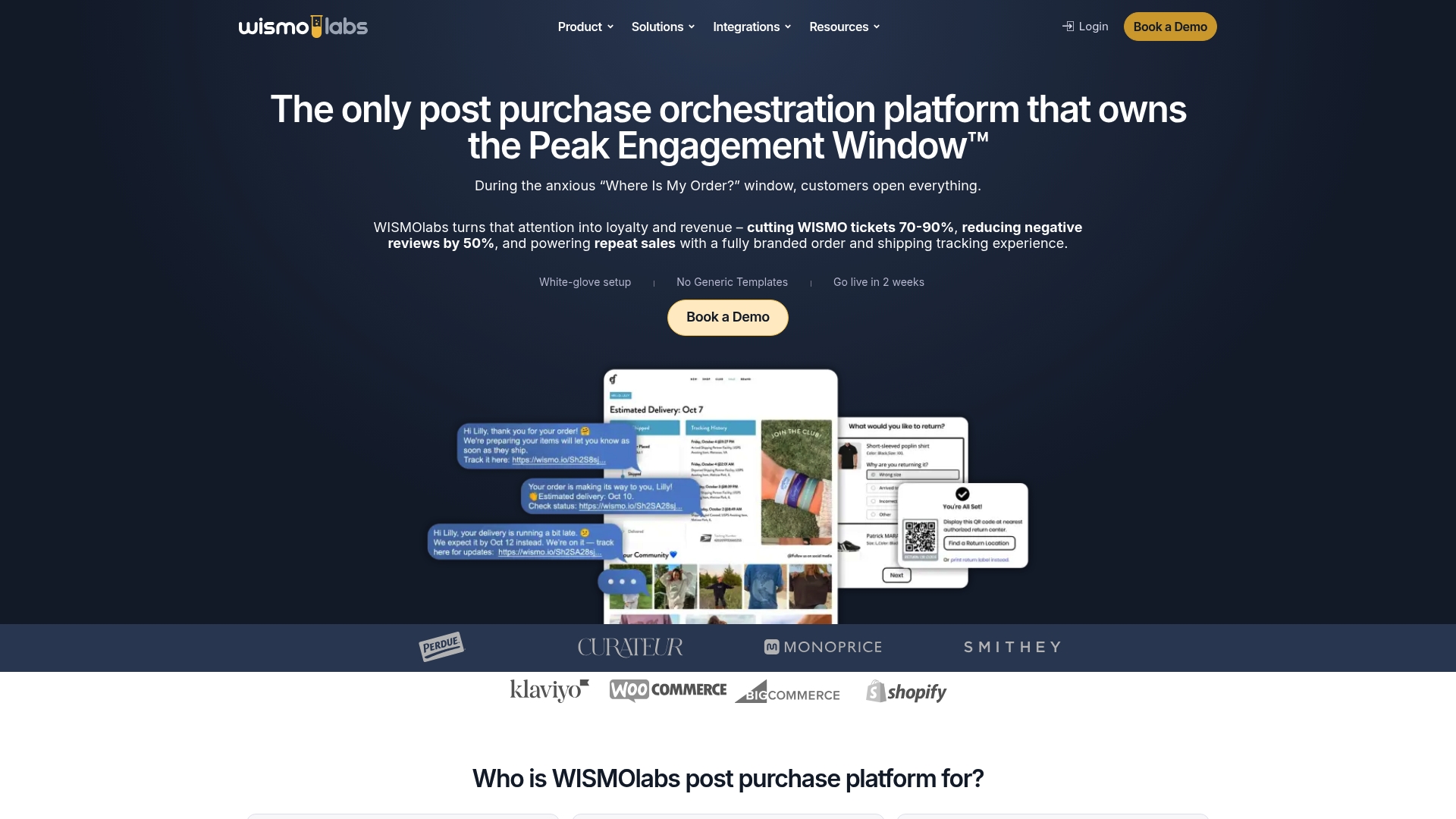
Explore how our platform’s revolutionary decision logic can elevate your ecommerce brand with intelligent post-purchase communication and turn fragmented shipping data into a unified, proactive experience. Visit WISMOlabs now to start your journey toward smarter, revenue-generating branded tracking.
Frequently Asked Questions
How can I conduct a data audit for my ecommerce platform?
Conduct a data audit by reviewing all existing platforms to identify inconsistencies in data collection and storage methods. Start by mapping out your current data touchpoints and documenting any discrepancies, which will help improve data reliability over the next 30 days.
What steps should I take to create a standardized data governance framework?
To establish a standardized data governance framework, set clear rules for data formatting and develop uniform metadata schemas. Implement automated validation processes to maintain accuracy and reliability, aiming for completion within 60 days.
How do I configure decision layer logic for proactive customer communication?
Configure decision layer logic by identifying key moments in the customer journey where proactive communication can lead to a better experience. Set up decision rules based on real-time customer data, and implement workflows to automate message content and timing based on order characteristics.
What are effective notification strategies for upsell opportunities?
Implement intelligent notification systems that analyze customer purchase history and behavior to create personalized upsell recommendations. Segment your notifications based on customer lifecycle and purchase frequency, and continually adjust messaging based on engagement metrics to optimize outcomes.
How can I test my branded tracking system for various shipping scenarios?
Develop a structured testing framework to evaluate your branded tracking performance under different shipping conditions. Create realistic test scenarios, such as international and expedited shipping, to assess tracking accuracy and communication clarity, aiming for completion of initial testing within 60 days.
What key performance indicators (KPIs) should I monitor for branded tracking?
Monitor KPIs such as update accuracy, response time, engagement rate, and sentiment score to evaluate tracking effectiveness. Continuously analyze these metrics to develop actionable insights, and hold quarterly review sessions to discuss performance and improvement strategies.
Recommended
- Order Tracking Optimization That Actually Works: Reduce Support Calls and Drive Revenue – WISMOlabs
- Improve Post-Purchase Customer Experience | Order Tracking & WISMO Reduction
- 5 Reasons your eCommerce Business Needs a Branded Tracking Page
- 5 Ways to Improve Customer Loyalty with Branded Tracking Pages
- Crafting the Perfect Branded Gift Set for HR Professionals and Markete – Gino’s Awards, Inc.