Every E-commerce brand manager in North America knows that generic delivery updates often leave customers feeling anxious and overlooked. For organizations aiming to create meaningful post-purchase experiences, shifting from transactional messages to intelligent, data-driven communication is a necessity. By embracing context-aware personalization and AI-powered messaging, brands can increase customer satisfaction, reduce WISMO tickets, and turn the post-purchase window into a true loyalty driver.
Table of Contents
- Defining Intelligent Post-Purchase Communication
- How Decision Layers Enhance Delivery Messaging
- Personalization and AI in Order Updates
- Reducing WISMO Tickets and Negative Reviews
- Turning Post-Purchase Into Revenue Opportunities
Key Takeaways
| Point | Details |
|---|---|
| Intelligent Communication | Shift from generic notifications to personalized messaging enhances customer satisfaction by reducing anxiety and improving engagement. |
| Decision Layers in Messaging | Implement decision layers to evaluate multiple data signals and optimize real-time communication, increasing relevancy and effectiveness of messages. |
| AI-Driven Personalization | Utilize AI to tailor order updates based on individual customer behaviors and preferences, fostering stronger relationships and increasing retention. |
| WISMO Reduction Strategies | Proactively communicate shipment statuses to significantly cut down on “Where is my order” inquiries, improving support efficiency and customer trust. |
Defining Intelligent Post-Purchase Communication
Intelligent post-purchase communication goes far beyond the standard transactional email confirming your order went through. It represents a fundamental shift from reactive notification systems to decision-driven communication that considers the complete context of each customer’s unique situation. Rather than treating every order the same way, intelligent post-purchase communication evaluates multiple data signals-shipping status, order history, customer behavior patterns, and real-time delivery conditions-to determine whether a message should be sent at all, and if so, what that message should say and when it should arrive. This isn’t about sending more messages. It’s about sending smarter ones.
The core principle behind intelligent post-purchase communication is that one size does not fit all. A customer who ordered something for their child’s birthday party needs different communication than someone purchasing a replacement household item. Someone buying their tenth product from you has different expectations than a first-time buyer. Strategic post-purchase communication aligned with individual consumer identities enhances engagement, satisfaction, and encourages repeat purchases. Traditional systems blast out notifications based on carrier feeds without understanding context. An intelligent system understands that sending a “Your package is on the way” message to someone whose order has been sitting in a distribution center for three days actually increases anxiety rather than relieving it. It recognizes that review requests sent after a delivery failure create negative brand impressions. It knows when to stay silent and when to speak, and what tone to use when communicating. This contextual awareness transforms post-purchase messaging from a customer service burden into a relationship-building opportunity.
What makes this communication intelligent is the technology stack behind it. AI enhances personalization, responsiveness, and emotional resonance in communication strategies by processing complex shipment data and customer signals simultaneously. The platform evaluates carrier updates, logistics exceptions, customer profiles, and behavioral patterns to surface the exact right moment for engagement. This means detecting when a shipment hits a delay and automatically holding back standard notifications to avoid amplifying concern. It means recognizing when a customer is a prime candidate for a upsell or cross-sell during the high-attention window between purchase and delivery. It means personalizing messaging based on how that specific customer prefers to receive information. Consider a typical scenario: when a package encounters a weather delay, an unintelligent system sends the same delay notification to all customers. An intelligent system knows which customers checked tracking three times already and need reassurance, which customers don’t care about timelines as long as their order arrives, and which customers need a proactive offer to offset disappointment. The difference in customer satisfaction between these two approaches is measurable and significant.
For e-commerce brand managers, this translates into concrete business outcomes. Intelligent post-purchase communication reduces support ticket volume by eliminating redundant “Where Is My Order” inquiries. It improves customer satisfaction by delivering relevant information exactly when customers need it. It increases revenue by leveraging the post-purchase window for strategic product recommendations when customer attention is highest. Most importantly, it protects brand reputation by preventing negative reviews triggered by unnecessary anxiety about shipments in transit. When you shift from broadcasting generic messages to delivering personalized, contextual communication, you transform the post-purchase experience from a potential pain point into a competitive advantage.
Here’s a comparison of traditional vs. intelligent post-purchase communication approaches:
| Aspect | Traditional Communication | Intelligent Communication |
|---|---|---|
| Message Timing | Event-triggered, generic | Contextual, optimized timing |
| Content Personalization | One-size-fits-all text | Tailored to individual context |
| Customer Impact | May increase anxiety | Reduces anxiety, builds trust |
| Business Value | High support costs | Lower tickets, higher loyalty |
Pro tip: Start mapping your customer segments by purchase intent and delivery timeline rather than just demographics-identify which customers need proactive communication and which prefer to check status on their own, then build your intelligent communication strategy around these behavioral patterns.
How Decision Layers Enhance Delivery Messaging
A decision layer sits between raw data and customer action. Think of it as the intelligent filter that processes countless signals in real-time and determines the optimal response. In delivery messaging, this means your system continuously evaluates carrier feeds, order attributes, customer history, and behavioral patterns simultaneously to decide whether to send a notification, what message to send, and precisely when to send it. Without a decision layer, you’re stuck with rule-based systems that trigger the same notification to every customer whenever a carrier event occurs. With a decision layer, you gain the ability to personalize at scale by running complex evaluations across multiple data streams instantaneously. Decision layers integrate multiple models and timescales to optimize decision-making dynamically in real time, which means your delivery messaging responds to immediate conditions while also accounting for longer-term customer patterns and business objectives. This layered approach transforms delivery notifications from a static, one-size-fits-all broadcast into a dynamic, context-aware communication strategy.
Here’s what actually happens inside a decision layer during the post-purchase window. When a package status changes, the system doesn’t immediately fire off a notification. Instead, it asks a series of rapid-fire questions. Has this customer already checked tracking multiple times in the past hour (indicating high anxiety)? Does their order contain time-sensitive items like perishables or gifts? What’s their communication preference based on past engagement? Have we detected a delivery exception that warrants proactive messaging? Is this the right moment to suggest a complementary product? The decision layer evaluates all these factors against predefined rules, machine learning models, and business logic. The result is granular, intelligent routing that ensures messages add value rather than creating noise. For instance, if a customer ordered a birthday gift and the package enters a distribution delay, the decision layer recognizes this urgency and either sends a reassuring update immediately or holds back messaging entirely if it would amplify concern. Simultaneously, it might suppress a standard promotional offer because customer context suggests delivery anxiety takes priority. This isn’t reactive communication. It’s proactive, contextualized decision-making happening milliseconds after each data point arrives.

The infrastructure supporting this intelligence matters tremendously. Efficient message queuing ensures reliable, ordered, and scalable communication flows critical for timely and accurate delivery updates. This means your decision layer can process thousands of simultaneous orders, each with unique logic paths, without losing accuracy or speed. The system maintains message ordering so customers don’t receive “Your package arrived” before “Your package is out for delivery.” It scales automatically as order volume fluctuates during peak seasons without degrading performance. For brand managers, this infrastructure difference is crucial because it separates systems that feel sluggish and outdated from those that respond with precision and speed. When a customer opens your email or app, they should see delivery information that reflects their order’s current status, not updates from hours ago.
The business impact of decision-layer-driven delivery messaging shows up across multiple metrics. Support ticket volume drops significantly because customers receive proactive communication that answers questions before they ask them. Customer satisfaction increases because messages feel timely and relevant rather than repetitive and generic. Revenue improves because the decision layer identifies high-value upsell moments during the peak engagement window when customer attention is highest. Brand reputation strengthens because the system prevents the messaging mistakes that trigger negative reviews-like sending a “Your package is on the way” notification to someone whose order has been stuck for three days. Most importantly, the decision layer allows your team to move beyond firefighting reactive customer service and instead build a strategic communication program that anticipates needs and delivers value consistently.
Pro tip: Map out your highest-impact decision points in delivery messaging (time-sensitive orders, delivery exceptions, peak anxiety windows) and prioritize building decision logic around those moments first rather than attempting to optimize every possible scenario simultaneously.
Personalization and AI in Order Updates
Here’s the uncomfortable truth about generic order updates: they feel impersonal because they are impersonal. A customer who spent three months researching before making a purchase receives the same “Your order has shipped” message as someone who impulse-bought a replacement item. Someone ordering a gift for an important occasion gets identical copy to someone buying household staples. The result is communication that misses the mark, treating all customers as interchangeable units rather than individuals with unique needs, preferences, and contexts. AI changes this equation fundamentally. Rather than writing dozens of message templates and trying to match them to customer segments, AI can generate unique, contextually appropriate order updates for each individual customer in real-time. AI tailors order updates and notifications to individual preferences, improving readability and relevance to foster engagement and satisfaction through context-aware delivery messaging. This isn’t about inserting a customer’s name into a template. It’s about understanding what matters to that specific customer in that specific moment and crafting messaging that resonates with their situation.
The mechanics of AI-driven personalization in order updates work through multiple layers of data evaluation and adaptive response. When an order ships, AI doesn’t just grab carrier data and push a notification. It evaluates order composition, delivery timeline, customer communication history, past behavior patterns, purchase frequency, and purchase category to determine the tone, content, and timing of the update. For instance, a first-time buyer receives messaging focused on reassurance and clarity because they lack reference points from previous purchases. Someone on their tenth order receives more casual, concise updates because they understand the process. A customer who always checks tracking religiously gets minimal notification (letting them discover updates themselves) while someone who typically ignores shipping emails gets proactive, high-value updates that answer likely questions. Dynamic, personalized order status communications adapt to customer behavior and preferences, enhancing the post-purchase experience by recognizing individual patterns rather than forcing everyone into uniform communication buckets. The system learns what resonates with each customer segment and adjusts messaging accordingly over time.
What makes AI personalization particularly powerful for brand managers is that it operates at scale without requiring additional human effort. You don’t need a copywriter crafting individualized messages for each order. You don’t need to manually segment customers into dozens of categories and maintain separate message sets for each. The AI handles that complexity automatically, generating appropriate communications for millions of orders simultaneously while maintaining brand voice and compliance standards. This efficiency translates into measurable business impact. Personalized order updates improve customer satisfaction because they feel relevant rather than robotic. They reduce support inquiries because messaging addresses likely questions proactively. They create upsell and cross-sell opportunities by mentioning complementary products at moments when customer attention is highest. They build loyalty by demonstrating that you understand your customer’s individual needs rather than treating them as one faceless audience. The personalization also extends beyond text. AI can adjust message format based on preference (email, SMS, push notification), optimize send times based on individual timezone and engagement patterns, and even customize visual elements like product photography or promotional imagery based on browsing history.
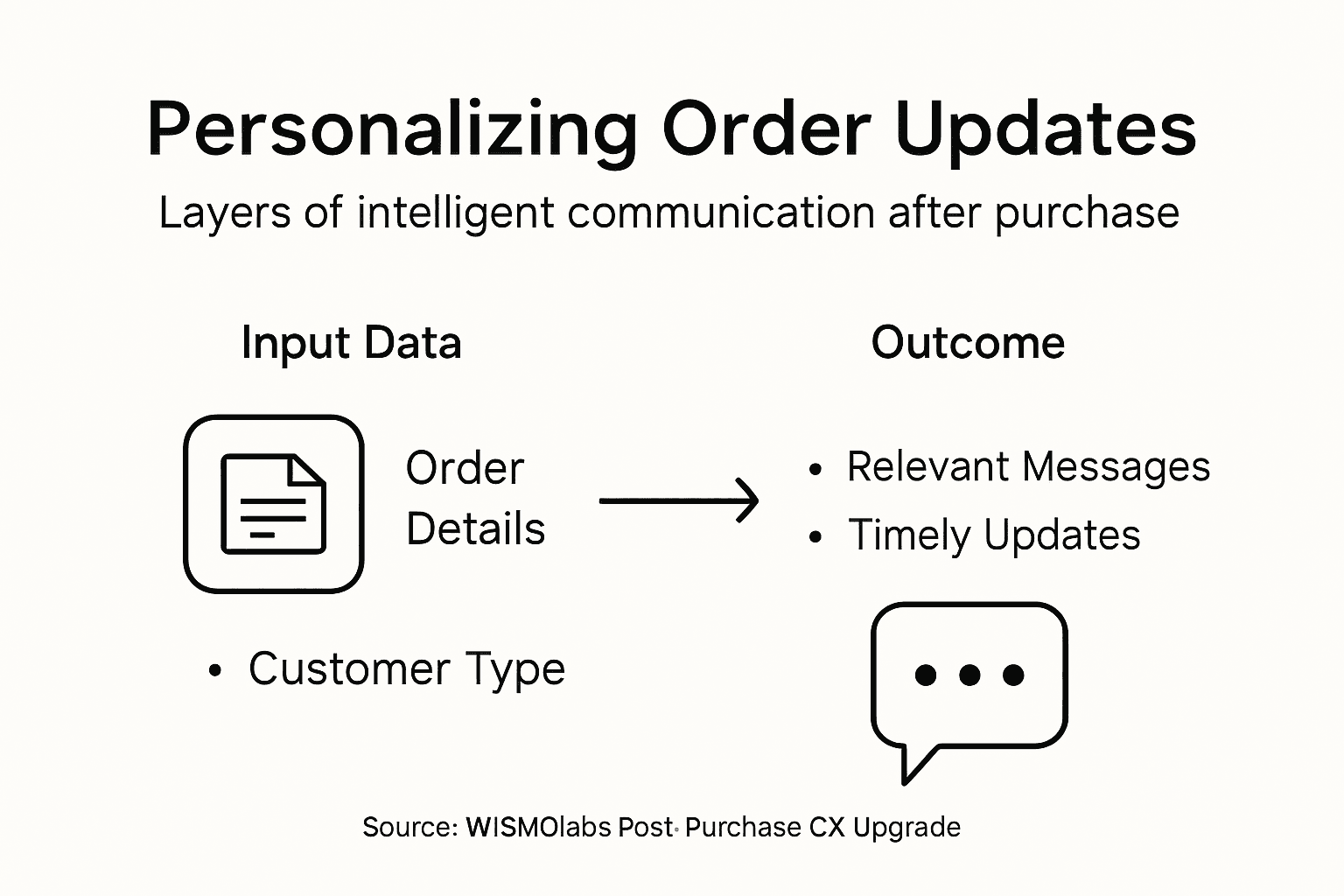
Below is a summary of how personalization and AI enhance the order update experience:
| Personalization Layer | What It Analyzes | Result for Customer |
|---|---|---|
| Purchase History | Past orders, frequency | Tone and detail matched to experience |
| Communication Preferences | Email, SMS, app use | Updates sent in preferred channel |
| Engagement Patterns | Opens and clicks | Timing and volume optimized |
| Behavior Signals | Tracking checks, support queries | Proactive or minimal messaging |
The practical application requires moving beyond “one-size-fits-all” thinking. Instead of asking “What message should we send all customers whose packages are in transit?”, you ask “What does this specific customer need to hear right now based on their order, history, and current delivery status?” That shift in perspective unlocks the real value of AI in order updates. Some customers need reassurance. Some need logistical clarity. Some need speed of communication while others prefer conciseness. Some are price-conscious and appreciate being reminded of the value they received. Others focus entirely on delivery timeline. AI recognizes these variations and responds accordingly, transforming order updates from administrative notifications into personalized experiences that strengthen customer relationships.
Pro tip: Start by identifying your top three customer behaviors that diverge most significantly (first-time versus repeat buyers, high-anxiety trackers versus hands-off customers, gift purchases versus personal use), then build AI personalization rules around those distinctions first before attempting to optimize for every possible variation.
Reducing WISMO Tickets and Negative Reviews
WISMO tickets represent a massive operational drag on e-commerce support teams. A customer emails asking “Where is my order?” A support agent spends 10-15 minutes investigating shipment status, pulling up tracking information, and crafting a response. Then another customer asks the same question. Then another. By the end of the month, your team has spent thousands of hours answering a question that could have been preempted with one well-timed proactive notification. The math is simple but brutal: more WISMO inquiries equal higher support costs, longer response times, and deteriorating customer experience. Negative reviews follow closely behind because customers who feel anxious about their orders are more likely to leave poor feedback, especially if they perceive the brand as unresponsive or unhelpful. The connection between inadequate post-purchase communication and negative reviews is direct and measurable. When customers lack information, they fill the void with worry. When worry persists, it transforms into frustration. Frustrated customers leave negative reviews. Intelligent post-purchase communication breaks this chain by ensuring customers have accurate, timely information before anxiety takes hold.
The most effective approach to WISMO reduction is prevention through proactive communication. Instead of waiting for customers to ask where their orders are, you tell them exactly where their packages are at the precise moment they need that information. This requires understanding customer anxiety patterns. First-time buyers typically experience peak anxiety right after purchase as they question whether their order actually went through. That’s the ideal moment for a reassuring confirmation message with clear next steps. Anxiety peaks again during the pre-delivery window when customers are expecting their packages. That’s when detailed tracking updates matter most. The key is matching communication to these natural anxiety peaks rather than blasting notifications whenever a carrier event occurs. Prompt, empathetic, and comprehensive responses to post-purchase issues help restore consumer trust and reduce negative reviews by addressing customer concerns before they escalate. When you deliver information proactively and empathetically, customers feel heard and informed rather than ignored and anxious. This simple shift from reactive to proactive communication transforms how customers perceive your brand and dramatically reduces support ticket volume.
The business impact extends beyond just fewer support tickets. When you reduce WISMO inquiries by 70-90%, your support team shifts from firefighting constant repetitive questions to handling actual customer problems that require expertise. This improves agent job satisfaction because they’re solving real issues rather than answering the same question 100 times daily. It improves customer satisfaction because problems get resolved faster when your team isn’t drowning in WISMO emails. It reduces negative reviews significantly because the most common trigger for negative feedback-unclear delivery status-gets eliminated proactively. The ripple effects compound over time. Better customer satisfaction leads to higher lifetime value. Lower negative review volume improves your conversion rate on new customers who read reviews before purchasing. Happier support agents have lower turnover, reducing training costs and maintaining institutional knowledge. WISMO reduction impacts customer loyalty and creates multiple business benefits across support efficiency, brand reputation, and revenue growth. Most brand managers underestimate how interconnected these metrics are. Solving the WISMO problem solves multiple problems simultaneously.
Implementing WISMO reduction requires shifting your operational mindset. Stop thinking of post-purchase communication as a customer service function and start thinking of it as a strategic business tool. That means using data to identify your highest-WISMO customer segments and tailoring communication specifically to their needs. It means recognizing that different product categories generate different levels of post-purchase anxiety. It means understanding that certain customer demographics or purchase patterns correlate with higher support inquiries and adjusting your communication strategy accordingly. The most effective brands treat WISMO reduction as an ongoing optimization process rather than a one-time implementation. They monitor which types of proactive messages reduce inquiries most effectively. They test timing variations to find the optimal moment for each message type. They measure the correlation between communication strategies and review sentiment. Over time, this data-driven approach creates increasingly sophisticated communication systems that anticipate customer needs before they become support problems.
Pro tip: Segment your customers by their past behavior with tracking-identify your “frequent checkers” versus “never check” groups, then send minimal notifications to heavy trackers and comprehensive updates to passive customers, freeing your support team from redundant WISMO inquiries while maximizing satisfaction for both groups.
Turning Post-Purchase Into Revenue Opportunities
Most e-commerce brands treat the post-purchase phase as a customer service problem to be solved efficiently. They focus on getting the order out the door, managing support tickets, and keeping customers informed. What they miss is that the post-purchase window represents one of the highest-value revenue opportunities in the entire customer lifecycle. The customer has already made a purchase decision. They’ve already experienced the friction of discovering your brand, evaluating products, and committing money. Their defenses are down. Their attention is high. Their wallet is out. And yet most brands squander this moment by sending generic shipping notifications instead of strategic, personalized offers. The post-purchase period is when customer acquisition cost is lowest per additional sale and when customer receptiveness is highest. A customer who just received their order confirmation email is dramatically more likely to engage with a complementary product offer than someone scrolling through a random ad on social media. Strategic approaches capitalize on post-purchase engagements by converting insights into monetizable opportunities, emphasizing market readiness and conversion at the exact moment when customers are most receptive. This is the Peak Engagement Window that separates strategic post-purchase communication from transactional messaging.
The mechanics of converting post-purchase moments into revenue involve understanding what customers are ready to buy at each stage. Immediately after purchase, customers aren’t typically ready for aggressive upselling. They want confirmation and clarity. But once they receive tracking confirmation and understand their order is being processed, their mindset shifts. This is the optimal moment for targeted product recommendations. A customer who just bought running shoes is primed to receive recommendations for performance socks or a running watch. Someone who ordered a beginner coding book is receptive to offers on advanced courses or development tools. The key is matching recommendations to purchase intent and urgency. Upselling and cross-selling strategies work most effectively when timing aligns with customer readiness rather than forcing offers at arbitrary moments. The difference between a 2 percent and 15 percent conversion rate on post-purchase offers often comes down to timing and relevance rather than the offer itself. A customer who ordered a single item might be interested in bulk purchasing for business use. A customer with a seasonal purchase pattern might be primed for complementary seasonal products. A customer ordering their first product in a category is a prime candidate for expanded product education or related categories. The most sophisticated brands use purchase data, browsing history, and past engagement patterns to predict what each customer needs next and present offers at the moment they’re most likely to convert.
The financial impact of effective post-purchase monetization is substantial and often underestimated. Even modest improvements in post-purchase offer conversion rates create significant revenue uplift. If your average order value is $100 and you generate 10,000 orders monthly, a 3 percent conversion rate on a $50 average post-purchase offer generates an additional $15,000 in monthly revenue. Scale that to annual revenue and the number becomes $180,000 in incremental revenue from the same customer base. But it goes deeper than simple math. Customers who make repeat purchases have higher lifetime value, lower churn, and become brand advocates who refer others. Each post-purchase revenue opportunity also serves as a customer retention moment. You’re reinforcing the relationship and demonstrating that you understand their needs. You’re building habit formation where customers begin to see your brand as their go-to source across multiple product categories rather than a one-time purchase destination. This transforms your business model from transaction-based to relationship-based, which fundamentally improves unit economics across customer acquisition, retention, and lifetime value.
Implementing effective post-purchase monetization requires moving beyond sporadic promotional emails to building a systematic approach. This means understanding your product ecosystem and identifying which products complement each other. Which purchases naturally lead to follow-up purchases? What’s the typical timeline between initial purchase and readiness for the next purchase? Which customer segments show highest propensity for repeat purchases? Post-purchase marketing strategies create measurable ROI improvements when aligned with customer data and purchase patterns. The brands that win at post-purchase monetization treat it like a science rather than an art. They test different offer types, timing windows, and messaging approaches. They measure what works and what doesn’t. They use customer feedback and purchase behavior to continuously refine their strategy. They recognize that the post-purchase phase isn’t a single moment but an extended window with multiple touchpoints and multiple opportunities to add value.
Pro tip: Start by analyzing your top 20 percent of customers-identify what products they purchase next and what timeline exists between purchases, then reverse-engineer offers that anticipate these natural next steps before customers even realize they need them.
Revolutionize Your Post-Purchase Experience with Intelligent Communication
Customers crave clarity and relevance after placing an order. The article highlights how traditional generic updates increase anxiety and flood support teams with WISMO tickets. Your challenge is to move beyond just transactional messages and embrace a smart, personalized communication strategy that reduces customer stress, cuts support costs, and unlocks new revenue streams during the Peak Engagement Window™.
WISMOlabs answers this exact need by treating post-purchase messaging as a sophisticated Decision Layer. The platform processes real-time shipping data, customer behavior, and delivery context to send the right message at the right time. This approach results in up to a 90% reduction in “Where Is My Order” inquiries and a 50% drop in negative reviews. Beyond reducing friction it transforms your post-purchase phase into a growth engine through AI-powered personalized upsells and cross-sells.
Elevate your customer experience now with WISMOlabs, the intelligent post-purchase orchestration platform designed for brands ready to win.
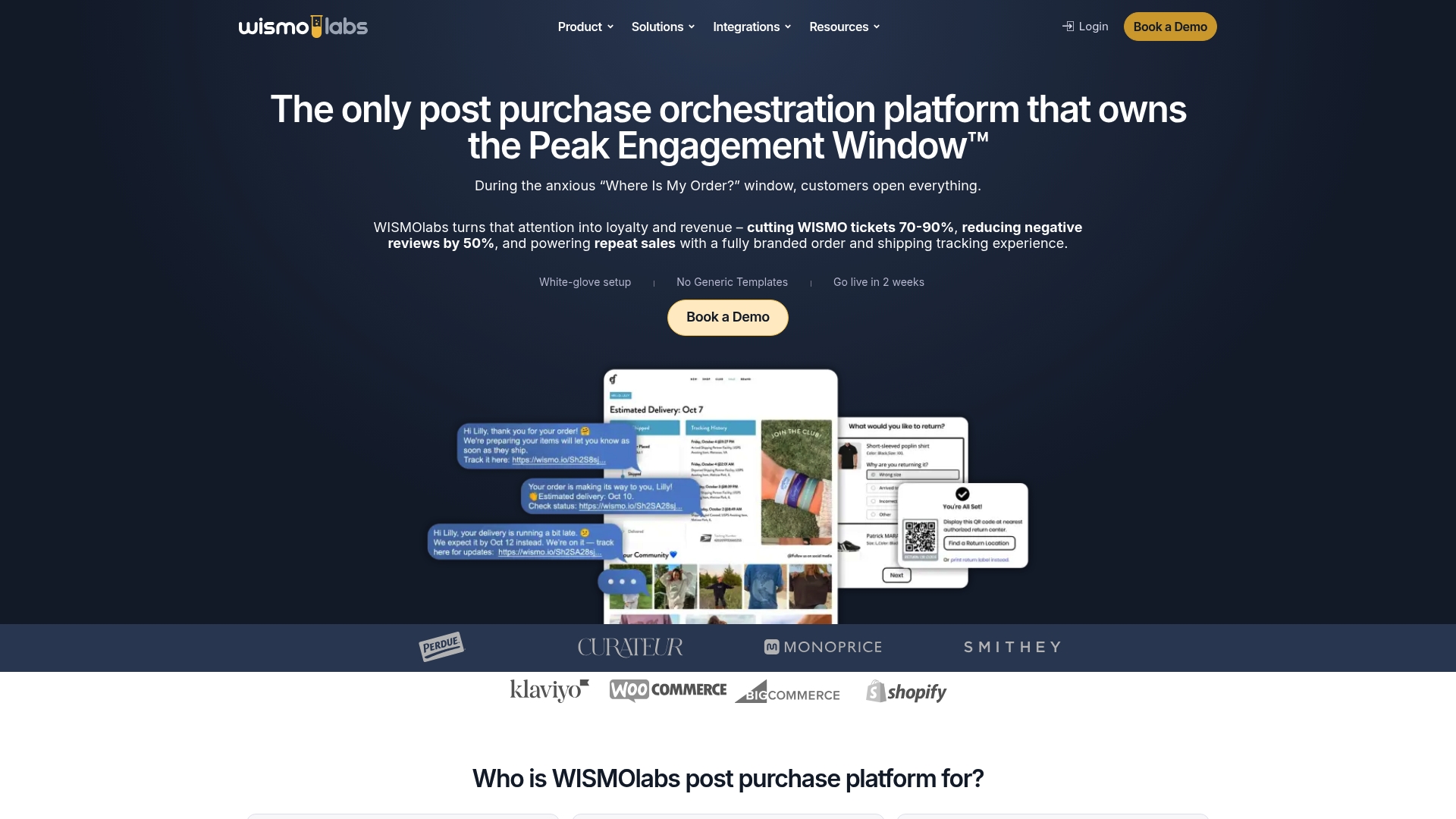
Stop letting generic notifications undermine your brand. Discover how intelligent communication can turn moments of uncertainty into loyalty-building opportunities. Visit https://wismolabs.com today to start your transformation and see measurable ROI in under two weeks.
Frequently Asked Questions
What is intelligent post-purchase communication?
Intelligent post-purchase communication refers to a strategic approach that tailors messaging to individual customers based on their unique context, order details, and behavior. Instead of generic notifications, it provides personalized updates that enhance customer experience and reduce anxiety.
How does AI enhance post-purchase communication?
AI enhances post-purchase communication by evaluating customer data, shipment status, and behavioral patterns in real-time. It allows for personalized messaging that resonates with customers’ specific situations, thereby improving engagement and satisfaction.
Why is reducing WISMO inquiries important for e-commerce brands?
Reducing WISMO inquiries is crucial as it lowers operational costs, enhances customer satisfaction, and prevents negative reviews. Proactive communication about order status can significantly diminish the volume of these inquiries, allowing support teams to focus on more complex customer issues.
How can brands leverage the post-purchase window for revenue opportunities?
Brands can leverage the post-purchase window by making timely, personalized product recommendations based on recent purchases. This stage offers a high potential for upselling or cross-selling, as customers are more receptive right after completing a purchase.