Nearly 70 percent of American shoppers expect real-time, personalized order tracking from their favorite ecommerce brands. For American brand managers, this demand represents both a challenge and an opportunity to stand out in a crowded marketplace. By offering a tailored tracking experience, you can reduce costly WISMO inquiries while creating loyal customers who return again and again for a seamless, transparent journey.
Table of Contents
- Personalized Order Tracking for Ecommerce
- Types of Personalization and Data Sources
- Ai and Real-Time Decisioning Features
- Reducing Wismo and Negative Reviews
- Risks, Challenges, and Implementation Tips
Key Takeaways
| Point | Details |
|---|---|
| Importance of Personalization | Personalized order tracking enhances customer engagement and satisfaction throughout the purchasing journey. |
| Role of AI Technologies | Advanced AI enables predictive delivery updates and tailored communication, fostering a customer-centric experience. |
| Data Utilization for Personalization | Utilizing diverse data sources can significantly improve tracking experiences while ensuring compliance with privacy regulations. |
| Managing WISMO Inquiries | Proactive communication strategies can reduce “Where Is My Order?” incidents and improve overall customer trust and satisfaction. |
Personalized Order Tracking for Ecommerce
E-commerce brands today face unprecedented challenges in maintaining customer satisfaction throughout the purchasing journey. With the rapid evolution of digital shopping experiences, customers now expect more than just a transaction – they want a personalized, transparent tracking experience that keeps them informed and engaged. Personalized order tracking technologies have emerged as a critical solution for transforming the post-purchase experience.
The power of personalization extends far beyond simple shipping updates. By leveraging advanced AI technologies, e-commerce businesses can create tracking experiences that feel tailored to individual customer preferences and behaviors. Advanced AI integration enables predictive delivery estimations and customized communication strategies that replace traditional one-size-fits-all approaches. These intelligent systems analyze individual purchasing patterns, historical data, and real-time shipment information to deliver precisely timed and contextually relevant updates.
Key elements of effective personalized order tracking include:
- Real-time shipment visibility
- Customized communication frequency
- Predictive delivery time estimates
- Proactive issue resolution notifications
- Branded tracking interfaces
Successful implementation requires a holistic approach that combines data analytics, customer insights, and seamless technological integration. By treating order tracking as a strategic engagement opportunity rather than a mere transactional process, brands can transform potentially mundane shipping updates into moments of positive customer interaction.
Pro tip: Implement a dynamic tracking system that adapts communication based on individual customer preferences and past interaction history.
Types of Personalization and Data Sources
E-commerce personalization represents a sophisticated approach to understanding and anticipating customer needs through multiple data collection strategies. Comprehensive customer interaction data enables brands to create nuanced, adaptive tracking experiences that go far beyond traditional shipping notifications. These data sources encompass a wide range of digital touchpoints, providing rich insights into customer behaviors and preferences.
The primary types of personalization data sources include:
- Behavioral tracking data
- Purchase history analysis
- Demographic information
- Geographic location
- Device and browsing patterns
- Customer support interaction records
Intelligent personalization systems leverage these diverse data streams to create dynamic, context-aware tracking experiences. By analyzing individual customer interactions across multiple channels, businesses can develop predictive models that anticipate customer communication preferences, delivery expectations, and potential service issues before they arise. This proactive approach transforms order tracking from a passive notification system into an interactive, customer-centric engagement platform.
Successful personalization requires a delicate balance between data utilization and customer privacy. Advanced tracking technologies must not only collect and analyze data effectively but also maintain strict compliance with data protection regulations. This means implementing robust anonymization techniques, providing transparent opt-in mechanisms, and giving customers granular control over their data sharing preferences.

Here’s a comparison of key data sources for e-commerce personalization and their typical business impact:
| Data Source | Example Insights | Business Impact |
|---|---|---|
| Behavioral tracking | Browsing and click patterns | Improves recommendation relevance |
| Purchase history | Previous products bought | Enables targeted promotions |
| Demographic information | Age, gender, income level | Allows segment-specific messaging |
| Customer support interactions | Inquiry topics, resolutions | Enhances proactive service outreach |
Pro tip: Create a comprehensive data governance framework that prioritizes customer consent and provides clear, accessible privacy controls.
AI and Real-Time Decisioning Features
Artificial Intelligence has revolutionized e-commerce order tracking by enabling unprecedented real-time data processing capabilities. Modern AI systems can analyze complex shipment and customer data within milliseconds, transforming traditional tracking experiences into dynamic, intelligent interactions that adapt instantly to changing conditions.
Key AI-powered decisioning features include:
- Predictive delivery time calculations
- Dynamic communication frequency adjustments
- Contextual issue prediction and proactive resolution
- Personalized notification routing
- Customer behavior pattern recognition
- Adaptive tracking interface customization
Machine learning algorithms now operate with sub-80-millisecond response times, enabling e-commerce platforms to deliver hyper-personalized tracking experiences. These sophisticated systems continuously learn from each customer interaction, refining their predictive models to anticipate customer needs with remarkable accuracy. By analyzing historical data, current context, and potential future scenarios, AI can dynamically adjust communication strategies, reducing customer anxiety and improving overall satisfaction.
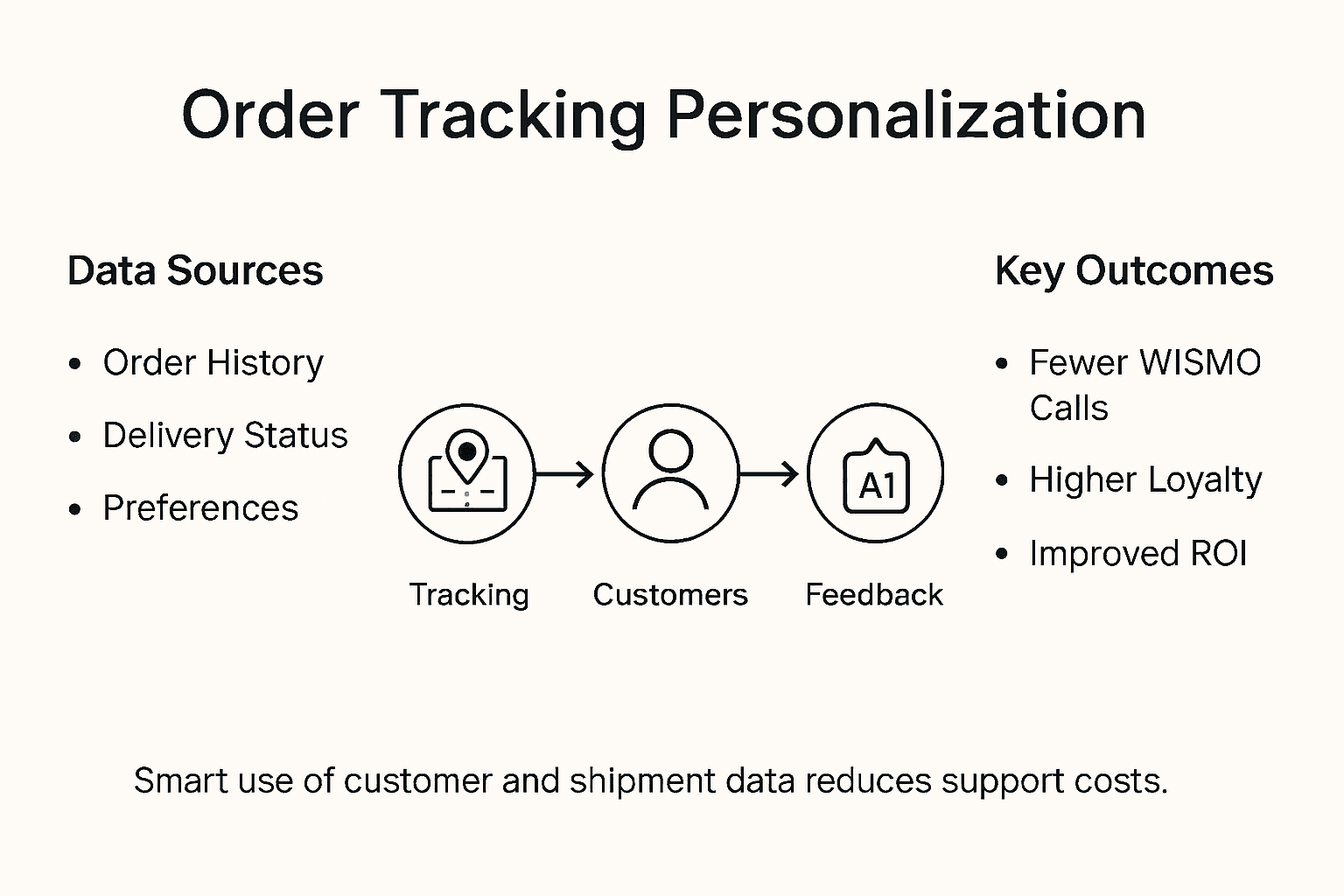
The most advanced AI decisioning platforms go beyond simple tracking, transforming each shipment update into an opportunity for enhanced customer engagement. They can intelligently determine not just when to send an update, but how to present it, what additional information might be valuable, and even predict potential service recovery needs before they become critical issues.
Pro tip: Implement a continuous learning model that regularly evaluates AI decisioning performance using customer feedback and interaction metrics.
Reducing WISMO and Negative Reviews
Customer support teams face a constant challenge in managing “Where Is My Order?” (WISMO) inquiries that drain operational resources and potentially damage brand reputation. Effective multi-channel communication strategies can dramatically transform this challenge by proactively managing customer delivery expectations and minimizing unnecessary support interactions.
Key strategies for reducing WISMO and negative reviews include:
- Implementing real-time tracking interfaces
- Providing transparent, predictive delivery estimates
- Sending proactive, personalized shipping updates
- Creating self-service tracking options
- Establishing clear communication channels
- Developing automated resolution workflows
The most successful approaches leverage technology to anticipate and address potential customer concerns before they escalate. By creating a comprehensive communication ecosystem that keeps customers informed at every stage of their delivery journey, businesses can significantly reduce uncertainty and frustration. Intelligent tracking systems that offer precise, context-aware updates help customers feel more connected and reassured throughout the purchasing process.
Beyond technological solutions, reducing WISMO requires a holistic approach that combines predictive analytics, customer-centric design, and strategic communication. Organizations must view each shipping update as an opportunity to reinforce brand trust, transform potential points of friction into positive interactions, and demonstrate their commitment to exceptional customer experience.
Pro tip: Develop a comprehensive WISMO reduction playbook that integrates technological solutions with human-centered communication strategies.
Risks, Challenges, and Implementation Tips
Implementing advanced order tracking personalization requires careful navigation of complex technological and ethical landscapes. Data privacy and algorithmic fairness represent critical challenges that demand strategic, proactive management to maintain customer trust and regulatory compliance.
Key implementation challenges include:
- Managing large volumes of customer data
- Ensuring algorithmic transparency
- Preventing potential privacy breaches
- Addressing potential bias in personalization models
- Maintaining robust data security protocols
- Balancing customization with customer consent
Comprehensive risk mitigation strategies require ongoing monitoring and ethical governance. Successful implementations demand a nuanced approach that goes beyond technological capabilities, focusing on building trust through transparent data practices. Organizations must develop sophisticated frameworks that not only leverage advanced personalization technologies but also prioritize customer agency and data protection.
The most effective order tracking personalization strategies view potential challenges as opportunities for innovation. By establishing clear communication channels, implementing robust consent mechanisms, and continuously refining algorithmic models, businesses can transform potential risks into competitive advantages. This approach requires cross-functional collaboration between technology, customer experience, legal, and data governance teams to create holistic, customer-centric solutions.
The table below summarizes the main risks and mitigation strategies for AI-driven order tracking personalization:
| Key Risk | Potential Challenge | Mitigation Strategy |
|---|---|---|
| Data privacy | Unauthorized data usage | Strict consent and anonymization policies |
| Algorithmic bias | Unfair customer treatment | Regular audits and fairness reviews |
| Security breaches | Access to sensitive data | Strong encryption and access controls |
| Lack of transparency | Customer mistrust | Clear, accessible data usage disclosures |
Pro tip: Develop a comprehensive data ethics framework that includes regular algorithmic audits, transparent opt-in processes, and clear customer control mechanisms.
Transform Your Post-Purchase Experience with Intelligent Order Tracking
The article highlights the challenge of reducing WISMO tickets and negative reviews by adopting personalized and proactive communication strategies. Customers want transparent, predictive, and context-aware updates that lower anxiety and improve satisfaction. Pain points like generic shipping notifications, ineffective communication timing, and repetitive messages create frustration and drive support costs higher.
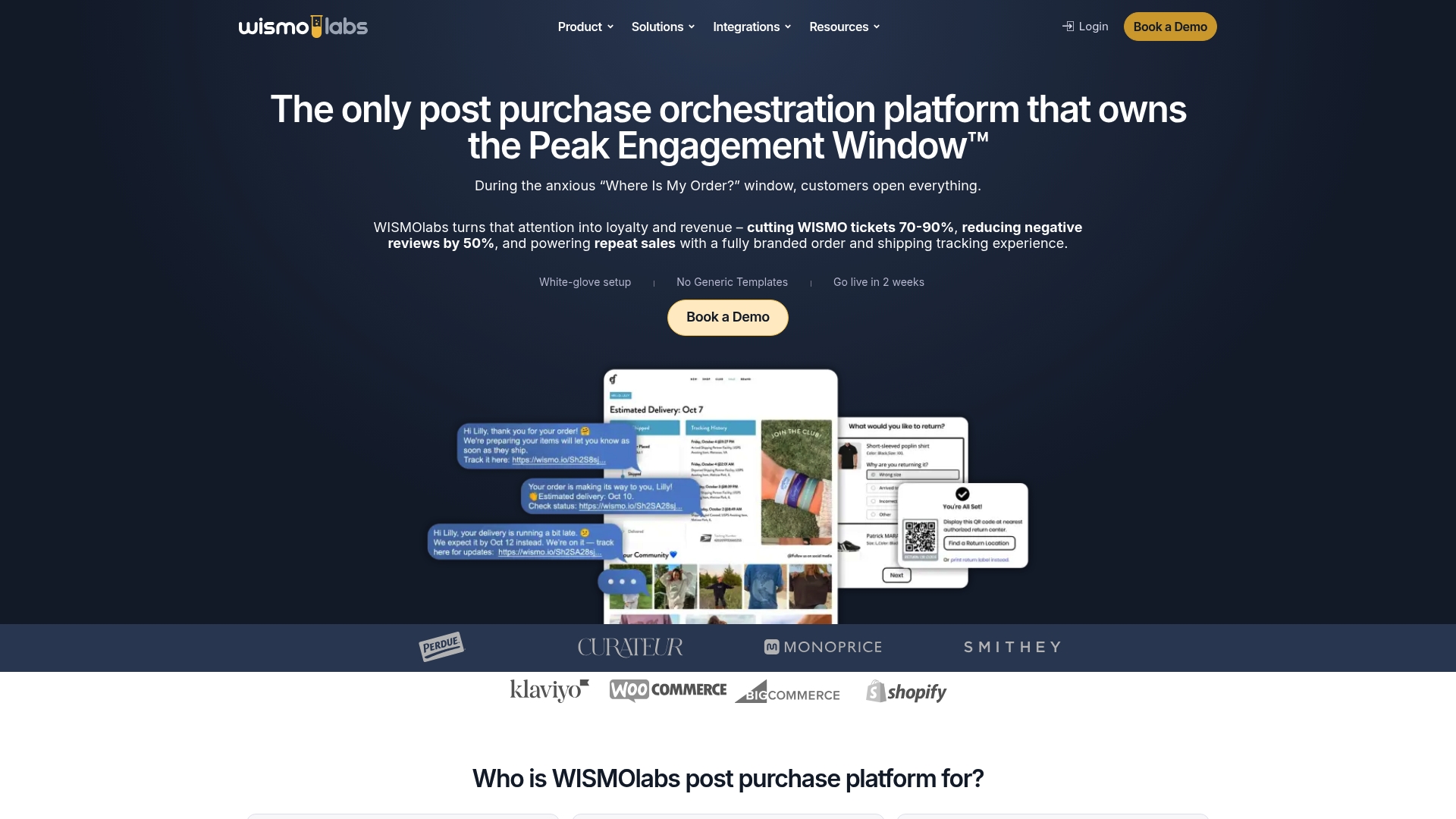
WISMOlabs addresses these exact issues by innovating the post-purchase journey with a sophisticated Decision Layer that evaluates real-time shipment data, customer profiles, and behavioral signals. This approach ensures your brand sends only high-value, branded updates during the crucial Peak Engagement Window™. With features like hyper-accurate ETAs and Reputation Guard logic, you reduce WISMO inquiries by up to 90 percent and cut negative reviews by half. You create a seamless connection that turns shipping updates into strategic growth opportunities.
Experience the future of personalized order tracking by visiting WISMOlabs to learn how our platform can cut your customer support costs and boost ROI. Discover how our fast setup integrates with Shopify, BigCommerce, Magento, and Salesforce for a unified, intelligent shipping experience.
Drive smarter engagement that keeps customers informed and loyal. Visit https://wismolabs.com today and start transforming your post-purchase communication into your most powerful revenue driver.
Smart, proactive order tracking solutions empower your brand to stay ahead in delivering exceptional customer experiences.
Frequently Asked Questions
What is personalized order tracking in e-commerce?
Personalized order tracking is a system that provides customers with tailored and relevant updates about their shipments. This can include real-time shipment visibility, predictive delivery time estimates, and customized communication strategies, enhancing the overall purchasing experience.
How can personalized order tracking reduce WISMO inquiries?
By providing proactive and transparent updates about delivery status, predicted arrival times, and potential issues, personalized order tracking helps to keep customers informed, reducing the number of “Where Is My Order?” (WISMO) inquiries that customer support teams would have to address.
What technologies are used for implementing personalized order tracking?
Personalized order tracking often utilizes advanced AI technologies, data analytics, and customer insights to create context-aware tracking experiences. These technologies can dynamically adjust communications based on real-time data and customer preferences.
How does personalized tracking impact customer satisfaction and ROI?
Personalized tracking enhances customer satisfaction by providing timely and relevant updates, which builds trust and engagement. This positive experience can lead to repeat purchases and improved brand loyalty, ultimately boosting return on investment (ROI) for businesses.