Every ecommerce manager knows the real challenge starts after a customer clicks “buy.” Post-purchase moments-like delivery performance, return handling, and support experiences-can define a brand’s reputation and future revenue. Comprehensive research shows that analyzing these critical touchpoints provides powerful insights into customer satisfaction and drives continuous improvement. This guide breaks down post-purchase analytics so you can transform interaction data into higher satisfaction, fewer WISMO inquiries, and stronger customer loyalty.
Table of Contents
- Defining Post-Purchase Analytics In Ecommerce
- Types Of Post-Purchase Data And Signals
- How Advanced Analytics Platforms Operate
- Impact On Wismo Reduction And Reputation
- Monetizing The Peak Engagement Window
- Common Pitfalls In Post-Purchase Strategies
Key Takeaways
| Point | Details |
|---|---|
| Post-Purchase Analytics | Understanding customer behavior post-transaction is fundamental for enhancing loyalty and driving revenue growth. |
| Critical Data Types | Analyzing delivery performance, customer satisfaction, and engagement signals provides valuable insights into customer interactions. |
| Proactive Communication | Advanced analytics help reduce WISMO inquiries by providing timely updates and transparent tracking to enhance brand perception. |
| Maximizing Engagement | The Peak Engagement Window is crucial for targeted upselling and cross-selling to increase customer lifetime value significantly. |
Defining Post-Purchase Analytics in Ecommerce
Post-purchase analytics represents a sophisticated approach to understanding customer behavior after a transaction, transforming raw shipping and interaction data into strategic insights for ecommerce businesses. By systematically analyzing customer touchpoints following a sale, retailers can decode complex behavioral patterns that drive loyalty and long-term revenue growth.
At its core, post-purchase analytics involves collecting and interpreting data across multiple stages of the customer journey after a purchase. This includes tracking delivery experiences, measuring customer satisfaction, evaluating return behaviors, and understanding engagement signals. Comprehensive customer experience research highlights that these post-purchase interactions are critical moments that can significantly impact brand perception and future purchasing decisions.
The fundamental components of post-purchase analytics typically encompass several key dimensions:
- Delivery Performance: Tracking shipping times, carrier reliability, and customer communication effectiveness
- Customer Satisfaction Metrics: Measuring post-purchase sentiment through reviews, support interactions, and feedback
- Behavioral Signals: Analyzing return rates, repeat purchase likelihood, and cross-selling opportunities
- Retention Indicators: Understanding long-term customer lifetime value and loyalty potential
By leveraging advanced data analysis techniques, ecommerce brands can transform these raw interaction signals into actionable strategic insights that drive continuous improvement and customer-centric innovation.
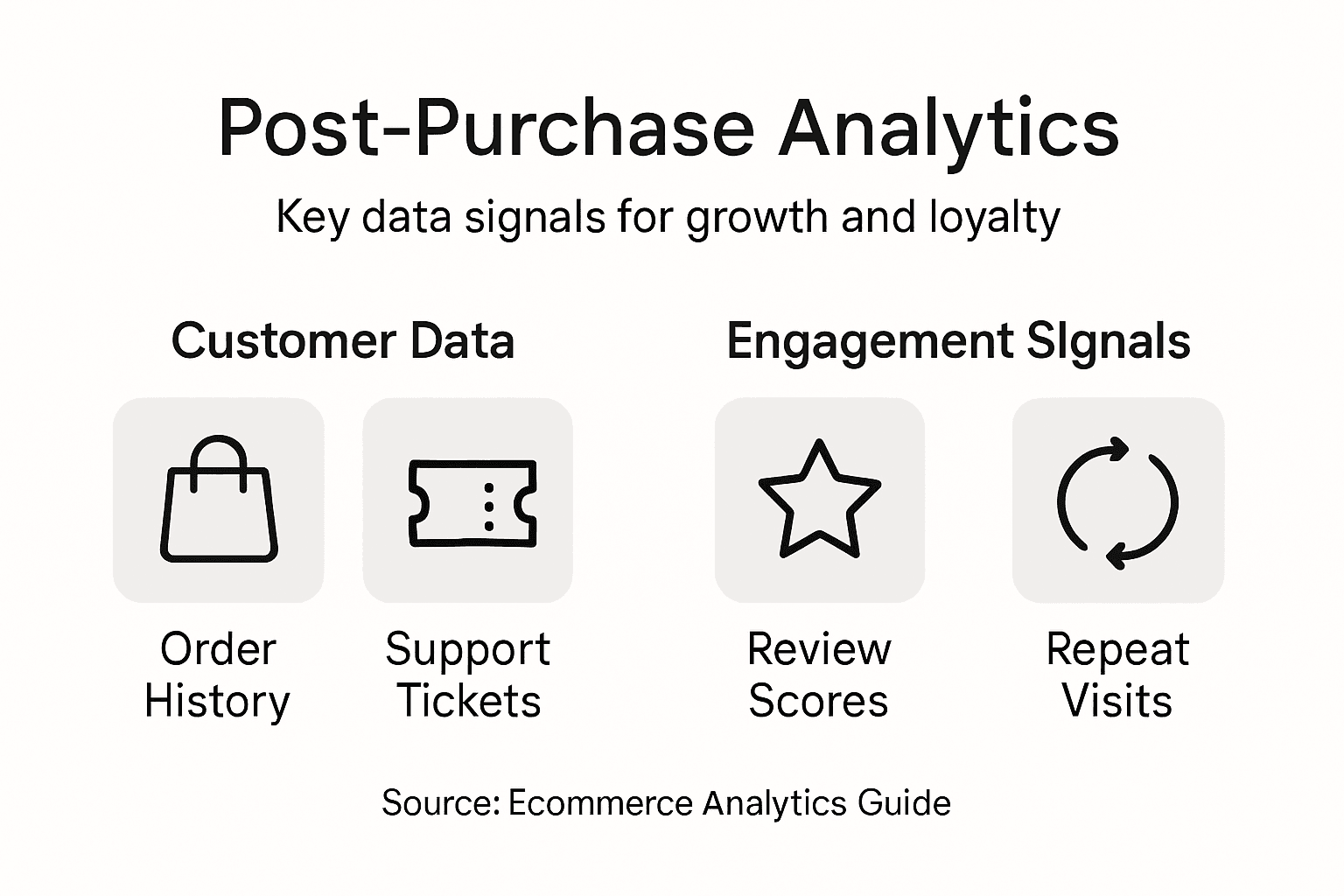
Here’s a high-level summary of post-purchase analytics components and their impact:
| Component | What It Measures | Business Value |
|---|---|---|
| Delivery Performance | Shipping speed and reliability | Reduces inquiries, builds trust |
| Customer Satisfaction | Reviews and support interactions | Increases retention rates |
| Behavioral Signals | Return rates and repeat purchases | Drives upsell opportunities |
| Retention Indicators | Long-term value and loyalty potential | Supports strategic planning |
Pro tip: Implement a centralized post-purchase analytics dashboard that integrates multiple data sources to get a holistic view of your customer experience journey.
Types of Post-Purchase Data and Signals
Post-purchase data represents a complex ecosystem of customer interaction signals that provide deep insights into consumer behavior, satisfaction, and potential future engagement. Comprehensive customer experience research reveals that these data types go far beyond simple transactional records, offering nuanced understanding of the entire customer journey.
The primary categories of post-purchase data can be systematically classified into several key dimensions:
- Delivery Performance Signals
- Shipping time accuracy
- Carrier reliability metrics
- Package tracking engagement
- Delivery success rates
- Customer Experience Indicators
- Support ticket volume and resolution times
- Customer service interaction quality
- Communication channel preferences
- First contact resolution rates
- Behavioral Engagement Data
- Product review sentiment
- Return and exchange patterns
- Repeat purchase frequency
- Cross-selling and upselling receptiveness
Understanding these signals requires advanced analytical approaches that transform raw data into actionable strategic insights. By integrating multiple data streams, ecommerce brands can create a comprehensive view of customer interactions that drives continuous improvement and personalized experiences.
Pro tip: Implement machine learning algorithms to automatically classify and weight different post-purchase signals, enabling more dynamic and responsive customer experience strategies.
How Advanced Analytics Platforms Operate
Advanced analytics platforms for post-purchase insights represent sophisticated technological ecosystems designed to transform raw customer interaction data into actionable strategic intelligence. Qualitative data analysis techniques enable these platforms to decode complex behavioral patterns and extract meaningful insights from seemingly disparate data points.
The operational architecture of these platforms typically involves several intricate processing stages:
- Data Aggregation
- Consolidate information from multiple sources
- Integrate shipping, customer support, and transactional records
- Normalize data across different formats and systems
- Machine Learning Processing
- Apply predictive algorithms to customer behavior
- Identify patterns and potential future actions
- Generate probabilistic models of customer engagement
- Contextual Intelligence
- Evaluate real-time situational factors
- Assess customer sentiment and interaction quality
- Generate personalized insights for strategic decision making
These platforms leverage artificial intelligence to transcend traditional analytics, creating dynamic models that continuously learn and adapt. By processing massive datasets with advanced computational techniques, they provide ecommerce businesses unprecedented visibility into customer experiences and potential growth opportunities.

Pro tip: Implement a multi-layered data validation process to ensure the accuracy and reliability of your post-purchase analytics insights.
Impact on WISMO Reduction and Reputation
Customer service interactions around shipping status represent a critical battleground for brand reputation in ecommerce. After-sales service research demonstrates that proactive communication significantly reduces customer anxiety and minimizes “Where Is My Order” (WISMO) inquiries, directly impacting overall brand perception and loyalty.
The primary mechanisms through which advanced post-purchase analytics reduce WISMO incidents include:
- Predictive Communication
- Anticipate potential shipping delays
- Automatically generate personalized updates
- Provide context-specific delivery information
- Transparent Tracking
- Real-time shipment status monitoring
- Precise estimated delivery windows
- Contextual carrier performance insights
- Proactive Problem Resolution
- Detect potential delivery issues early
- Automatically trigger customer support protocols
- Prevent negative customer experiences before they escalate
By transforming reactive customer service into a strategic, data-driven approach, businesses can dramatically reduce support ticket volumes while simultaneously enhancing customer trust. The result is a powerful feedback loop that turns potentially frustrating shipping experiences into opportunities for building long-term customer relationships.
This table contrasts traditional order tracking with advanced WISMO reduction platforms:
| Approach | Interaction Style | Customer Outcome |
|---|---|---|
| Basic Order Tracking | Reactive, limited updates | Higher frustration, more tickets |
| Advanced Analytics System | Proactive, real-time data | Fewer issues, improved loyalty |
Pro tip: Create a centralized dashboard that aggregates real-time shipping signals to enable immediate visibility and proactive customer communication.
Monetizing the Peak Engagement Window
The Peak Engagement Window represents a critical moment of heightened consumer receptivity immediately following a purchase, where customers are most likely to take additional actions. Post-purchase consumer behavior research demonstrates that strategic messaging during this window can dramatically increase customer lifetime value and drive substantial incremental revenue.
Key strategies for monetizing this unique opportunity include:
- Personalized Upsell Recommendations
- Leverage recent purchase data for contextual suggestions
- Match complementary products to original transaction
- Use machine learning to refine recommendation accuracy
- Targeted Cross-Selling Techniques
- Analyze customer profile and purchase history
- Present relevant additional product offerings
- Create time-limited incentives to encourage immediate action
- Dynamic Conversion Optimization
- Implement real-time pricing and discount strategies
- Generate urgency through limited-time promotions
- Use behavioral signals to customize offer relevance
Successful monetization requires understanding that the Peak Engagement Window is fundamentally about trust and perceived value. By delivering precisely timed, genuinely useful recommendations, businesses can transform a simple transaction into a longer-term customer relationship with significant revenue potential.
Pro tip: Create a segmented communication strategy that matches offers to specific customer personas and recent purchase behaviors to maximize conversion rates.
Common Pitfalls in Post-Purchase Strategies
Post-purchase strategies can quickly unravel when businesses fail to recognize the nuanced complexities of customer interactions. After-sales service research reveals multiple critical mistakes that can undermine customer trust and potentially destroy long-term loyalty.
The most significant pitfalls in post-purchase strategies include:
- Communication Failures
- Inconsistent or delayed shipping updates
- Generic, non-personalized messaging
- Lack of proactive problem resolution
- Ignoring customer feedback channels
- Data Management Errors
- Inadequate integration of return data
- Poor predictive analytics implementation
- Failure to track customer sentiment signals
- Overlooking behavioral pattern insights
- Experience Design Weaknesses
- Complicated return processes
- Insufficient post-purchase support options
- Rigid customer interaction protocols
- Missing personalization opportunities
These strategic missteps can transform a potentially positive customer experience into a frustrating journey that damages brand reputation. Successful post-purchase strategies demand a holistic, data-driven approach that prioritizes customer understanding and continuous adaptation.
Pro tip: Implement a cross-functional feedback loop that connects customer service, analytics, and product teams to continuously refine post-purchase strategies.
Transform Your Post-Purchase Analytics into Powerful Growth Opportunities
The article highlights the challenge ecommerce brands face with managing post-purchase customer interactions to reduce WISMO inquiries while maximizing the Peak Engagement Window for upselling and loyalty. You want to overcome common pitfalls like generic messaging and ineffective data use. Key goals include delivering personalized, timely communication that builds trust and drives repeat purchases.
WISMOlabs offers a cutting-edge solution that aligns perfectly with these needs. Unlike basic order tracking, our intelligent post-purchase orchestration platform treats the journey as a proactive Decision Layer. It evaluates real-time shipping context alongside customer profiles and behavioral signals to deliver only the most relevant updates. This reduces customer anxiety and cuts WISMO tickets by up to 90%. Using proprietary AI, it unlocks the Peak Engagement Window™ to generate 15-30x ROI through targeted upsells and cross-sells. Learn more about how to revolutionize your customer experience and increase revenue on the WISMOlabs website.
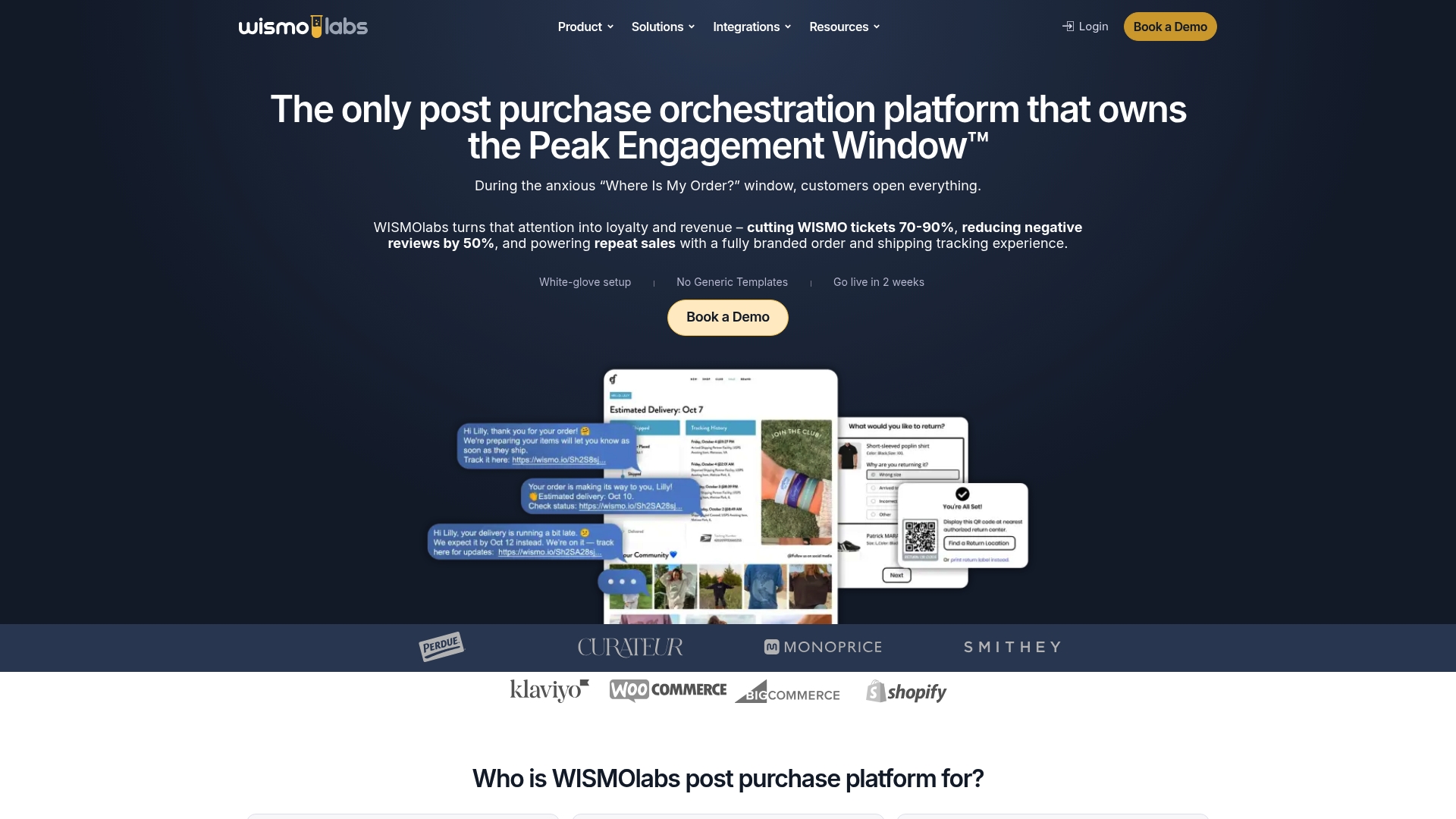
Ready to eliminate frustrating shipping questions and turn every order into a strategic growth moment? Explore how WISMOlabs delivers actionable insights and seamless integration with platforms like Shopify and Magento. Start transforming your post-purchase experience today by visiting WISMOlabs and take the first step toward smarter customer loyalty and higher ROI.
Frequently Asked Questions
What is post-purchase analytics in ecommerce?
Post-purchase analytics is the systematic analysis of customer behavior and interactions after a purchase, focusing on areas such as delivery performance, customer satisfaction, and retention indicators to drive loyalty and revenue growth.
How can post-purchase analytics improve customer satisfaction?
By collecting data on delivery experiences, support interactions, and overall customer sentiment, ecommerce businesses can identify pain points and enhance the overall customer experience, ultimately leading to increased satisfaction and retention.
What types of data are included in post-purchase analytics?
Post-purchase analytics includes delivery performance signals, customer experience indicators, and behavioral engagement data, such as shipping accuracy, interaction quality, and return patterns, all crucial for understanding customer behavior.
How can I monetize the peak engagement window after a purchase?
Monetizing the peak engagement window involves leveraging recent purchase data for personalized upsell recommendations, targeted cross-selling techniques, and dynamic pricing strategies to encourage additional purchases immediately following a transaction.