
Every North American retailer feels the pressure when customers flood support with ‘Where is my order?’ messages. Customers expect more than a tracking link after checkout—they want reassurance, updates, and clear answers that build confidence in your brand. Understanding the distinct roles within post-purchase customer service lets your team address each expectation with precision, driving loyalty and reducing avoidable inquiries from the start.
Table of Contents
- Defining Post-Purchase Customer Service Roles
- Comparing Reactive Vs. Proactive Service Models
- Key Functions And Technologies Involved
- Real-World Impact On Ecommerce Performance
- Common Mistakes That Undermine Post-Purchase Care
Key Takeaways
| Point | Details |
|---|---|
| Role Diversity | Post-purchase customer service encompasses various roles such as order tracking, problem resolution, and retention strategies that collectively influence customer experiences. |
| Proactive Engagement | Shifting from reactive to proactive service enhances customer satisfaction and fosters loyalty by anticipating issues and addressing them before customers reach out. |
| Technology Integration | Utilizing advanced technologies like AI and CRM systems streamlines processes, providing personalized, consistent communication that improves overall customer interactions. |
| Impact on Revenue | Effective post-purchase service acts as a revenue driver, improving customer retention and repurchase rates through meaningful engagement and timely support. |
Defining Post-Purchase Customer Service Roles
Post-purchase customer service isn’t a single function. It’s a collection of distinct roles that work together to shape how customers experience your brand after they hit the buy button. Understanding these roles separately helps you staff appropriately, measure performance accurately, and deliver the quality customers expect. The roles extend well beyond problem solving. Research on online post-purchase customer experience shows that customer service plays multiple critical functions including delivery support, return and refund administration, and proactive communication that directly impacts whether customers return for future purchases.
The first major role is the order tracker and communicator. This person or system keeps customers informed at every step of their journey from warehouse to doorstep. They manage shipping notifications, delivery windows, and real-time status updates. In high-volume operations, this role often blends with automation, but the human judgment remains essential for deciding what information matters and when to send it. The second role is the problem resolver who handles shipping delays, damaged goods, lost packages, and other delivery failures. But here’s the critical distinction: modern post-purchase service goes beyond reactive problem-solving. According to research on evolving post-purchase service roles, customer service functions as a differentiator that shapes customer emotions and loyalty, not just addresses complaints. Your problem resolvers are actually brand ambassadors shaping perception during vulnerable moments when customers question their purchase decision.
The third role is the review and feedback facilitator. This person determines when to request reviews, manages negative feedback, and identifies at-risk customers before they leave bad reviews. The fourth role is the cross-sell and upsell strategist. During the post-purchase window, when customer attention is highest, there’s an opportunity to introduce complementary products or relevant accessories. Finally, there’s the retention specialist who uses post-purchase interactions to build loyalty, create exclusive offers, and encourage repeat business. These roles often overlap in smaller teams, but recognizing each one separately helps you identify gaps in your current approach. You might be excellent at tracking but weak at retention, or great at problem-solving but missing upsell opportunities entirely.
Pro tip: Map each role to a specific person or system in your operation, then audit whether that role is actually being performed, or if it’s falling through the cracks due to unclear ownership.
Here’s a comparison of common post-purchase service roles and their primary business impact:
| Role | Core Responsibility | Business Impact |
|---|---|---|
| Order Tracker & Communicator | Notifies customers about order and delivery status | Reduces WISMO inquiries, boosts transparency |
| Problem Resolver | Handles delivery delays and issues | Builds trust during order problems |
| Review & Feedback Facilitator | Manages feedback requests and reviews | Detects churn risk, enhances brand advocacy |
| Cross-Sell/Upsell Strategist | Suggests related products post-purchase | Increases average order value |
| Retention Specialist | Drives repeat business through offers | Improves loyalty, reduces churn |
Comparing Reactive vs. Proactive Service Models
Most customer service operations run on reactive mode. A customer contacts you with a problem, and you solve it. This approach is familiar, easy to measure, and doesn’t require significant investment upfront. But it comes with a steep hidden cost: you’re always playing catch-up, customers are already frustrated before you engage, and you’re missing opportunities to build loyalty before issues happen. The alternative is proactive service, where you anticipate problems and reach out to customers before they even realize something is wrong.
The difference shows up clearly in how reactive versus proactive support models impact customer satisfaction at each stage of the journey. Reactive service typically waits for customers to report issues. Your team then investigates, resolves the problem, and hopes the customer isn’t already leaving a negative review. Proactive service takes the opposite approach: you monitor shipping progress, track potential delays, analyze delivery patterns, and communicate before problems escalate. When a package is stuck in a distribution center for longer than expected, you send an update explaining what’s happening and when delivery will actually arrive. When you notice a customer’s order might arrive damaged based on carrier handling data, you flag it early and prepare a replacement. This shifts the entire dynamic from damage control to confidence building.
The operational shift from reactive to proactive requires infrastructure changes. You need visibility into real-time carrier data, not just final delivery notifications. You need decision-making logic to determine when communication adds value versus when it adds noise. You need to understand how proactive strategies use data analytics and real-time communication to prevent issues rather than react to them. For ecommerce teams managing post-purchase journeys, this means moving beyond basic shipping notifications to intelligent orchestration that treats the period between purchase and delivery as a strategic window. The numbers support the investment: proactive models generate higher customer satisfaction scores, lower support ticket volume, and stronger repeat purchase rates because customers feel informed and cared for instead of abandoned.
The challenge for most ecommerce managers is that proactive service requires upfront investment in technology and process redesign. You can’t simply add proactive touches to an existing reactive operation. You need to fundamentally rethink how you monitor shipments, what triggers communication, and how you respond to patterns rather than individual problems. Teams that make this shift successfully report dramatic reductions in WISMO inquiries because customers never feel lost in the first place.
Pro tip: Start proactive service small by identifying your most common post-purchase complaint type, then build automated early warning for that specific issue before expanding to other scenarios.
Key Functions and Technologies Involved
Post-purchase customer service runs on two parallel tracks: functions that define what you’re trying to accomplish, and technologies that make those functions possible at scale. The core functions are straightforward to describe but complex to execute. You need personalized engagement that makes each customer feel valued rather than processed. You need complaint resolution that fixes problems quickly and converts frustrated customers into loyalists. You need real-time communication that keeps customers informed without overwhelming them with irrelevant notifications. You need return and refund management that removes friction from the process. And you need data analysis that reveals patterns so you can improve operations rather than just react to individual complaints. Research on essential post-purchase service functions emphasizes that these functions working together enhance customer satisfaction and retention across ecommerce operations globally.
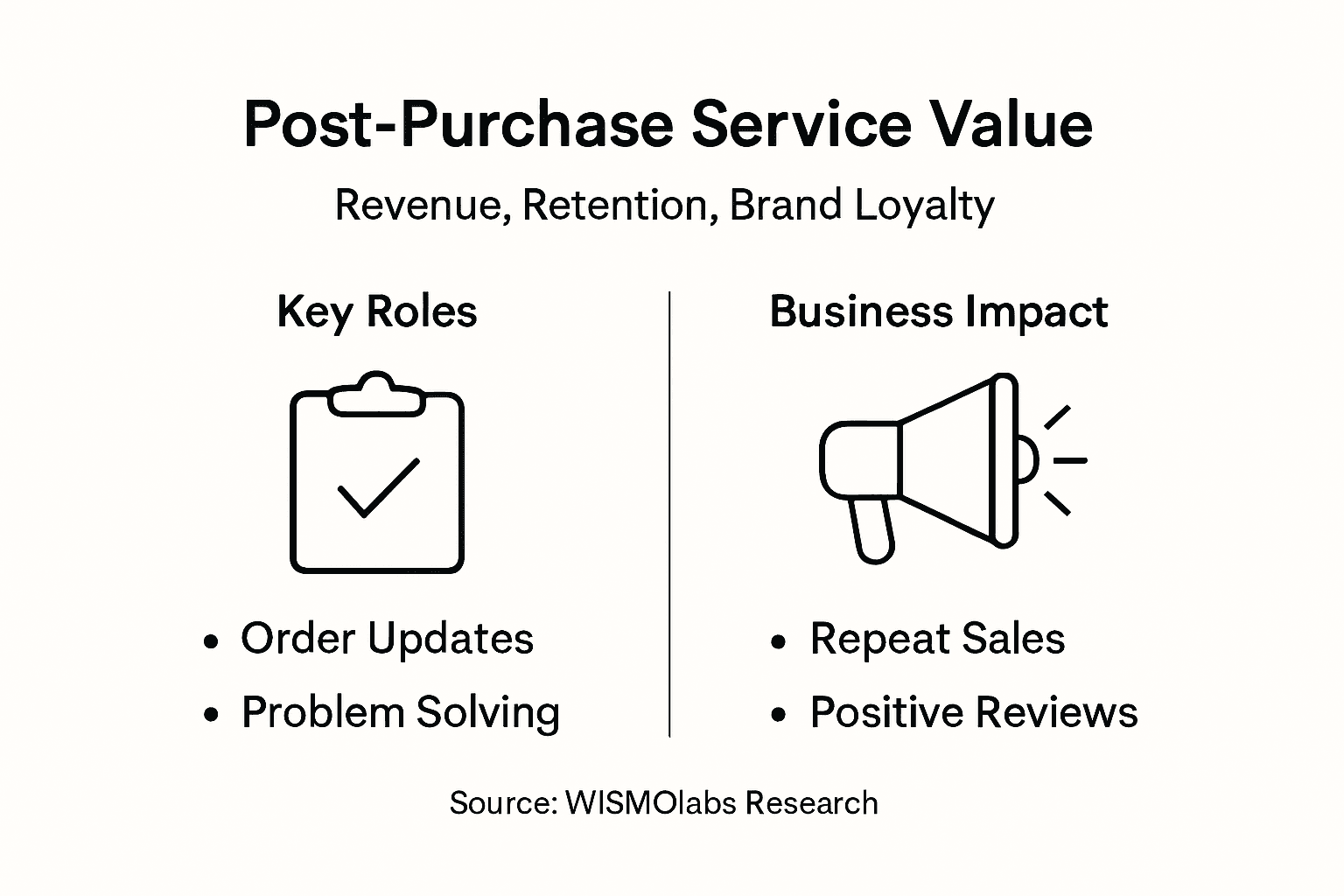
The technology stack that enables these functions has evolved dramatically. Customer Relationship Management (CRM) systems serve as the central nervous system, storing customer data and interaction history so every team member can see the full picture. Multichannel platforms let you communicate through email, SMS, in-app messaging, and push notifications without creating separate workflows for each channel. Real-time tracking systems pull data from carrier networks and parse it into actionable insights. This is where the heavy lifting happens. Basic tracking shows “your package is in transit.” Intelligent tracking shows “your package hit a delay at the Memphis hub, so I’m sending you an update explaining why and when it will actually arrive.” That distinction requires AI and machine learning. AI technologies enhance post-purchase operations by automating complaint handling, providing automated updates, and powering analytics that improve efficiency and transparency across the entire process.
The most advanced technology stack includes AI chatbots that handle basic questions 24/7 without requiring human staff. Automated decision engines that evaluate order context, customer history, and shipment data to determine exactly when and how to communicate. Sentiment analysis tools that flag negative customer language before it becomes a public review. Predictive analytics that identify which orders are likely to have problems so you can intervene early. Integration layers that connect your ecommerce platform, shipping carriers, payment processors, and customer service tools so data flows seamlessly. For most ecommerce managers, the challenge isn’t choosing individual tools but orchestrating them into a cohesive system where functions flow naturally and data transfers without manual handoffs.
Pro tip: Audit your current technology stack to identify which functions are working smoothly and which ones require manual workarounds, then prioritize closing those gaps before adding new capabilities.
The table below summarizes the technological tools essential for modern post-purchase experiences:
| Technology | Enables | Benefit to Ecommerce Business |
|---|---|---|
| CRM Systems | Unified customer data management | Contextual support, faster service |
| AI Chatbots | 24/7 instant assistance | Reduces response times, scales support |
| Predictive Analytics | Early issue detection | Minimizes complaints, boosts satisfaction |
| Integration Layers | Connects ecommerce tools seamlessly | Prevents data silos, ensures accuracy |
Real-World Impact on eCommerce Performance
Post-purchase customer service isn’t a cost center. It’s a revenue engine. This distinction matters because it changes how you invest in the function and how you measure success. When you treat post-purchase service as a support cost, you minimize spending and accept basic service levels. When you treat it as a growth lever, you invest strategically and measure impact on the bottom line. The evidence is clear: post-purchase satisfaction directly influences customer retention and repurchase intentions, with effective services including personalized communication and grievance handling creating measurable improvements in customer loyalty and lifetime value across ecommerce businesses.
The financial impact shows up across multiple metrics. Customer retention rates improve when post-purchase experiences are positive. A retained customer generates revenue multiple times, so a 10 percent improvement in retention translates directly to double-digit revenue growth. Repurchase rates accelerate because customers who feel cared for after their first purchase return faster and buy more frequently. Average order value increases when you use the post-purchase window for intelligent product recommendations based on what customers actually bought. And customer acquisition costs effectively decline because retained customers require far less marketing investment than acquiring new ones. Research demonstrates that post-purchase services contribute to improved sales and cash flows while also driving word-of-mouth marketing and reducing price sensitivity, all crucial competitive factors in global ecommerce.

Beyond these direct metrics, post-purchase service impacts brand perception and market position. Customers who receive proactive shipping updates and responsive problem resolution become brand advocates who recommend your company to friends and family. Negative reviews decrease when you address issues before customers feel compelled to complain publicly. Your support team’s workload decreases because fewer customers need to contact you when they’re already informed and confident about their order. This creates a virtuous cycle: better post-purchase experience leads to fewer WISMO inquiries, which frees your team to focus on higher-value interactions, which further improves customer satisfaction. For North American ecommerce managers, the practical reality is that effective post-purchase campaign measurement reveals exactly where your investment is generating returns.
The companies winning in ecommerce aren’t competing on price or product selection alone. They’re competing on how they make customers feel after the purchase. That feeling is shaped entirely by post-purchase service. When customers receive intelligent communication, helpful updates, and quick problem resolution, they perceive your brand as customer-centric and trustworthy. When they’re left wondering where their order is and struggling to get help, they perceive your brand as indifferent. The gap between these two experiences is entirely controllable through post-purchase strategy investment.
Pro tip: Start measuring post-purchase impact by tracking repeat purchase rate and customer lifetime value separately for customers with excellent post-purchase experiences versus mediocre ones. This data will make the value obvious to stakeholders.
Common Mistakes That Undermine Post-Purchase Care
Most ecommerce teams know post-purchase service matters, yet they still make predictable mistakes that undermine their efforts. These aren’t failures of intention but rather failures of system design and execution. The first major mistake is treating post-purchase as reactive only. Teams wait for customer inquiries to arrive, then respond. This approach guarantees you’ll miss customers who are anxious but haven’t contacted you yet. They’re sitting with purchase remorse, worried about their order, and wondering if something went wrong. By the time they reach out, they’re already frustrated. Common post-purchase care pitfalls include neglecting clear communication about delivery and return policies, providing inadequate customer support responsiveness, and failing to personalize engagement, all of which lead to decreased satisfaction and damaged brand trust.
The second mistake is communicating too much or too little. Some teams bombard customers with every notification the carrier sends, creating notification fatigue and anxiety. “Your package left the facility. Your package entered the facility. Your package is loading.” By the tenth notification, customers stop reading. Other teams communicate almost nothing, leaving customers wondering if their order is even being shipped. The sweet spot is strategic communication at moments that actually matter. The third mistake is ignoring the emotional dimension of post-purchase. Customers aren’t purely rational after purchase. They’re experiencing anxiety about whether they made the right choice, worry about delivery timing, and concern about product quality. When your communication ignores this emotional reality and focuses only on transactional information, you miss opportunities to build confidence. Reactive-only approaches that ignore emotional aspects undermine customer loyalty and require proactive, experiential strategies to strengthen post-purchase outcomes.
The fourth mistake is using siloed channels. Your SMS team doesn’t coordinate with your email team. Your in-app messaging doesn’t sync with your email workflow. Customers receive conflicting information or redundant messages across channels. Modern post-purchase care requires multichannel orchestration where you maintain consistent messaging and intelligent routing across all touchpoints. The fifth mistake is not personalizing at scale. Generic “Your order is on the way” messages work, but they don’t build connection. When you can reference the customer’s order contents, their purchase history, or their location to provide relevant information, you transform transactional updates into meaningful interactions. This requires data integration and decision logic, not just manual personalization.
Finally, teams often fail to measure and optimize. Without clear metrics on WISMO reduction, review impact, and repeat purchase correlation, it’s impossible to improve. You’re flying blind. Teams that succeed in post-purchase service invest in measurement systems that reveal what’s working and what’s not, then iterate systematically based on that feedback.
Pro tip: Conduct an audit of your last 100 customer support tickets to identify which ones could have been prevented through better post-purchase communication, then build a simple process to address that specific gap first.
Transform Your Post-Purchase Customer Service Into a Growth Engine
The article highlights a crucial challenge many ecommerce brands face today: moving beyond reactive, generic post-purchase communications to deliver proactive, personalized, and emotionally intelligent service. Customers want more than just updates about shipping. They need transparency, reassurance, and meaningful engagement that builds trust and loyalty during the highly sensitive Peak Engagement Window™ between purchase and delivery. Common pain points include managing WISMO inquiries, reducing negative reviews, and turning post-purchase interactions into revenue opportunities through upselling and retention.
This is where WISMOlabs changes the game. Our intelligent post-purchase orchestration platform treats this critical moment as a sophisticated Decision Layer rather than a simple notification system. Using proprietary AI and real-time shipment data analysis, WISMOlabs ensures customers receive high-value, branded updates exactly when they need them, reducing anxiety and increasing confidence. Our platform drives a 70-90 percent reduction in “Where Is My Order?” tickets and cuts negative reviews by half. By capitalizing on the Peak Engagement Window™, you can unlock 15-30x ROI through personalized cross-sells and upsells while building lasting loyalty.
Discover how WISMOlabs transforms post-purchase strategy and stop losing customers to frustration and silence.
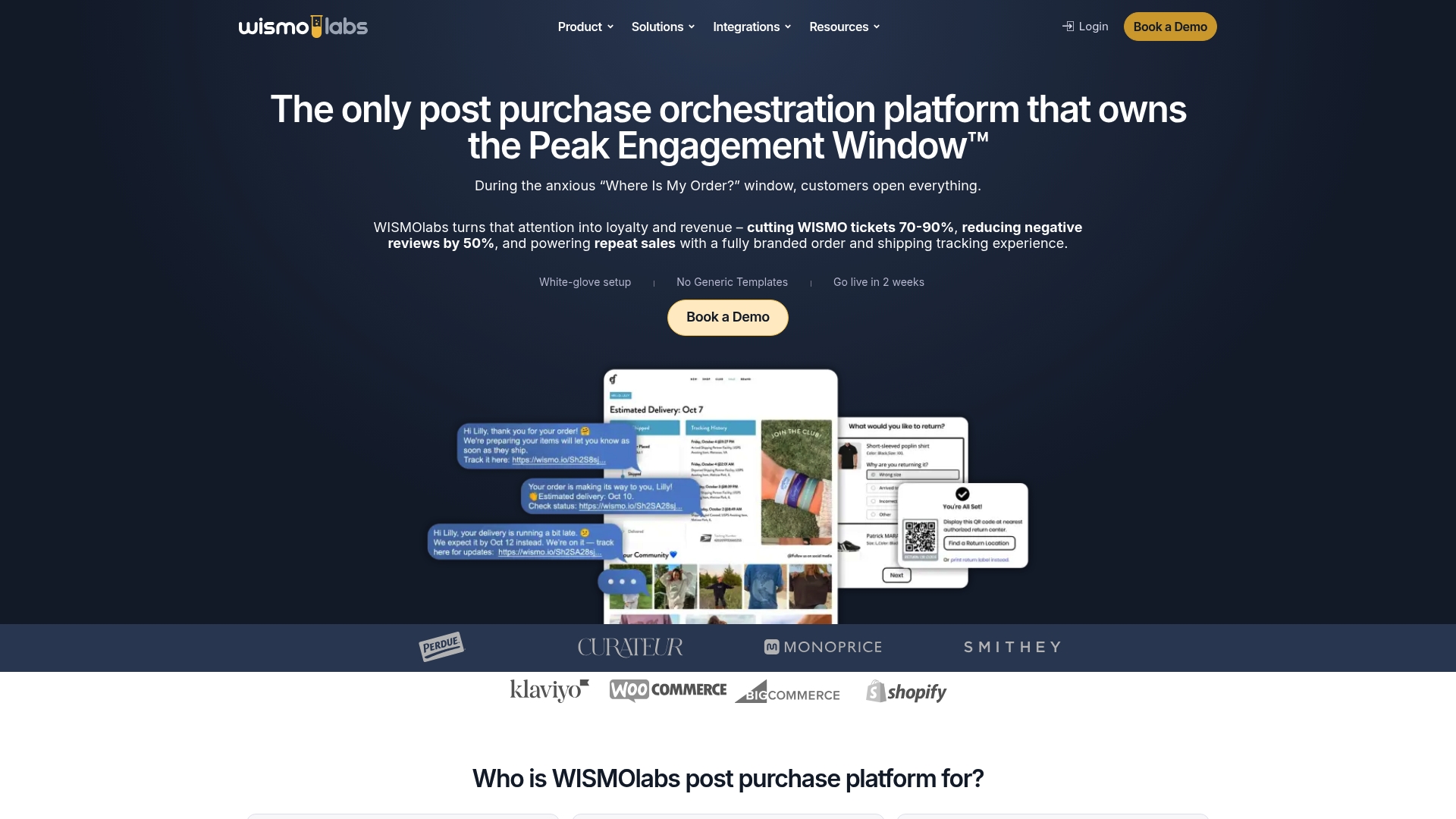
Take control of your post-purchase experience now and convert anxious customers into passionate brand advocates. Visit WISMOlabs to learn more and get started with a white-glove setup that gets your brand live in under two weeks.
Frequently Asked Questions
What are the key roles in post-purchase customer service?
The key roles include order trackers and communicators, problem resolvers, review and feedback facilitators, cross-sell and upsell strategists, and retention specialists. Each plays a crucial role in enhancing customer experience and satisfaction after a purchase.
How does proactive customer service differ from reactive customer service?
Proactive customer service anticipates issues and communicates with customers before they even realize a problem exists, whereas reactive customer service waits for customers to report problems before addressing them. This leads to higher customer satisfaction and loyalty.
Why is personalized engagement important in post-purchase service?
Personalized engagement makes customers feel valued and can significantly improve their satisfaction and loyalty. Tailored communication, based on their order history or preferences, helps build a stronger emotional connection with the brand.
What technologies enhance post-purchase customer service?
Technologies such as CRM systems, AI chatbots, predictive analytics, and integration layers enable efficient management and communication in post-purchase service, leading to improved customer satisfaction and streamlined operations.
Recommended
- Discover Effective Post-Purchase Follow-Up Techniques: Building Customer Loyalty After the Sale – WISMOlabs
- Optimizing The Post Purchase Experience – A Brief Guide
- 3 Post-Purchase Marketing Strategies That Boost ROI
- Unlock the Power of Post-Purchase: How it Can Make or Break Your Ecommerce Business – WISMOlabs