Every retail brand manager knows the challenges of turning raw customer and shipping data into meaningful customer experiences. With growing volumes of information moving across global ecommerce networks, the ability to interpret this data is now a key driver for reducing support inquiries and elevating satisfaction. By focusing on actionable insights from customer data and shipment context, you can create seamless post-purchase communication that sets your brand apart and streamlines support operations.
Table of Contents
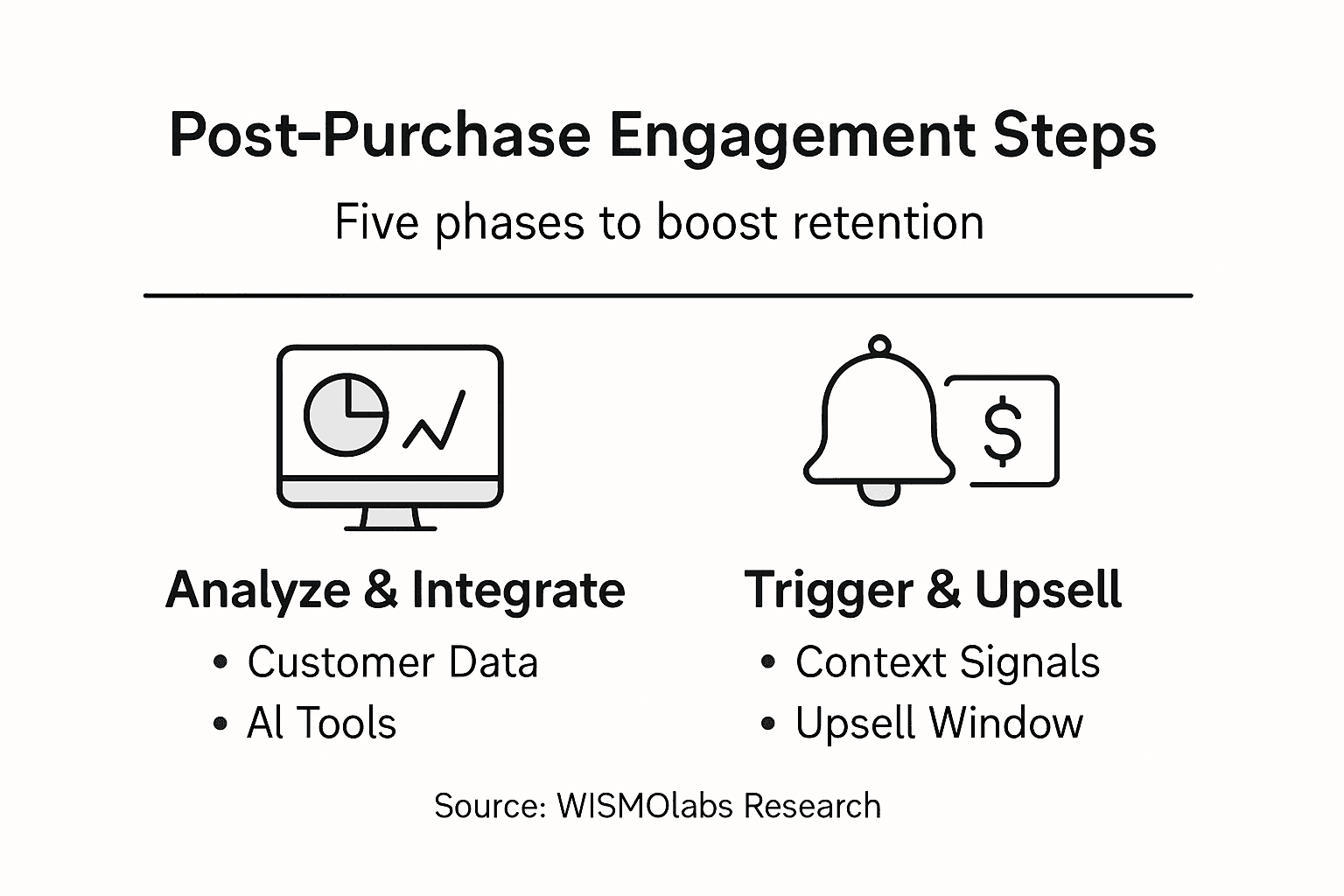
- Step 1: Assess Customer Data And Shipment Context
- Step 2: Integrate Intelligent Engagement Decision Tools
- Step 3: Deploy Personalized, Context-Driven Notifications
- Step 4: Leverage Peak Engagement Window For Upsells
- Step 5: Monitor Impact And Refine Communication Flows
Quick Summary
| Key Point | Explanation |
|---|---|
| 1. Analyze customer data systematically | Collect data points such as purchase history and shipping preferences to identify shipping patterns. |
| 2. Implement AI-driven engagement tools | Use AI tools to create personalized customer interactions and analyze behaviors for improved service. |
| 3. Develop context-aware notifications | Deliver timely, relevant notifications based on previous purchases and customer behaviors for better engagement. |
| 4. Time upsell offers strategically | Present upsell opportunities immediately after purchase when customers are most receptive and engaged. |
| 5. Continuously monitor communication effectiveness | Track performance metrics, refine strategies, and optimize messaging for improved post-purchase interactions. |
Step 1: Assess customer data and shipment context
Understanding the nuanced relationship between customer data and shipment context is crucial for transforming raw information into actionable insights. Ecommerce brands can leverage sophisticated data analysis techniques to decode complex shipping patterns and customer behaviors. Analyzing critical shipment data metrics allows retailers to predict potential issues and optimize customer experiences before problems arise.
The assessment process begins by collecting comprehensive data points including purchase history, customer demographics, shipping preferences, previous delivery performance, and real time carrier updates. Successful analysis requires integrating multiple data streams systematically. Retailers should focus on identifying patterns such as delivery time variations, geographical shipping challenges, and individual customer expectations. Predictive analytics for consumer return behaviors can help anticipate potential friction points in the shipping experience and proactively address them.
By implementing robust data collection and analysis strategies, brands can transform shipping from a transactional process into a strategic customer engagement opportunity. This approach allows for personalized communication, precise expectations management, and continuous improvement of logistics performance.
Pro tip: Invest in advanced analytics tools that can automatically synthesize complex shipping data into clear, actionable insights without requiring manual intervention.
Step 2: Integrate intelligent engagement decision tools
Ecommerce brands must strategically implement intelligent decision tools that transform customer interactions from generic transactions to personalized experiences. AI technologies enable dynamic customer engagement by analyzing complex behavioral patterns and predicting individual customer needs with unprecedented accuracy.
Successful integration involves selecting AI powered tools that can seamlessly analyze multiple data streams and generate real time insights. These intelligent systems should incorporate features like automated segmentation, predictive messaging, and personalized recommendation engines. Intelligent engagement platforms can dynamically adapt communication strategies based on individual customer behaviors, preferences, and historical interaction data.

The key to effective implementation is creating a holistic ecosystem where AI tools communicate across different touchpoints. This means connecting customer support platforms, shipping notification systems, personalization engines, and analytics dashboards into a unified intelligent framework that can anticipate and proactively address customer needs.
Pro tip: Select AI engagement tools that offer robust integration capabilities and provide transparent machine learning models to ensure continuous performance improvement and maintain customer trust.
Here is a summary of how intelligent engagement tools can transform the customer experience:
| Engagement Tool Feature | Functionality | Business Impact |
|---|---|---|
| Automated Segmentation | Groups customers by real-time data | Enables targeted, relevant messaging |
| Predictive Messaging | Anticipates communication needs | Increases engagement and customer retention |
| Recommendation Engine | Suggests products based on behavior | Drives higher upsell and cross-sell rates |
| Integration Capabilities | Connects with various brand touchpoints | Creates seamless, unified customer journeys |
Step 3: Deploy personalized, context-driven notifications
Transforming customer communication requires a strategic approach to delivering notifications that feel relevant and timely. Personalized notification strategies can dramatically improve consumer trust and engagement by providing precisely targeted information at the right moment.
Successful deployment involves implementing a sophisticated system that analyzes multiple contextual signals including customer behavior, purchase history, current shipping status, and individual preferences. Context-aware notification frameworks enable brands to create dynamic communication that adapts in real time. This means moving beyond generic updates to crafting messages that feel like they were designed specifically for each customer.
The implementation process requires carefully mapping customer journeys and establishing intelligent triggers that determine when and how to communicate. Brands should focus on creating a communication ecosystem that prioritizes relevance over frequency ensuring that each notification provides genuine value rather than becoming digital noise.
Pro tip: Develop a notification scoring system that evaluates each potential communication against criteria of relevance, timeliness, and expected customer value before sending.
Step 4: Leverage Peak Engagement Window for upsells
Successful ecommerce brands understand that timing is everything when presenting additional product opportunities. AI-driven upsell strategies can increase conversion rates by identifying precise moments when customers are most receptive to additional purchases.
The peak engagement window represents a critical timeframe immediately following a customer purchase when their excitement and trust are at maximum levels. Effective implementation requires analyzing individual customer data to create personalized recommendations that feel natural and valuable. Customer engagement optimization enables brands to strategically present complementary products or upgrades that genuinely enhance the original purchase.
To maximize this opportunity, brands must develop intelligent recommendation algorithms that consider factors like previous purchase history, browsing behavior, and real time contextual signals. The goal is to craft upsell offers that feel like helpful suggestions rather than intrusive sales pitches ensuring a seamless and positive customer experience.
Pro tip: Create dynamic upsell recommendations that automatically adjust based on individual customer profiles and recent interaction data to maintain relevance and perceived value.
Step 5: Monitor impact and refine communication flows
Transforming post-purchase engagement requires a systematic approach to measuring and improving communication strategies. Communication impact tracking techniques enable brands to move beyond surface level metrics and understand the true effectiveness of their customer interactions.
Successful monitoring involves establishing comprehensive analytics frameworks that capture multiple dimensions of communication performance. This means tracking not just basic metrics like open rates and click throughs but deeper indicators such as customer sentiment, engagement duration, and subsequent purchase behaviors. Electronic commerce communication strategies emphasize the importance of continuous iteration and learning from each customer interaction to progressively enhance communication quality.
The refinement process should be data driven and dynamic. Brands need to create feedback loops that automatically analyze communication performance and suggest intelligent adjustments. This approach allows for real time optimization of messaging timing, tone, and content ensuring that each communication becomes more precisely tailored to individual customer preferences and needs.
Pro tip: Implement a quarterly communication performance audit that uses machine learning algorithms to identify subtle patterns and opportunities for strategic refinement.
The table below highlights key metrics for monitoring and refining post-purchase communication:
| Metric | What It Measures | Why It Matters |
|---|---|---|
| Engagement Duration | Time spent interacting with messages | Gauges customer interest |
| Sentiment Analysis | Attitude in customer responses | Reveals satisfaction and loyalty |
| Subsequent Purchase Rate | Repeat buying after communication | Indicates effectiveness of outreach |
| Communication Timing Effect | Impact of message timing | Optimizes delivery for engagement |
Elevate Your Post-Purchase Engagement with Intelligent Decision-Making
The article highlights the common challenges ecommerce brands face in managing post-purchase communication effectively. Customers often experience anxiety from redundant notifications, and brands miss strategic chances to boost revenue through personalized upsells during the Peak Engagement Window. Key goals include leveraging real-time shipment context alongside customer behavior to deliver relevant, timely messages that build trust and loyalty.
WISMOlabs is designed exactly for these challenges. By treating the post-purchase journey as a sophisticated Decision Layer, WISMOlabs evaluates multiple data streams to decide the perfect moment and message for each customer. This proactive approach reduces “Where Is My Order?” tickets by up to 90 percent and transforms transaction updates into growth opportunities with tailored upsell offers that drive 15-30x ROI. With seamless integrations for Shopify, BigCommerce, Magento, and Salesforce, WISMOlabs helps turn fragmented post-purchase communications into a unified engine for success.
Discover how you can transform your post-purchase strategy into a strategic advantage with WISMOlabs. Start delivering high-value, branded updates that your customers will appreciate and see the difference in engagement and revenue.
Looking to optimize your post-purchase communication using intelligent engagement and precise timing
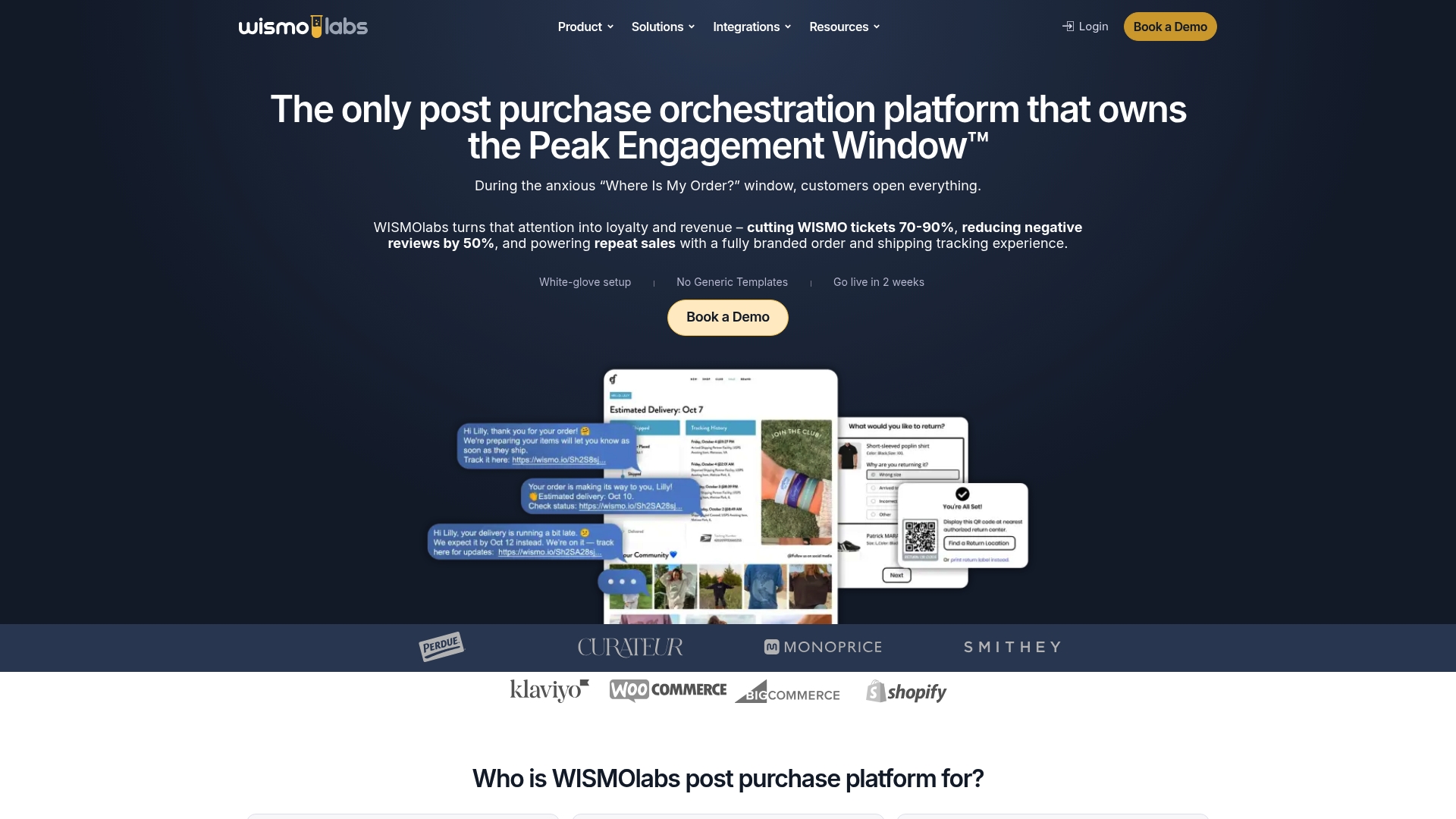
Visit WISMOlabs today and unlock the power of the Peak Engagement Window™ with a platform built to grow your customer loyalty and bottom line now.
Frequently Asked Questions
What are the key steps in creating a post-purchase engagement strategy for ecommerce?
To develop an effective post-purchase engagement strategy, start by assessing customer data and shipment context to identify patterns. Next, integrate intelligent engagement decision tools, deploy personalized notifications, leverage upsell opportunities during peak engagement windows, and continuously monitor and refine your communication flows to enhance customer satisfaction.
How can I analyze customer data to improve my shipping process?
Analyze critical shipment data metrics like delivery time variations and customer preferences to predict potential issues. Focus on collecting data points such as purchase history and real-time carrier updates, and use this information to enhance the overall shipping experience and address problems proactively.
What are some effective ways to personalize customer notifications?
To personalize customer notifications, develop a system that analyzes signals like behavior and shipping status to tailor messages. Create relevant and timely communications that feel customized for each customer, moving beyond generic updates to relevant messages that enhance their experience.
How does leveraging upsell opportunities relate to customer engagement?
Leveraging upsell opportunities involves timing your offers right after a purchase when customers are most enthusiastic. Implement intelligent recommendation algorithms to suggest complementary products that enhance the initial purchase, thereby improving overall customer engagement and increasing your sales conversion rates.
What metrics should I track to measure the effectiveness of my post-purchase engagement?
Track key metrics such as engagement duration, sentiment analysis, and subsequent purchase rates to measure communication effectiveness. Analyzing these metrics will help you understand customer satisfaction and refine your strategy in real-time for better results.
How can I refine my communication strategies over time?
Refine your communication strategies by establishing feedback loops that automatically capture and analyze customer interaction data. Conduct quarterly audits to identify patterns, using this information to adapt your messaging’s timing, tone, and content for better relevance and impact.