Most american shoppers expect instant updates once they make a purchase, but only a fraction of retailers truly meet those expectations. For ecommerce managers, missed messages lead to frustrated customers, extra support cases, and lost loyalty. Reviewing each touchpoint, from SMS alerts to branded tracking pages, uncovers powerful ways to turn post-purchase interactions into trust-building moments that keep shoppers coming back.
Table of Contents
- Step 1: Assess Current Post-Purchase Communication Channels
- Step 2: Integrate Real-Time Order and Customer Data Sources
- Step 3: Implement Branded, Proactive Delivery Notifications
- Step 4: Enable Upsell and Engagement Opportunities on Tracking Pages
- Step 5: Measure Results and Refine Your Optimization Approach
Quick Summary
| Key Insight | Explanation |
|---|---|
| 1. Audit Communication Channels | Review all current post-purchase channels to identify effectiveness and service gaps for meaningful customer engagement. |
| 2. Integrate Real-time Data Sources | Connect multiple data sources to provide a unified view of customer interactions and order statuses for improved responsiveness. |
| 3. Personalize Delivery Notifications | Create engaging, branded notifications during delivery to enhance customer experience and loyalty through personalized interactions. |
| 4. Optimize Tracking Pages for Upsells | Enhance tracking pages with strategic product recommendations that can lead to increased sales while informing customers. |
| 5. Measure and Refine Performance | Establish a comprehensive framework to track KPIs, allowing for data-driven improvements to the post-purchase experience. |
Step 1: Assess current post-purchase communication channels
Understanding and evaluating your existing communication infrastructure is critical for optimizing customer experience. Your goal is to map out all current channels customers use to interact after making a purchase, examining their effectiveness and potential gaps in service delivery.
Begin by conducting a comprehensive audit of your communication touchpoints. This involves systematically reviewing email systems, SMS notifications, customer support platforms, tracking pages, and social media interaction points. Generative AI tools are increasingly enhancing the quality of post-purchase communication by providing personalized and timely responses, so consider their potential integration during your assessment.
Carefully document each channel’s performance metrics like response time, customer satisfaction ratings, resolution rates, and user engagement levels. Pay special attention to moments of friction or customer frustration. The key is identifying where communication breaks down and determining strategic improvements that can transform post-purchase interactions from transactional updates to meaningful engagement opportunities.
Pro tip: Create a visual communication channel map that tracks every potential customer touchpoint, helping you quickly identify strengths and weaknesses in your current post-purchase experience strategy.
Here’s a summary of key post-purchase communication channels and their business impact:
| Channel Type | Primary Purpose | Common Metrics | Potential Business Impact |
|---|---|---|---|
| Order confirmation and updates | Delivery rates, open rates | Builds trust, enables detailed info | |
| SMS | Instant alerts and notifications | Response time, click-through rate | Fast engagement, high immediacy |
| Support Platform | Problem resolution, inquiries | Resolution rate, satisfaction score | Boosts loyalty, reduces churn |
| Tracking Page | Order status and product info | Time on page, engagement | Increases transparency, drives upsell |
| Social Media | Feedback and brand engagement | Sentiment score, interactions | Amplifies brand, handles public issues |
Step 2: Integrate real-time order and customer data sources
Streamlining your data integration strategy is crucial for creating a comprehensive and responsive post-purchase experience. Your objective is to connect multiple data sources seamlessly, enabling a holistic view of customer interactions and order statuses across different platforms and touchpoints.
Real-time data analytics can transform e-commerce decision-making processes by providing dynamic insights into customer behavior and operational performance. Start by identifying all potential data sources such as order management systems, customer relationship management platforms, shipping carriers, website analytics, and customer support databases. Develop a centralized data integration approach that allows for seamless information flow and real-time updates.

Implement robust integration frameworks that enable automatic data synchronization and cross-platform communication. This means creating APIs or middleware solutions that can pull and push data between different systems in real-time, ensuring that customer support representatives, marketing teams, and logistics managers have instant access to the most current information. Pay close attention to data quality, consistency, and security protocols during the integration process.
Pro tip: Invest in middleware solutions that offer robust data transformation capabilities, allowing you to standardize and normalize data from multiple sources before integration.
Step 3: Implement branded, proactive delivery notifications
Creating a seamless and engaging delivery notification strategy transforms routine shipping updates into meaningful customer touchpoints that reinforce your brand identity and build long-term loyalty. Your primary goal is to design notification systems that go beyond basic tracking information and instead deliver personalized, contextually relevant communication.
Proactive notification systems can dramatically enhance customer satisfaction by anticipating user needs before customers even request information. Begin by mapping out your entire delivery journey and identifying key communication moments where notifications can provide value. This means developing a comprehensive notification framework that covers order confirmation, shipment processing, transit updates, estimated delivery times, and final delivery confirmation. Each notification should reflect your brand voice, incorporate visual design elements consistent with your overall brand identity, and offer clear actionable information.
Prioritize creating notifications that feel conversational and helpful rather than transactional. Leverage data insights to personalize messages based on customer preferences, previous purchase history, and specific order details. Integrate multiple communication channels like SMS, email, and mobile app push notifications to ensure customers receive updates through their preferred platforms. Implement intelligent routing that allows customers to easily take next steps such as rescheduling delivery, providing delivery instructions, or accessing real-time tracking information.
Pro tip: Design notification templates with modular content blocks that can be dynamically populated with personalized information, enabling rapid customization without rebuilding entire message structures.
Step 4: Enable upsell and engagement opportunities on tracking pages
Transforming your order tracking pages from simple status updates into strategic revenue generation platforms requires a thoughtful and data driven approach. Your primary objective is to create an interactive experience that not only keeps customers informed but also provides compelling opportunities for additional purchases and brand engagement.
Cross-selling strategies on tracking pages can significantly increase average order value by presenting personalized product recommendations at a moment of high customer attention. Design your tracking page with strategic product placement that feels natural and helpful rather than intrusive. Implement intelligent recommendation algorithms that analyze the customer’s current order, purchase history, and browsing behavior to surface complementary products, accessories, or upgraded versions of their existing purchase.
Consider the tracking page as a dynamic canvas for customer interaction. Incorporate engaging visual elements like product carousels, limited time offers, and bundle recommendations that are contextually relevant to the customer’s current order. Utilize social proof techniques such as customer reviews, popularity indicators, and scarcity messaging to create urgency and encourage additional purchases. Ensure that the upsell and cross-sell elements are seamlessly integrated into the tracking experience, maintaining a clean and user friendly interface that prioritizes order information while subtly presenting additional value propositions.
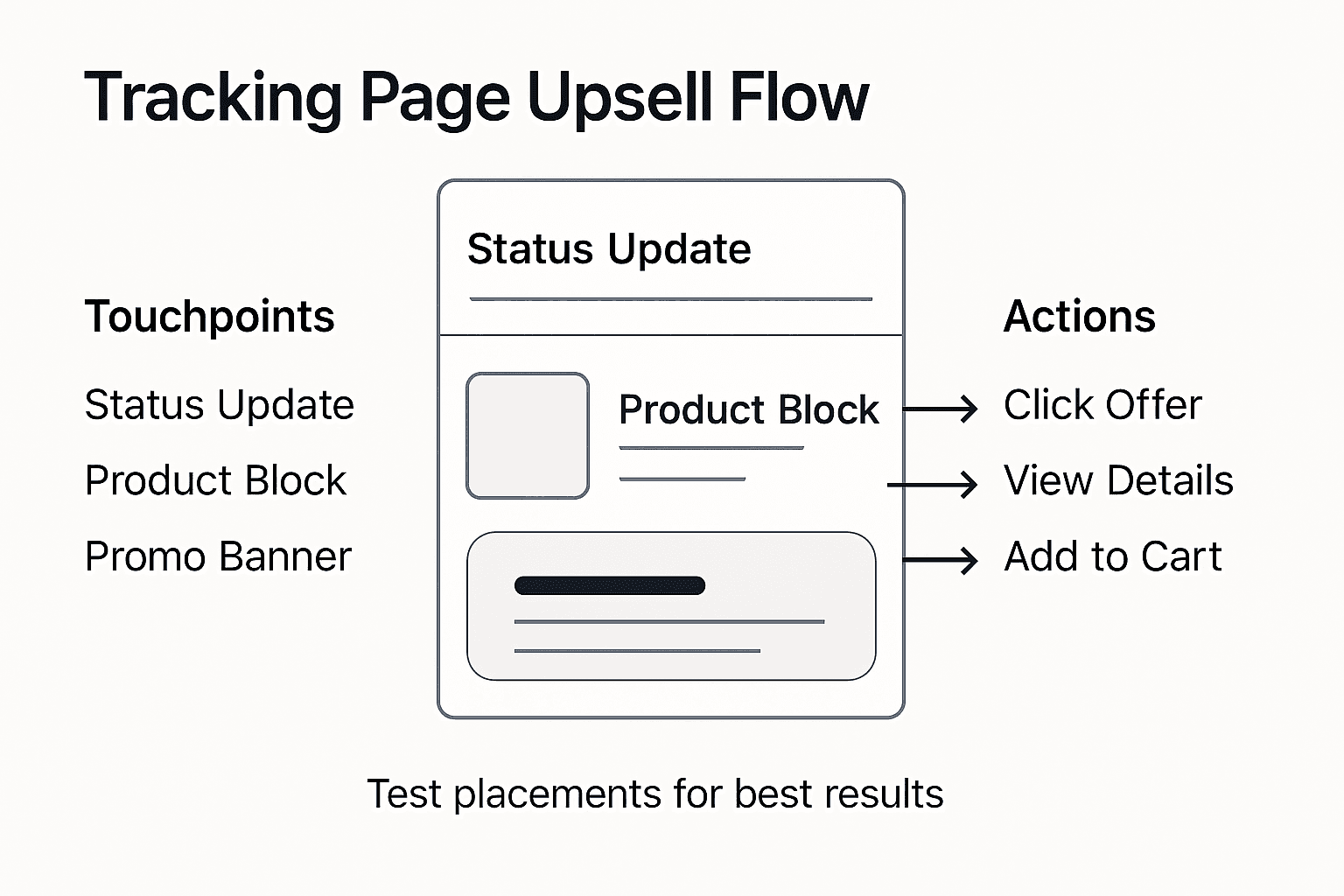
Pro tip: Implement A/B testing on different product recommendation placements and designs to continuously optimize conversion rates and customer engagement on your tracking pages.
Step 5: Measure results and refine your optimization approach
Establishing a robust measurement and continuous improvement framework is essential for transforming your post-purchase experience from a static process to a dynamic, responsive strategy. Your objective is to create a systematic approach that captures meaningful insights and enables data driven refinements across all customer interaction points.
Advanced analytical frameworks can quantify post-purchase service satisfaction with unprecedented precision by combining sophisticated data analysis techniques. Develop a comprehensive measurement strategy that tracks key performance indicators such as customer support ticket reduction, repeat purchase rates, tracking page engagement, upsell conversion rates, and overall customer sentiment. Implement multivariate tracking that goes beyond surface level metrics to understand the emotional and functional aspects of your post-purchase experience.
Utilize a combination of quantitative and qualitative measurement tools including customer surveys, review analysis, behavioral tracking, and direct feedback channels. Create cross functional reporting that allows marketing, customer support, logistics, and product teams to collaborate on optimization strategies. Regularly schedule review sessions to discuss insights, validate hypotheses, and develop iterative improvements that incrementally enhance the customer journey. Remember that optimization is an ongoing process that requires continuous learning and adaptation.
Pro tip: Establish a quarterly optimization sprint where you review all collected data, identify top three improvement opportunities, and develop actionable experiments to address customer experience gaps.
This table highlights advanced KPI metrics for measuring post-purchase experience optimization:
| KPI Metric | Description | Value for Business |
|---|---|---|
| Ticket Reduction | Decrease in support cases after purchase | Lowers service costs |
| Repeat Purchase Rate | Percent of customers buying again | Indicates loyalty growth |
| Tracking Engagement | User activity on order pages | Reveals customer interest |
| Upsell Conversion | Rate of additional product sales | Boosts average order value |
| Sentiment Analysis | Overall customer feelings post-purchase | Identifies improvement areas |
Elevate Your Post-Purchase Experience with WISMOlabs
The article highlights the common challenges brands face after a sale is made including fragmented communication, lack of real-time order updates, and missed opportunities for upselling during the delivery journey. Key pain points like excessive customer support inquiries for order status and the need for personalized, branded notifications are front and center. If your goal is to turn post-purchase moments into proactive engagement opportunities that reduce frustration and build lasting loyalty WISMOlabs offers a powerful solution designed to address exactly these issues.
WISMOlabs.com integrates multiple data sources to deliver intelligent and timely updates that transform routine shipping communications into meaningful brand interactions. Features such as branded tracking pages, upsell recommendations during peak engagement, and advanced performance analytics directly align with the article’s emphasis on optimizing communication channels and leveraging real-time customer data. By decreasing support tickets by up to 90% and cutting negative reviews by half WISMOlabs helps you not only meet but exceed the expectations laid out in this strategic framework.
Discover how you can reduce customer anxiety and create new revenue streams with a platform built specifically for enhancing the post-purchase experience. Take control of your customer journey today by visiting WISMOlabs and explore how our intelligent post-purchase orchestration can redefine your brand loyalty and operational efficiency.
Looking for seamless integration and quick setup that delivers fast results Explore our official landing page to learn more. Check out the detailed post-purchase experience optimization insights to see how we turn analytics into action.
Frequently Asked Questions
How can I assess my current post-purchase communication channels?
To assess your current post-purchase communication channels, conduct a comprehensive audit of all touchpoints such as emails, SMS notifications, and support platforms. Document performance metrics like response times and customer satisfaction ratings to identify strengths and weaknesses in your strategy.
What are the benefits of integrating real-time order and customer data sources?
Integrating real-time order and customer data sources allows for a holistic view of customer interactions and order statuses. By connecting multiple systems, you can ensure that your customer support representatives have instant access to the most current information, leading to improved customer satisfaction within a few weeks.
How do I create an effective delivery notification strategy?
To create an effective delivery notification strategy, design notifications that are personalized and contextually relevant to the customer. Map out key communication moments throughout the delivery process and integrate various channels such as SMS and email to ensure timely updates reach customers based on their preferences.
What techniques can I use to enable upsell opportunities on tracking pages?
To enable upsell opportunities on tracking pages, design the page to showcase personalized product recommendations that complement the customer’s current order. Use engaging visual elements and social proof techniques to create a seamless experience that encourages additional purchases without being intrusive.
How can I measure and refine my post-purchase experience optimization?
To measure and refine your post-purchase experience optimization, establish a measurement framework tracking key performance indicators like customer support ticket reduction and repeat purchase rates. Regularly analyze this data and hold quarterly reviews to identify improvement opportunities and develop actionable experiments to enhance the customer journey.