More than 40 percent of American ecommerce shoppers report frustration when post-purchase communication falls short, leading to avoidable support inquiries and declining loyalty. For American brand managers, every touchpoint after checkout is a chance to strengthen relationships and ease the workload on customer service teams. This article highlights the vital types of post-purchase touchpoints, uncovering how thoughtful design turns routine order updates into powerful tools for customer engagement and satisfaction.
Table of Contents
- Defining Post-Purchase Touchpoints In Ecommerce
- Types Of Touchpoints And Engagement Channels
- How Touchpoints Shape Customer Experience
- Reducing Wismo And Support Inquiries
- Driving Loyalty And Revenue Opportunities
Key Takeaways
| Point | Details |
|---|---|
| Post-Purchase Touchpoints Matter | These interactions significantly influence customer satisfaction and loyalty, making them crucial for brand success. |
| Omnichannel Engagement is Key | Combining digital and human touchpoints creates a seamless experience that resonates with diverse customer preferences. |
| Proactive Communication Reduces Inquiries | Clear and timely updates can decrease WISMO inquiries, enhancing overall customer experience. |
| Transform Interactions into Opportunities | View post-purchase moments as chances for engagement and revenue, focusing on personalized touches to build customer relations. |
Defining Post-Purchase Touchpoints in Ecommerce
Post-purchase touchpoints represent the critical communication and interaction moments between a brand and its customer after a transaction has been completed. These touchpoints are essential interactions that shape customer perception, satisfaction, and future engagement. Research exploring customer journeys categorizes these touchpoints into three primary groups: brand-owned, partner-managed, and external interactions.
In the ecommerce landscape, post-purchase touchpoints encompass multiple channels and interactions designed to enhance customer experience. These might include order confirmation emails, shipping notifications, delivery tracking updates, post-delivery satisfaction surveys, customer support interactions, and follow-up marketing communications. Digital platforms like brand websites and social media play a crucial role in facilitating these touchpoints, providing customers with continuous information and engagement opportunities.
Post-purchase touchpoints serve multiple strategic purposes beyond mere transaction completion. They help brands gather customer feedback, build long-term relationships, address potential concerns proactively, and create opportunities for repeat purchases. By designing thoughtful, personalized post-purchase experiences, brands can transform what could be routine interactions into meaningful engagement moments that differentiate them from competitors.
Here’s a summary of the main types of post-purchase touchpoints and their unique business roles:
| Touchpoint Type | Key Channels | Unique Role | Business Impact |
|---|---|---|---|
| Brand-Owned | Email, apps, website | Direct customer engagement | Increase satisfaction, loyalty |
| Partner-Managed | Logistics, delivery platforms | Service execution | Reduce WISMO, build trust |
| External Interactions | Social media, reviews | Reputation management | Influence buying decisions |
Pro tip: Create a comprehensive post-purchase communication map that outlines every potential customer interaction, ensuring no communication gap exists between order placement and delivery.
Types of Touchpoints and Engagement Channels
Post-purchase touchpoints encompass a wide range of communication channels that brands leverage to maintain customer engagement after a transaction. Research examining touchpoint categories identifies three fundamental types of touchpoints: brand-owned, partner-managed, and external interactions. These touchpoints span digital and physical platforms, creating a comprehensive ecosystem of customer communication.
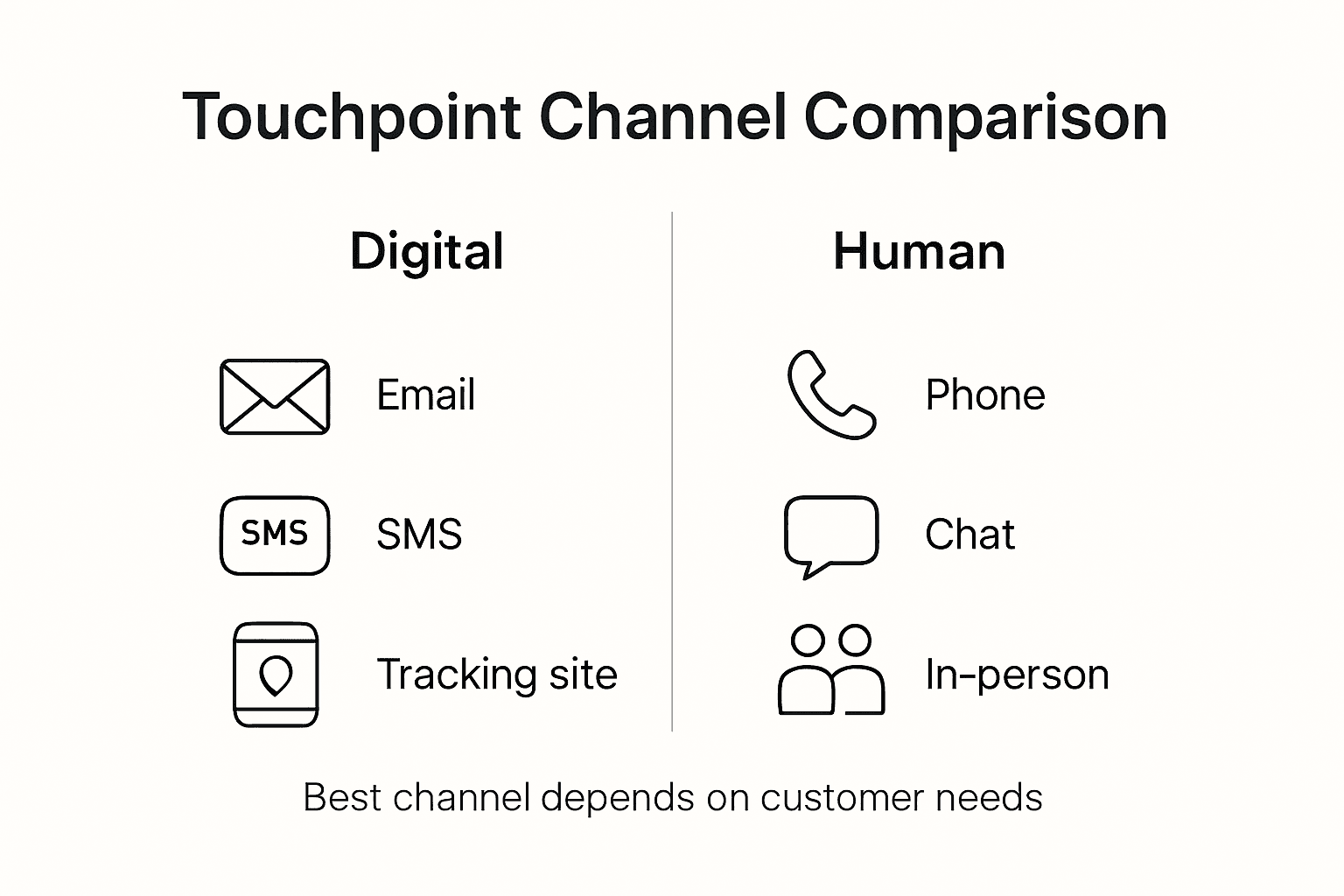
Digital engagement channels represent the most dynamic and rapidly evolving touchpoint category. These include email communications, mobile app notifications, social media interactions, live chat support, tracking portals, and personalized recommendation platforms. Perceived quality of these touchpoints directly influences customer buying intention and satisfaction, making strategic channel selection crucial for maintaining positive relationships.

Traditional human-based touchpoints continue to play a significant role in post-purchase experiences. Customer support phone lines, in-person service interactions, physical return centers, and follow-up consultation services provide personal connections that digital channels cannot fully replicate. The most effective post-purchase strategies integrate multiple touchpoint types, creating a seamless, omnichannel experience that meets diverse customer communication preferences.
This table compares digital and human-based post-purchase engagement channels by key strengths and limitations:
| Channel Type | Strengths | Limitations | Best For |
|---|---|---|---|
| Digital Channels | Fast, scalable, 24/7 | Less personal | Notifications, tracking |
| Human Touchpoints | Personalized, empathetic | Limited availability | Support, consultations |
Pro tip: Map out your customer’s potential interaction paths across different touchpoints, ensuring smooth transitions and consistent messaging between digital and human communication channels.
How Touchpoints Shape Customer Experience
Customer experience is fundamentally shaped by the quality and consistency of touchpoints throughout the purchasing journey. Personalized interactions significantly enhance customer connections by addressing individual needs and creating emotional resonance between customers and brands. These touchpoints go beyond mere transactional interactions, transforming into meaningful engagement opportunities that build long-term relationships and customer loyalty.
Digital and human touchpoints work in tandem to create a comprehensive experience ecosystem. Online channels like email, mobile notifications, and tracking platforms provide immediate, convenient interactions, while personal interactions through customer support and consultation services offer deeper emotional connection. Effective touchpoint management builds trust and mutual understanding, particularly in the post-purchase phase where customers seek reassurance and support.
The strategic design of touchpoints determines how customers perceive brand reliability and commitment. Each interaction serves as a potential moment of truth that can either strengthen or undermine customer confidence. By carefully crafting these touchpoints to be responsive, personalized, and seamless, brands can turn routine communications into powerful relationship-building opportunities that differentiate them from competitors.
Pro tip: Audit your current touchpoint experiences from the customer perspective, identifying and eliminating friction points while creating opportunities for personalized, meaningful interactions.
Reducing WISMO and Support Inquiries
WISMO (Where Is My Order) inquiries represent a significant drain on customer support resources and can negatively impact customer satisfaction. Integrating and managing on- and offline touchpoints helps reduce customer uncertainty by providing transparent and timely communication throughout the post-purchase journey. By proactively addressing potential information gaps, brands can dramatically decrease the volume of support tickets and improve overall customer experience.
Effective post-purchase communication strategies leverage multiple channels to keep customers informed. Disruptive technologies and real-time communication platforms minimize order status uncertainty by providing immediate access to relevant order information. These strategies might include automated email updates, SMS notifications, mobile app tracking, personalized tracking pages, and proactive communication about potential delivery challenges or delays.
Reducing WISMO inquiries requires a comprehensive approach that combines technological solutions with strategic communication planning. Brands must develop a holistic system that anticipates customer information needs, provides transparent and consistent updates across multiple channels, and creates a seamless post-purchase experience. By investing in intelligent communication infrastructure, companies can transform potentially frustrating moments into opportunities for building customer trust and loyalty.
Pro tip: Create a multi-channel communication workflow that provides predictive, proactive order updates, giving customers information before they feel compelled to ask.
Driving Loyalty and Revenue Opportunities
Post-purchase touchpoints are critical strategic assets that extend far beyond simple transactional interactions. Personalized touchpoints enhance customer loyalty by fostering emotional connections and trust, transforming routine communications into opportunities for deeper engagement and revenue generation. These interactions create meaningful moments that can significantly impact customer lifetime value and brand perception.
Strategic post-purchase interactions open multiple revenue streams through targeted cross-selling and upselling opportunities. Building brand communities through digital engagement contributes to sustained customer relationships that go beyond single transactions. By providing relevant product recommendations, exclusive offers, and personalized follow-up communications, brands can convert one-time buyers into loyal advocates who repeatedly choose their products and actively promote their brand.
The most successful post-purchase strategies view every interaction as a potential relationship-building moment. This means designing touchpoints that not only provide transactional information but also add genuine value to the customer experience. Whether through educational content, personalized recommendations, or proactive support, brands can transform post-purchase interactions from simple notifications into engaging experiences that customers actually look forward to receiving.
Pro tip: Design a post-purchase communication sequence that delivers unexpected value at each stage, turning routine updates into opportunities for customer delight and engagement.
Transform Your Post-Purchase Experience to Eliminate WISMO Stress
The challenge of managing WISMO inquiries remains one of the most pressing pain points for ecommerce brands striving to improve customer satisfaction while reducing costly support tickets. This article highlights how strategic post-purchase touchpoints can prevent customer frustration by delivering transparent, real-time updates at every stage of the delivery journey. To meet these goals brands need intelligent orchestration that unites order data, carrier info, and customer signals into personalized, branded communications that proactively answer the “Where Is My Order” question before customers even ask.
WISMOlabs.com is designed exactly for this challenge. Our specialized platform transforms post-purchase touchpoints into seamless engagement moments that reduce uncertainty, cut support inquiries by up to 90 percent, and build lasting customer loyalty. With features like branded tracking pages, predictive notifications, and upsell opportunities during peak engagement, WISMOlabs helps you turn what could be a source of customer anxiety into a strategic revenue opportunity. Discover how easy it is to enhance your customer experience through intelligent communication powered by data integration and automation.
Ready to stop WISMO tickets from draining your resources and start delighting customers after checkout?
Explore how WISMOlabs can revolutionize your post-purchase communication today at WISMOlabs.com. Take control of your customer experience now by visiting WISMOlabs.com and learn more about our unique approach to reducing support inquiries and boosting loyalty. For brands serious about operational excellence and customer happiness the time to act is now.
Frequently Asked Questions
What are post-purchase touchpoints?
Post-purchase touchpoints are critical interactions between a brand and its customer after a transaction, including communication like order confirmations, shipping updates, and follow-up surveys.
How do post-purchase touchpoints reduce WISMO inquiries?
By providing proactive and transparent updates throughout the post-purchase journey, such as tracking notifications and automated communication, brands can decrease customer uncertainty, which in turn reduces WISMO (Where Is My Order) inquiries.
Why is it important to manage post-purchase touchpoints effectively?
Effective management of these touchpoints builds customer trust, enhances satisfaction, and encourages loyalty, ultimately leading to repeat purchases and positive word-of-mouth.
What channels can be used for effective post-purchase communication?
Brands can use multiple channels like email, SMS, mobile apps, and social media to deliver timely updates and personalized communications, ensuring customers are informed at every stage of their order journey.