Every Ecommerce brand manager knows that customer satisfaction does not end at checkout. The moments after a purchase create some of the most meaningful opportunities to shape customer loyalty and trust. By focusing on post-purchase metrics-including delivery experience, product quality, and support interactions-brands can uncover hidden factors that drive repeat sales and minimize WISMO inquiries. This overview reveals how tracking these key indicators empowers businesses to transform post-purchase engagement into a genuine competitive advantage.
Table of Contents
- Defining Post-Purchase Metrics And Their Value
- Types Of Metrics That Shape Customer Experience
- Peak Engagement Window: Maximizing Customer Attention
- Personalization And Revenue Growth Strategies
- Avoiding Pitfalls: Reducing WISMO And Complaints
Key Takeaways
| Point | Details |
|---|---|
| Importance of Post-Purchase Metrics | Effective tracking of post-purchase metrics enhances understanding of customer satisfaction and guides business improvements. |
| Peak Engagement Window | Early post-purchase communication maximizes customer connection and encourages loyalty. |
| Personalization Strategies | Tailoring post-purchase experiences through data insights leads to increased revenue and customer retention. |
| WISMO Reduction | Proactive communication and tracking minimize customer inquiries, improving brand trust and reducing support costs. |
Defining Post-Purchase Metrics and Their Value
Post-purchase metrics represent a critical set of key performance indicators that track customer experiences, satisfaction, and engagement after a sale has been completed. These metrics go far beyond simple transaction records, offering nuanced insights into the entire customer journey. Post-purchase customer experience research reveals multiple dimensions that significantly influence customer satisfaction and future purchase intentions.
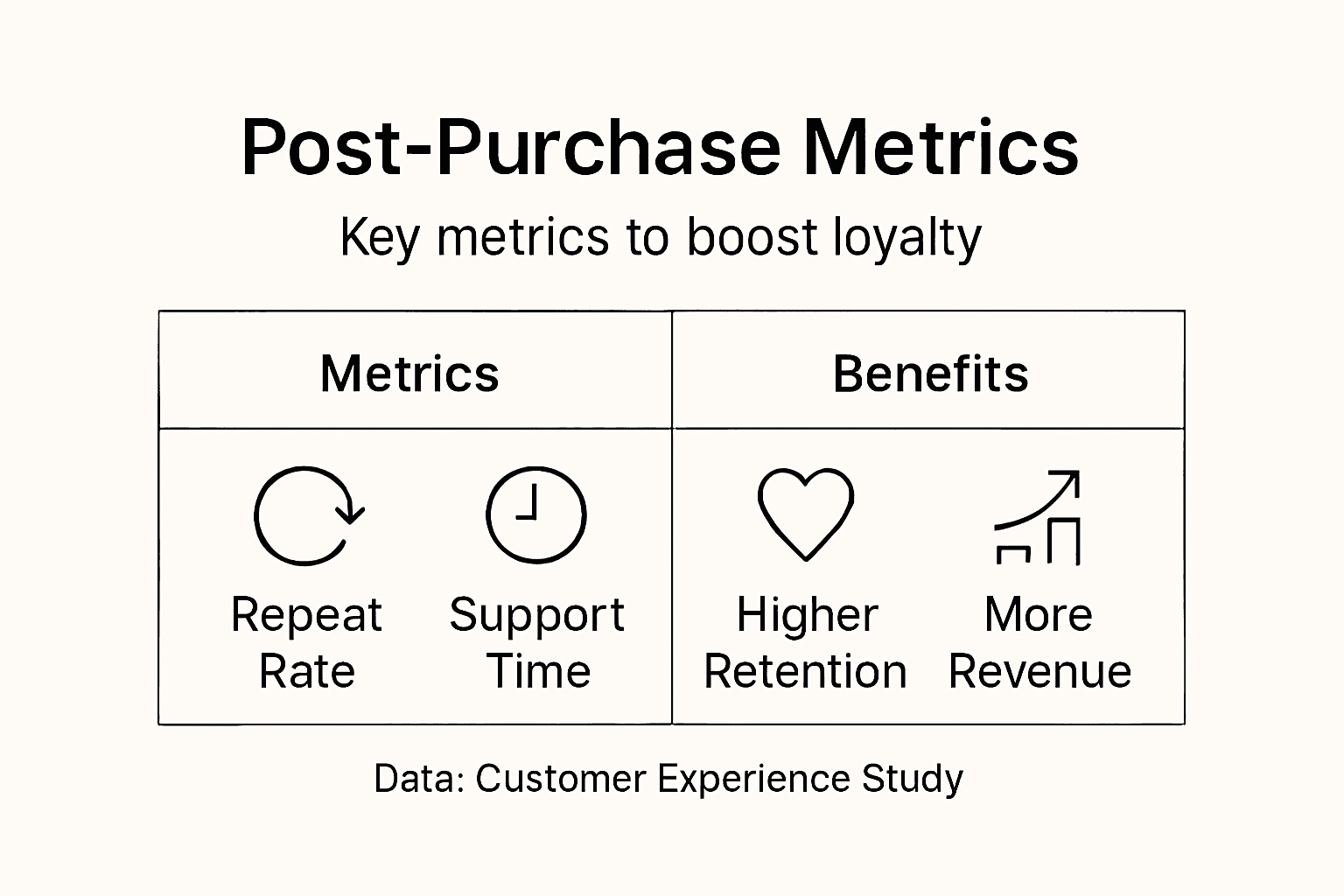
Post-purchase metrics typically encompass several key dimensions that provide comprehensive insights into customer behavior and satisfaction:
- Delivery Performance: Tracking shipping speed, accuracy, and package condition
- Product Quality Evaluation: Measuring customer satisfaction with received items
- Return and Exchange Rates: Understanding customer experience with product returns
- Customer Support Interactions: Analyzing support ticket resolution and response times
- Repeat Purchase Likelihood: Gauging potential for future customer transactions
These metrics serve as powerful diagnostic tools for businesses, enabling them to identify strengths and weaknesses in their post-purchase processes. By systematically monitoring these indicators, companies can proactively address customer concerns, improve overall experience, and ultimately drive long-term loyalty.
Here’s an overview of how post-purchase metrics influence business outcomes:
| Post-Purchase Metric | Business Impact | Example of Improvement |
|---|---|---|
| Delivery Performance | Reduces support requests | Faster shipping reduces complaints |
| Product Quality Evaluation | Drives repeat purchases | Improved quality boosts loyalty |
| Return and Exchange Rates | Identifies satisfaction issues | Lower return rates signal success |
| Customer Support Interactions | Enhances brand perception | Quick resolution improves reviews |
| Repeat Purchase Likelihood | Increases lifetime value | Targeted offers encourage return |
Pro tip: Implement a robust tracking system that captures post-purchase metrics across multiple touchpoints to gain holistic insights into your customer experience journey.
Types of Metrics That Shape Customer Experience
Customer experience metrics represent a sophisticated framework for understanding and improving post-purchase interactions. Comprehensive post-purchase research reveals six critical dimensions that capture the nuanced customer journey beyond simple transactional data.
The most influential post-purchase metrics can be categorized into several key types:
- Customer Satisfaction Score (CSAT): Direct measurement of customer happiness with specific interactions
- Net Promoter Score (NPS): Evaluates likelihood of customer recommendation
- Customer Effort Score (CES): Measures ease of completing desired actions
- Sentiment Analysis: Qualitative assessment of emotional customer responses
- Retention Rate: Percentage of customers who continue doing business
- Repeat Purchase Rate: Frequency of subsequent transactions
These metrics provide actionable insights that go far beyond surface-level performance indicators. By strategically tracking these dimensions, businesses can understand intricate customer behaviors, predict potential churn risks, and design targeted interventions to enhance overall experience.
Understanding the emotional and functional aspects of post-purchase interactions is crucial. While quantitative metrics offer numerical insights, combining them with qualitative feedback creates a holistic view of customer sentiment and potential improvement areas.
Pro tip: Develop a comprehensive dashboard that integrates multiple metric types to gain a 360-degree perspective on your customer experience journey.
Peak Engagement Window: Maximizing Customer Attention
Critical post-purchase research reveals a crucial timeframe immediately following product purchase where customer emotions and perceptions are most malleable. This Peak Engagement Window represents a strategic opportunity for businesses to transform a simple transaction into a memorable, loyalty-building experience.
The peak engagement window typically encompasses several critical interaction points:
- Immediate Order Confirmation: First touchpoint establishing trust
- Shipping Notification: Providing transparency and excitement
- Delivery Anticipation: Maintaining customer enthusiasm
- Post-Delivery Follow-up: Capturing initial product experience feedback
- Review Request: Encouraging customer participation
Consumer behavioral studies demonstrate that proactive, well-timed communications during this window can significantly reduce purchase uncertainty and enhance overall satisfaction. Strategic interventions during these moments can turn potential friction points into opportunities for deeper customer connection.

Successful engagement requires understanding the psychological nuances of post-purchase interactions. Customers are most receptive to communication and additional value propositions during this narrow window, making it a critical period for building long-term relationships and brand loyalty.
Pro tip: Design personalized, context-aware communication strategies that align with each customer’s unique journey and emotional state during the peak engagement window.
Personalization and Revenue Growth Strategies
Advanced AI-based personalization methods are transforming how businesses approach post-purchase customer experiences. By leveraging sophisticated algorithms that predict individual purchase motivations, companies can create hyper-targeted interactions that significantly boost revenue and customer loyalty.
Key personalization strategies for revenue growth include:
- Behavioral Segmentation: Categorizing customers based on purchase history and interactions
- Predictive Recommendation Engines: Suggesting products aligned with individual preferences
- Dynamic Pricing Strategies: Offering personalized discounts and promotions
- Customized Communication Channels: Tailoring messaging frequency and style
- Individualized Loyalty Programs: Designing rewards specific to customer behavior
Companies that excel in personalization demonstrate remarkable financial outcomes. Research indicates that targeted strategies can generate up to 40% more revenue by converting casual buyers into high-value, loyal customers. The key lies in understanding individual customer journeys and creating meaningful, contextually relevant experiences.
Successful personalization requires a holistic approach that integrates data analytics, machine learning, and deep customer insights. By continuously refining personalization algorithms and maintaining a nuanced understanding of customer preferences, businesses can create a competitive advantage that drives sustainable growth.
Pro tip: Implement a robust data collection and analysis framework that allows real-time personalization insights across multiple customer touchpoints.
The table below compares two leading strategies for post-purchase engagement:
| Strategy | Focus Area | Typical Benefit | Technology Requirement |
|---|---|---|---|
| AI-Driven Personalization | Hyper-targeted offers | Higher revenue and loyalty | Advanced analytics/AI needed |
| Proactive Communication | Timely updates | Reduced WISMO and complaints | Automated messaging tools |
Avoiding Pitfalls: Reducing WISMO and Complaints
Consumer response research highlights the critical importance of proactively managing post-purchase customer interactions to minimize “Where Is My Order?” (WISMO) inquiries and complaints. These repetitive customer contacts not only strain support resources but can significantly erode brand trust and loyalty.
Key strategies for reducing WISMO and customer complaints include:
- Proactive Communication: Sending timely, transparent shipping updates
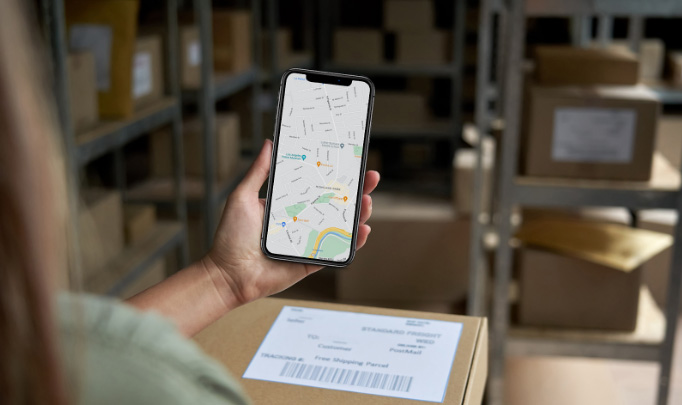
- Real-Time Tracking: Providing accurate, easily accessible order status information
- Predictive Delivery Notifications: Anticipating and addressing potential delivery challenges
- Automated Support Channels: Implementing AI-driven chatbots and self-service options
- Comprehensive Order Visibility: Creating end-to-end tracking experiences
Successful WISMO reduction requires a multifaceted approach that combines technological solutions with strategic communication planning. By implementing sophisticated tracking systems and developing clear, preemptive communication protocols, businesses can dramatically reduce customer uncertainty and support volume.
The financial implications of addressing WISMO are substantial. Reducing these inquiries can lower support costs, minimize customer frustration, and create more positive brand interactions that directly impact long-term customer retention and revenue growth.
Pro tip: Develop a comprehensive post-purchase communication strategy that provides customers with proactive, contextualized updates throughout their entire delivery journey.
Transform Post-Purchase Metrics into Loyalty and Revenue Growth
Tracking post-purchase metrics like delivery performance, customer support interactions, and repeat purchase likelihood is essential for reducing customer anxiety and boosting loyalty. The challenge many retailers face is turning raw data into meaningful, timely communication during the Peak Engagement Window, where customer attention is highest but emotions are most delicate. Without a smart approach, brands risk overwhelming customers with redundant messages that increase frustration rather than build trust.
WISMOlabs offers an intelligent post-purchase orchestration platform designed to solve these challenges. By evaluating real-time shipment context alongside order data and behavioral signals, it ensures your customers receive high-value, branded updates exactly when they need them. This decision-centric approach not only slashes “Where Is My Order?” (WISMO) tickets by up to 90 percent but also drives a 15-30x ROI through personalized upsells and strategic growth opportunities.
Experience the power of turning transactional updates into loyalty-building moments with WISMOlabs, your partner in optimizing post-purchase customer experience. Explore how personalized communication reduces complaints and enhances your brand reputation today.
Unlock the full potential of your post-purchase journey and see real impact on revenue and retention.
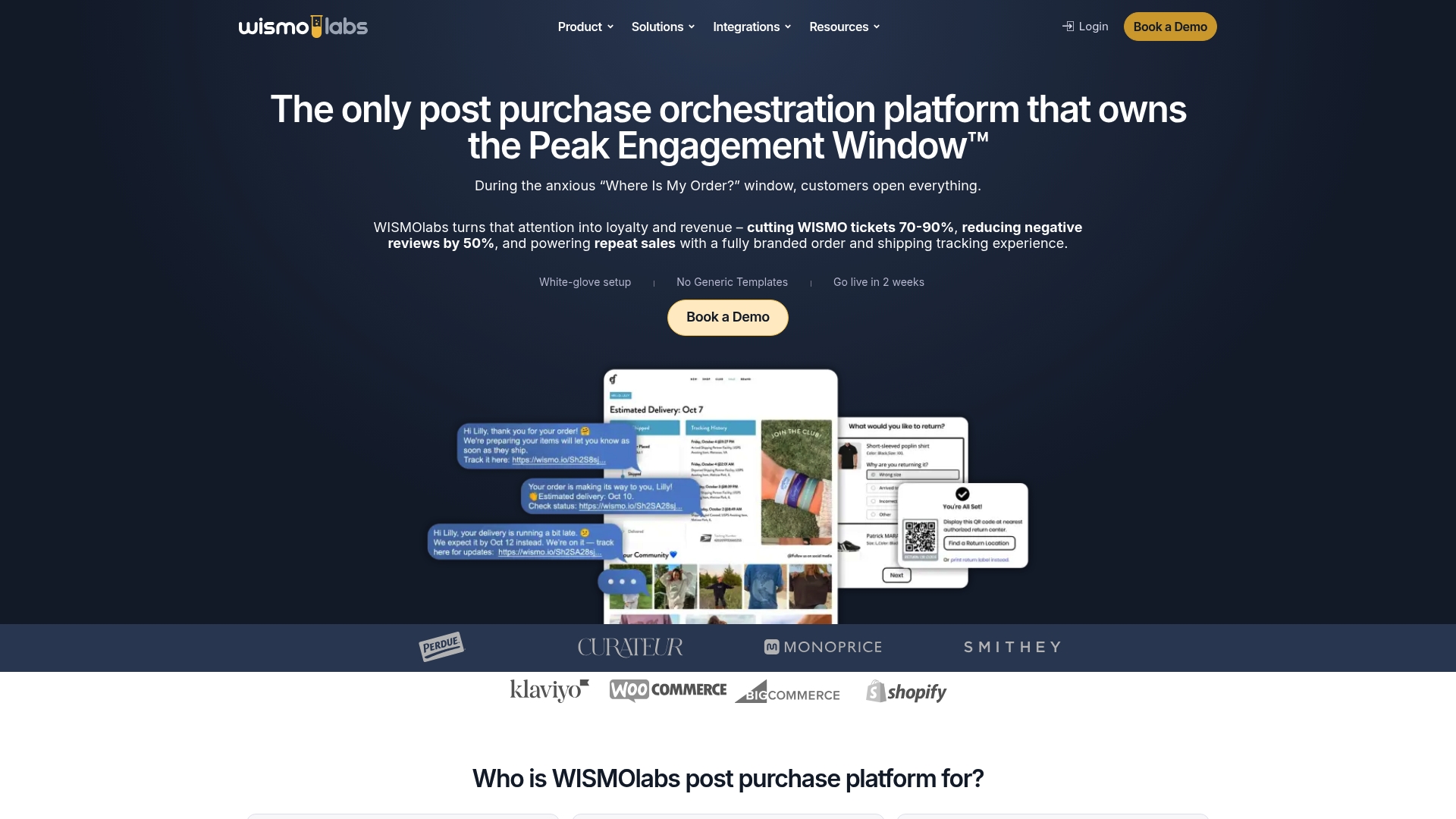
Experience smarter post-purchase orchestration that drives loyalty and growth. Visit WISMOlabs now to learn how to leverage your Peak Engagement Window and transform customer satisfaction into lasting business success.
Frequently Asked Questions
What are post-purchase metrics?
Post-purchase metrics are key performance indicators that track customer experiences and satisfaction after a sale, providing insights into delivery performance, product quality, return rates, and overall customer engagement.
Why are post-purchase metrics important for customer loyalty?
These metrics help businesses understand customer satisfaction and identify areas for improvement, ultimately enhancing the customer experience and fostering long-term loyalty.
How can businesses improve their post-purchase processes?
Businesses can improve post-purchase processes by tracking metrics like delivery performance and customer support interactions, addressing customer concerns proactively, and providing personalized communication throughout the customer journey.
What role does personalized communication play in post-purchase metrics?
Personalized communication during the peak engagement window can strengthen customer relationships and reduce uncertainty, leading to higher satisfaction and increased likelihood of repeat purchases.
Recommended
- Discover Effective Post-Purchase Follow-Up Techniques: Building Customer Loyalty After the Sale – WISMOlabs
- Why Post-Purchase Marketing Matters for Building Brand Loyalty
- 3 Post-Purchase Marketing Strategies That Boost ROI
- Setting Up Post-Purchase Marketing in Magento – WISMOlabs
- 7 Playlist Analytics Examples to Boost Your Strategy – Blog – Music24.com