Every retail manager knows the frustration of seeing WISMO tickets climb just as post-purchase engagement drops. Ignoring the time after a sale risks losing meaningful insights about customer satisfaction and future behavior. By focusing on intelligent post-purchase insights, you can address these overlooked moments, deepen connections, and proactively solve issues before negative reviews threaten your brand reputation.
Table of Contents
- Defining Post-Purchase Insights And Value
- Types Of Post-Purchase Data Signals
- How Intelligent Platforms Transform Experiences
- Impact On Customer Loyalty And Retention Rates
- Reducing WISMO Tickets And Negative Reviews
- Monetizing The Peak Engagement Window
Key Takeaways
| Point | Details |
|---|---|
| Post-Purchase Insights are Crucial | Understanding customer behavior and satisfaction post-purchase can lead to improved retention strategies. |
| Personalization Enhances Engagement | Leveraging intelligent platforms to personalize communication increases customer satisfaction and loyalty. |
| Proactive Communication Reduces Friction | Implementing real-time updates and problem anticipation can significantly lower inquiry volumes and negative reviews. |
| Monetization Opportunities Exist | The Peak Engagement Window allows retailers to generate additional revenue through targeted upselling and customer insights. |
Defining Post-Purchase Insights and Value
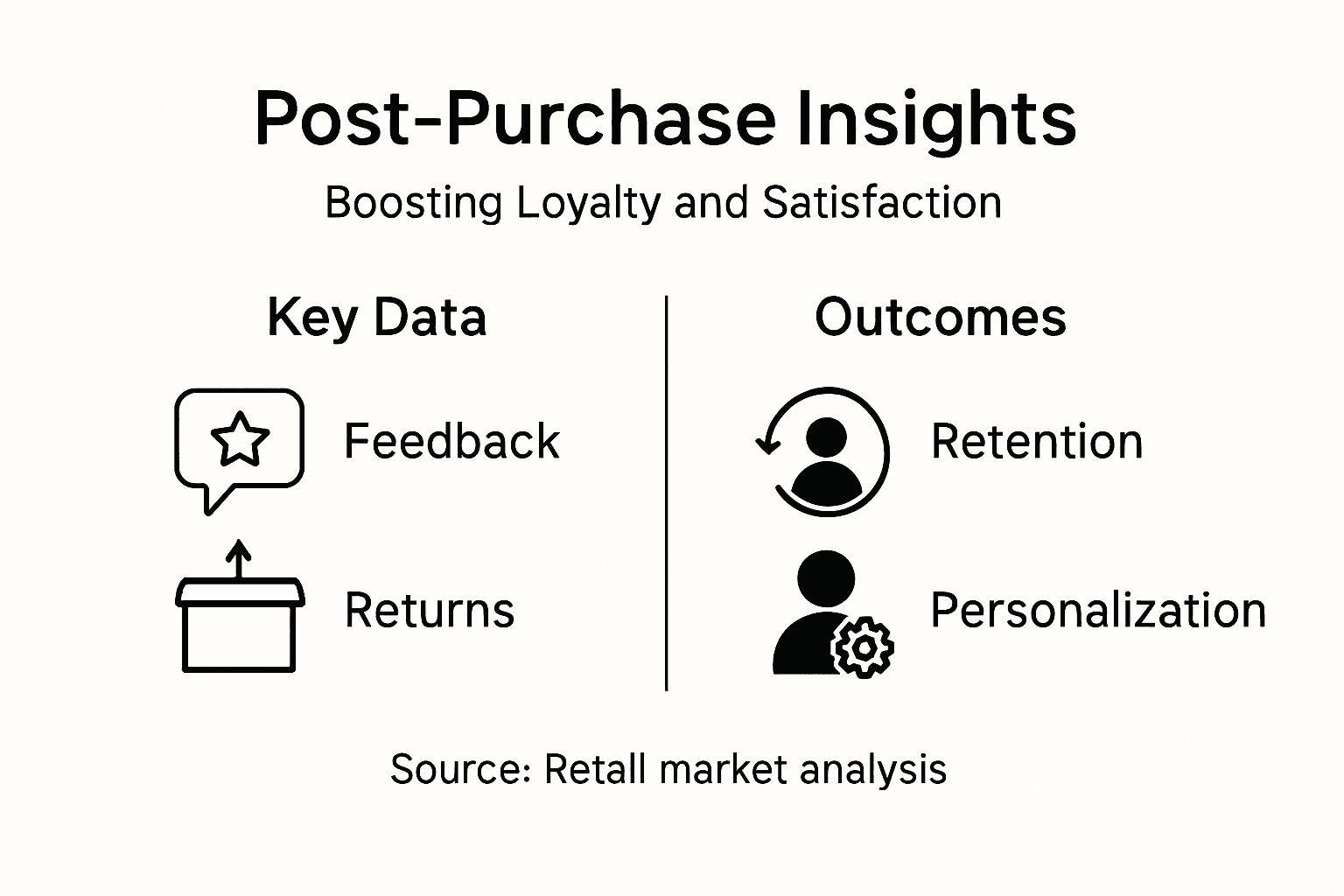
Post-purchase insights represent the critical data and understanding retailers gain after a customer completes a transaction. These insights go far beyond simple shipping updates, offering a nuanced view of customer behavior, satisfaction, and potential future engagement. Multidisciplinary research reveals this phase as a pivotal moment in the customer journey that has been historically overlooked by marketing professionals.
At its core, post-purchase insights involve analyzing customer interactions, emotions, and experiences immediately following a product acquisition. These insights help retailers understand critical aspects of the customer experience:
- Customer satisfaction levels
- Emotional responses to the purchase
- Likelihood of future repurchases
- Potential product or service improvement areas
- Predictive indicators of long-term loyalty
Qualitative studies demonstrate that online customer experience factors such as delivery speed, return policies, and customer support dramatically influence post-purchase perceptions. Retailers who systematically collect and analyze these insights can develop more targeted strategies for retention and engagement.
Customer Journey Mapping becomes exponentially more powerful when post-purchase data is integrated. By tracking customer interactions, emotions, and feedback after the sale, businesses can create more personalized, responsive experiences that transform transactional moments into relationship-building opportunities.
Pro tip: Implement a structured post-purchase feedback mechanism that captures both quantitative metrics and qualitative emotional responses to gain comprehensive customer insights.
Types of Post-Purchase Data Signals
Post-purchase data signals represent the multifaceted information retailers collect after a customer completes a transaction. Comprehensive research frameworks demonstrate these signals extend far beyond basic transactional metrics, offering nuanced insights into customer behavior and experience.
The primary categories of post-purchase data signals include:
-
Behavioral Signals
- Purchase frequency
- Repeat buying patterns
- Product usage tracking
- Interaction with customer support
-
Emotional Signals
- Customer satisfaction ratings
- Sentiment analysis of feedback
- Emotional response to product
- Likelihood of recommendation
-
Operational Signals
- Delivery performance
- Return and refund metrics
- Customer support response times
- Product issue resolution rates
Post-decision information search represents a critical yet often overlooked data signal. These signals capture consumer efforts to validate their purchase, reduce uncertainty, and maximize utility by engaging in additional research or seeking validation after the initial transaction.

Sophisticated retailers understand that these data signals are not isolated metrics but interconnected insights that provide a holistic view of the customer journey. By systematically analyzing these signals, businesses can develop more personalized, responsive strategies that anticipate and address customer needs proactively.
Pro tip: Implement a multi-dimensional data collection approach that captures both quantitative metrics and qualitative emotional signals to gain comprehensive customer understanding.
How Intelligent Platforms Transform Experiences
Generative AI technologies are revolutionizing the post-purchase customer experience by creating more personalized, intelligent interactions that go beyond traditional communication strategies. These advanced platforms leverage sophisticated algorithms to transform how businesses engage with customers after a transaction.
Key transformative capabilities of intelligent platforms include:
-
Personalization at Scale
- Dynamic content adaptation
- Individual customer preference mapping
- Contextual communication triggers
- Emotion-aware messaging
-
Predictive Customer Support
- Proactive issue resolution
- Real-time problem anticipation
- Automated response optimization
- Intelligent routing of complex inquiries
-
Continuous Learning Mechanisms
- Machine learning feedback loops
- Adaptive communication strategies
- Performance metric refinement
- Behavioral pattern recognition
AI-powered support solutions are dramatically reducing customer service friction by enabling smarter self-service options and automating complex interactions. These intelligent systems analyze vast amounts of data to provide hyper-personalized experiences that feel intuitive and responsive to individual customer needs.
The most advanced platforms don’t just react to customer interactions-they anticipate needs, learn from every engagement, and continuously refine their approach to create increasingly sophisticated, empathetic communication strategies.
Here’s how intelligent platforms enhance post-purchase experiences:
| Capability | How It Works | Business Impact |
|---|---|---|
| Personalization at Scale | AI adapts communication per user | Increases engagement and relevance |
| Predictive Customer Support | Anticipates problems proactively | Reduces support costs, boosts trust |
| Continuous Learning | AI updates from each interaction | Improves service with every contact |
Pro tip: Invest in AI platforms that offer granular customization and continuous learning capabilities to stay ahead of evolving customer expectations.
Impact on Customer Loyalty and Retention Rates
Empirical research demonstrates that post-purchase experiences are not just transactional interactions, but critical touchpoints that fundamentally shape customer loyalty and long-term brand relationships. These moments represent pivotal opportunities for businesses to transform one-time buyers into committed, enthusiastic brand advocates.
Key factors influencing customer loyalty through post-purchase experiences include:
-
Emotional Connection
- Personalized communication
- Responsive customer support
- Authentic brand interactions
- Demonstrated customer appreciation
-
Operational Excellence
- Seamless delivery processes
- Transparent communication
- Quick problem resolution
- Consistent service quality
-
Trust Building Mechanisms
- Proactive issue management
- Clear expectations setting
- Reliable performance delivery
- Consistent brand promise fulfillment
Digital environment technologies have dramatically transformed how retailers can leverage post-purchase insights to enhance customer retention. Advanced data analytics and artificial intelligence enable businesses to create increasingly sophisticated, personalized experiences that directly address individual customer needs and preferences.
The most successful retailers recognize that customer loyalty is not a destination but a continuous journey of engagement, anticipation, and meaningful interaction. By treating each post-purchase moment as an opportunity to deepen the customer relationship, businesses can significantly improve retention rates and transform transactional relationships into long-term partnerships.
Pro tip: Develop a comprehensive post-purchase strategy that prioritizes personalization, proactive communication, and continuous value delivery to maximize customer loyalty.
Reducing WISMO Tickets and Negative Reviews
Effective WISMO reduction strategies transform customer service from a reactive to a proactive model, addressing customer uncertainty before it escalates into frustration. The “Where Is My Order?” (WISMO) phenomenon represents a critical pain point in the customer experience, consuming significant operational resources and potentially damaging brand reputation.
Key strategies for minimizing WISMO tickets and negative reviews include:
-
Proactive Communication
- Real-time shipment tracking
- Predictive delivery notifications
- Personalized status updates
- Contextual shipping information
-
Anticipatory Problem Resolution
- Automated issue detection
- Preemptive customer support
- Transparent delay explanations
- Alternative solution recommendations
-
Customer Experience Optimization
- Simplified tracking interfaces
- Multi-channel communication
- Emotional intelligence in messaging
- Continuous feedback integration
By implementing sophisticated post-purchase communication strategies, retailers can dramatically reduce the volume of customer service inquiries. Loyalty impact metrics demonstrate that comprehensive WISMO reduction approaches not only minimize negative interactions but also create opportunities for positive brand engagement.
Successful organizations recognize that each potential WISMO interaction is a chance to reinforce customer trust, transform potential frustration into satisfaction, and demonstrate genuine commitment to exceptional service.
Pro tip: Develop an integrated communication framework that provides transparent, timely, and personalized updates throughout the entire shipping journey.
Monetizing the Peak Engagement Window
Data monetization models represent a transformative approach to turning customer interactions into strategic revenue opportunities. The Peak Engagement Window-the critical period immediately following a purchase-offers retailers an unprecedented chance to generate additional value beyond the initial transaction.
Key strategies for monetizing the peak engagement window include:
-
Personalized Upsell Opportunities
- Complementary product recommendations
- Targeted cross-selling suggestions
- Contextual bundle offers
- Timing-specific promotional content
-
Insight Generation Techniques
- Purchase behavior analysis
- Customer preference mapping
- Predictive intent modeling
- Sentiment-driven product development
-
Revenue Amplification Channels
- Targeted advertising placements
- Premium service upgrades
- Loyalty program incentives
- Referral commission structures
Purchase reason prediction introduces sophisticated AI-driven approaches that enable businesses to capture nuanced customer motivations, transforming post-purchase moments into intelligent monetization strategies. By understanding the underlying rationales behind purchases, retailers can create increasingly precise, value-generating interactions.
Successful organizations recognize the Peak Engagement Window as more than a transactional moment-it’s a dynamic opportunity to build deeper customer relationships while simultaneously creating innovative revenue streams that extend far beyond traditional sales models.
The following table summarizes monetization strategies in the Peak Engagement Window:
| Strategy | Method | Potential Benefit |
|---|---|---|
| Personalized Upselling | Recommend add-ons based on purchase context | Higher average order value |
| Data-Driven Insights | Analyze post-purchase behavior for trends | Improved targeting, product fit |
| Loyalty & Referral Offers | Timely incentives right after purchase | Boosted retention and referrals |
Pro tip: Design a multi-layered engagement strategy that seamlessly integrates value-added recommendations with genuine customer-centric experiences.
Unlock the True Potential of Post-Purchase Insights with WISMOlabs
The article highlights critical challenges retailers face after a purchase such as reducing WISMO tickets, managing customer anxiety, and transforming transactional moments into lasting loyalty. Post-purchase insights like emotional signals, operational data, and behavioral patterns are key to driving retention, yet many brands struggle to harness these in real time. Concepts like the Peak Engagement Window and proactive communication resonate strongly with brands seeking to engage customers meaningfully during this high-attention period.
WISMOlabs offers a revolutionary solution that moves beyond standard messaging. Our intelligent post-purchase orchestration platform evaluates real-time shipment context alongside customer profiles and order data to deliver high-value branded updates exactly when customers need them most. This proactive approach reduces redundant notifications that raise anxiety and instead creates moments of connection that increase loyalty and revenue. With a proven 70-90% reduction in WISMO tickets and a 50% drop in negative reviews, WISMOlabs transforms the post-purchase journey into a strategic growth engine.
Discover how you can capitalize on post-purchase data and the Peak Engagement Window with WISMOlabs, the intelligent platform built for today’s retailers.
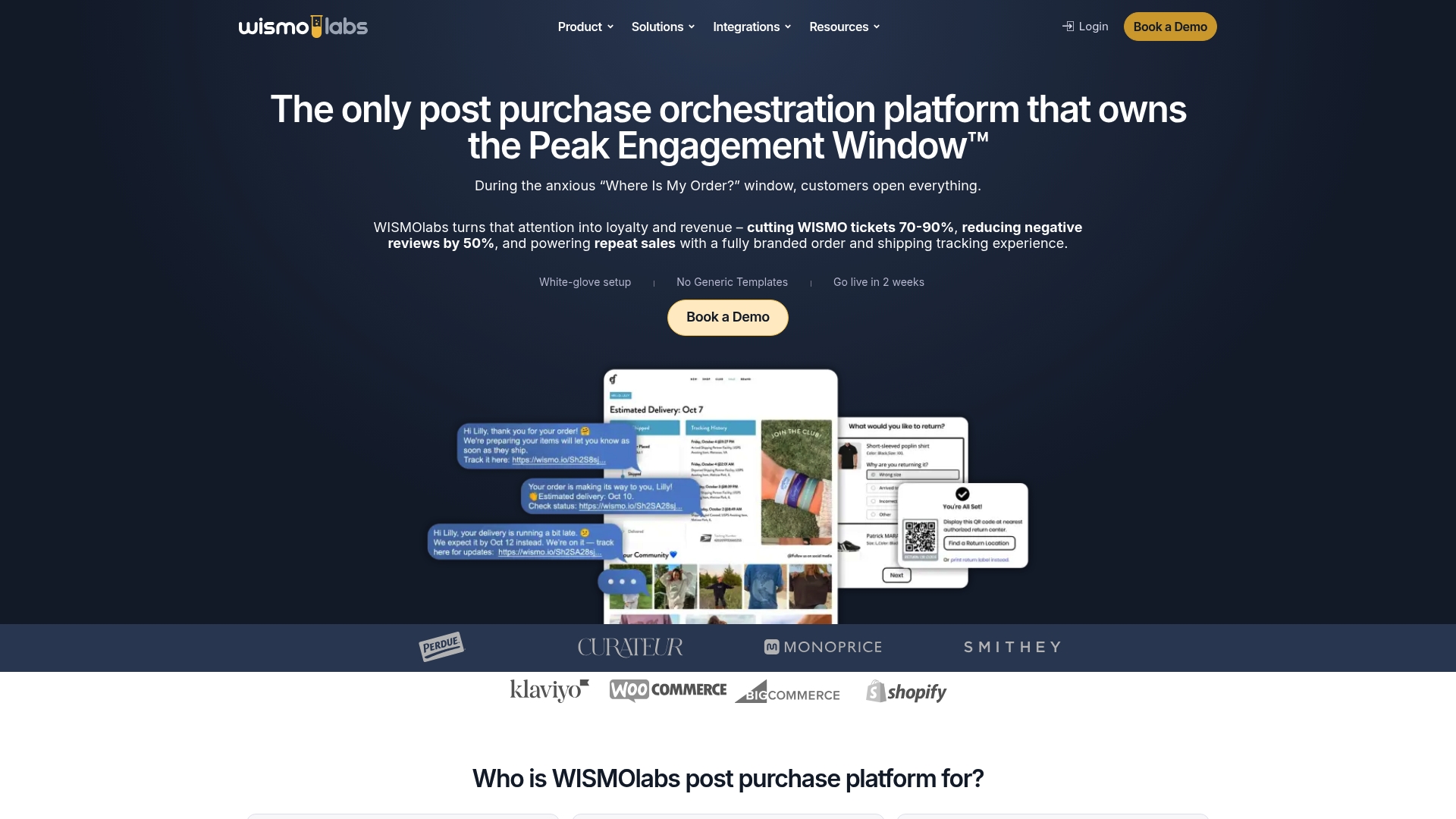
Ready to reduce customer uncertainty, boost trust, and drive higher lifetime value? Visit WISMOlabs now to learn how our AI-powered platform delivers personalized, decision-driven communication that turns every post-purchase moment into an opportunity for growth.
Frequently Asked Questions
What are post-purchase insights?
Post-purchase insights are the data and understanding retailers gain after a customer completes a transaction. These insights provide a nuanced view of customer behavior, satisfaction, and potential future engagement, focusing on experiences following a purchase.
How can retailers collect post-purchase data signals?
Retailers can collect post-purchase data signals through various methods such as customer satisfaction surveys, tracking product usage, monitoring interactions with customer support, and analyzing feedback through sentiment analysis.
Why are emotional signals important in post-purchase analysis?
Emotional signals are crucial because they provide insights into customer satisfaction and their emotional responses to products. Understanding these responses helps retailers improve customer experience and develop strategies to enhance loyalty.
How do intelligent platforms enhance the post-purchase experience?
Intelligent platforms enhance the post-purchase experience by providing personalized communication, predictive customer support, and continuous learning mechanisms. These capabilities allow for smarter, more responsive interactions that anticipate customer needs.